
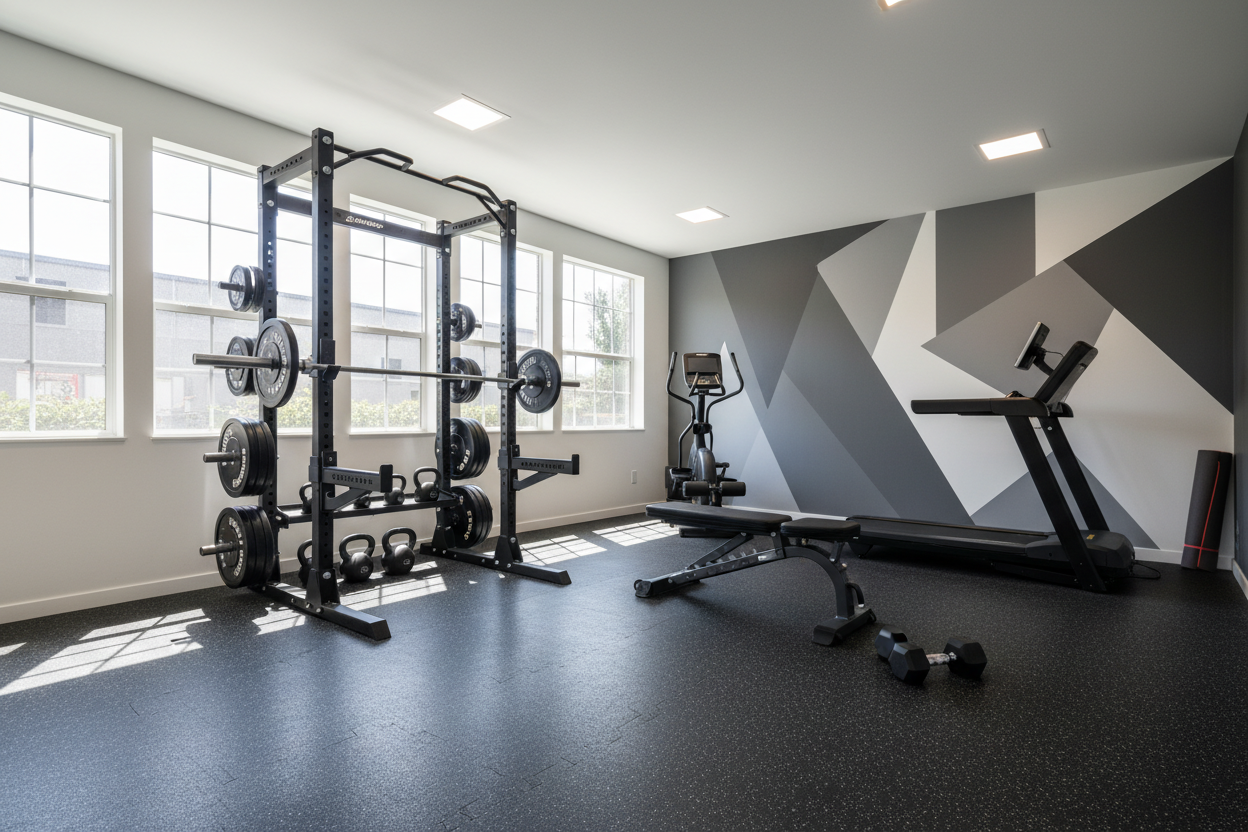
I remember unboxing my first 'bargain' adjustable bench. It looked incredible in the photos, boasted 4.8 stars from over a thousand buyers, and felt like it was constructed from recycled soda cans the moment I sat on it. Finding actual top-rated fitness equipment shouldn't feel like a high-stakes gamble, but in an era of algorithmic manipulation, that is exactly what it has become.
Quick Takeaways
- Most five-star reviews reflect 'fast shipping' rather than long-term durability.
- Static load ratings are a marketing lie; dynamic force is what actually breaks gear.
- Prioritize 11-gauge steel and oversized hardware over flashy digital displays.
- Beginner reviews often mask fatal design flaws that only appear under heavy loads.
The 30-Day Durability Trap (And Why Stars Lie)
The fundamental flaw with online ratings is timing. Most people write their reviews within 48 hours of the box arriving. The paint is still shiny, the 'new rubber' smell hasn't faded, and they haven't even finished their first week of training. A rack that looks 'sturdy' while holding an empty barbell might sway like a palm tree in a hurricane the second you try to re-rack a heavy set of squats.
We see this constantly with budget brands. They bank on the 'honeymoon phase' to rack up thousands of positive marks. But gear doesn't fail on day one. It fails on day 200, when a weld finally gives way under repeated stress or a cable pulley starts to shred. If a review doesn't mention how the equipment feels after six months of abuse, it is essentially useless for a serious lifter.
Weight Capacities and the 'Static Load' Scam
Brands love to claim a 1,000-lb capacity for their top fitness equipment. What they don't tell you is that this is a static load rating. This means they slowly, gently lowered a weight onto the center of the bench in a controlled lab and prayed it wouldn't buckle. In the real world, you aren't a static weight. You are a dynamic force.
When you're building a reliable home gym, you need to know what happens when a loaded bar drops three inches onto the safety pins. That impact creates force far beyond the weight on the bar. Cheap gear is designed to look the part on a spec sheet without having the structural integrity to handle an accidental drop. If the steel isn't thick enough to handle the vibration of a heavy re-rack, the '1,000-lb capacity' is just a number on a sticker.
Who Actually Writes These Reviews?
The hard truth is that the majority of reviewers are beginners. If someone is squatting 95 pounds once a week, a flimsy, bolt-together rack will feel perfectly fine to them. Their gear isn't being tested; it’s being stored. These reviews dominate the rankings, effectively masking the fact that the equipment will literally fold under the pressure of a 400-pound lifter.
You have to look for the 'one-star' reviews from the guys who actually train. They are the ones who will tell you the knurling is passive, the bushings are sticking, or the uprights aren't actually plumb. A beginner won't notice that a barbell has a permanent 2-mm whip after one heavy deadlift session, but you certainly will.
My Personal Test: When the 'Best' Gear Failed Me
I once fell for the hype and bought an adjustable bench that was 'Amazon's Choice' with glowing feedback. Three months into my program, I was doing heavy incline presses. On the third rep, the main adjustment bolt sheared clean off. I ended up on the floor with 180 pounds of iron hovering over my face because a $0.50 piece of hardware couldn't handle the shear force.
It took that near-disaster for me to figure out what the best at-home gym equipment really is—it is the stuff that is overbuilt for your current strength level. When people ask what is the best gym equipment, the answer isn't the one with the most stars. It’s the one that doesn't leave you wondering if a bolt is going to snap during your final set. I’ve learned the hard way that saving $100 on a bench isn't worth a trip to the ER.
The Specs You Should Read Instead of Ratings
Stop looking at the star count and start looking at the spec sheet. If a power rack uses 14-gauge steel, keep walking. You want 11-gauge steel for anything that is going to hold your life in its hands. Check the hardware sizing; if it is held together by tiny M10 bolts, it belongs in a toy store, not a garage. Look for 5/8-inch or 1-inch grade-8 hardware.
This is especially critical for complex pieces like a Smith machine home gym station. In these units, the quality of the linear bearings and the smoothness of the guide rods matter infinitely more than a digital console or a fancy paint job. If the bearings are cheap, the movement will be jerky, which isn't just annoying—it’s a recipe for a shoulder injury.
How to Build a Setup That Actually Lasts
The secret to a great gym isn't a garage full of cheap, highly rated junk. It’s about buying once and crying once. You don't need twenty different machines to get strong. You need a heavy-duty rack, a quality barbell, and iron plates that are actually accurate to their stated weight. Focus on the best home gym fitness equipment essentials and ignore the gadgets.
Strip away the marketing fluff. If a piece of gear looks like it was designed by an engineer who actually lifts, it probably was. If it looks like it was designed by a marketing team to fit in a small shipping box, stay away. Your safety and your progress depend on gear that can take a beating and ask for more.
FAQ
Is 14-gauge steel okay for a home gym?
Only if you are doing very light accessory work. For a main squat rack or bench, 11-gauge is the industry standard for a reason. It won't flex or bow under load.
What is the difference between a bushing and a bearing bar?
Bushings are simpler and better for powerlifting (squat, bench, deadlift). Bearings spin faster and are designed for Olympic lifts like cleans and snatches. Don't buy a bearing bar for slow lifts; it's unnecessary maintenance.
Why are some weight plates so much more expensive?
Precision. Cheap plates can be off by as much as 5-10% of their stated weight. High-end 'machined' or 'calibrated' plates are guaranteed to be within grams of the target, which matters when you're chasing PRs.
Share:
Is a Used Total Sports America Smith Machine Actually Worth Buying?
Can You Build Muscle Using Machines? (Why Your Muscles Don't Care)