
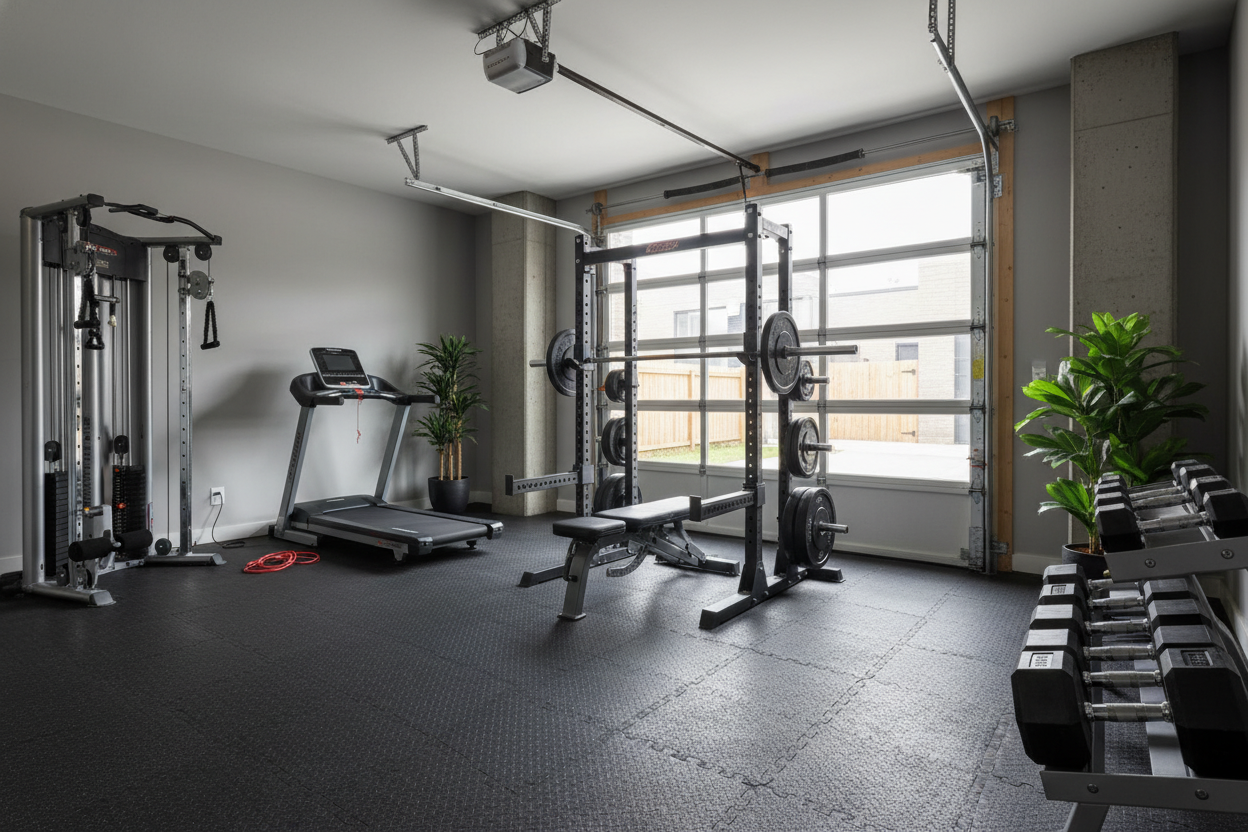
I remember the day I finally quit my big-box gym. They had just raised the 'amenity fee' for the third time, and the leg extension machine had been out of order for six weeks. I went home, cleared out a 10-by-12 space in my garage, and started scrolling through the different types of weight machine options online. I almost made the classic mistake of buying the first cheap lat pulldown I saw on Facebook Marketplace.
Quick Takeaways
- Selectorized stacks are fast but expensive and heavy to ship.
- Plate-loaded leverage machines offer the best value if you already own weight plates.
- Cable towers provide constant tension that gravity-based weights cannot replicate.
- A stable, heavy-duty bench is the foundation of any machine-based setup.
The Real Problem With Copying Commercial Gyms
Commercial gyms have thousands of square feet and a budget that allows for single-use machines. In a home gym, every inch is a premium. Most people fail because they try to recreate a Life Fitness circuit in a two-car garage. You end up with a 400-pound paperweight that only works your triceps and leaves no room for a power rack.
The secret isn't buying more gear; it's understanding the mechanics. Before you drop two grand, you need to categorize machines by how they move. Are you looking for the speed of a pin, the raw feel of a leverage arm, or the versatility of a pulley? Choosing the wrong category is how you end up with a garage full of regret and no room to park your truck.
Pin-Loaded Stacks: The Commercial Vibe That Costs a Fortune
Selectorized machines are the ones with the iron stack and the magnetic pin. They are the kings of convenience. If you love running drop sets where you strip weight every 10 seconds, these are unbeatable. You aren't fumbling with collars or lugging 45-pound plates across the room.
However, the hidden costs are brutal. You aren't just paying for the steel frame; you're paying for the shipping on 200 to 300 pounds of dead weight. Most of these units are also single-function. Before you commit, you should be making sense of weight machine types to see if that convenience is worth the massive footprint and the four-figure price tag.
Plate-Loaded Leverage: The Secret Weapon for Home Gyms
If you're building a gym on a budget, leverage machines are the holy grail. These don't have cables or weight stacks. Instead, you load your existing Olympic plates onto a steel arm that pivots on a bearing. You're essentially buying the ergonomics of a machine with the cost-effectiveness of free weights.
An independent arms chest press is a prime example. It mimics the converging path of a high-end commercial press, but since you provide the plates, the unit itself is much lighter and cheaper to ship. Plus, 11-gauge steel leverage arms rarely break. There are no cables to snap or pulleys to melt.
Cable Towers: The Ultimate Space-Saving Loophole
Cable machines are the only gear that actually challenges the 'single-use' rule. A solid functional trainer or a single cable column allows for hundreds of movements in a footprint no bigger than a floor mat. The magic here is constant tension. Unlike a barbell, where the weight gets 'light' at the top of a curl, a cable pulls against you through the entire range of motion.
I personally prefer a 2:1 ratio system for home use. It gives you more cable travel, which is essential for lunges or shadow boxing. Just make sure the pulleys are aluminum rather than cheap plastic; plastic pulleys tend to develop flat spots after a year of heavy use, which ruins that smooth, buttery feel you're paying for.
Why Your Machine Is Only as Good as What You're Sitting On
I've seen guys spend $1,500 on a high-end cable crossover only to use a $60 wobbly bench they bought at a big-box store. If your seat is shifting while you're trying to isolate your chest, your nervous system will never let you push to true failure. Stability is the precursor to strength.
You need a heavy-duty adjustable weight bench that can be locked into place. Whether you're doing seated cable rows or using a rack-attached leverage arm, the bench is your anchor. Investing in a solid weight bench is often more important than the machine itself because it serves as the cockpit for every other movement in your gym.
The Final Verdict: What Survived My Garage Gym Purge
After five years of testing, dropping, and selling gear, my garage looks a lot different. I realized I didn't need a dedicated machine for every muscle group. I needed a high-quality cable tower and a versatile leverage system. I actually tracked the cost of weight machine gear over twelve months and found that I was getting 90% of my results from just 20% of the equipment.
Don't buy for the person you hope to be in six months; buy for the space you have today. Start with a multi-functional cable unit or a plate-loaded chest press. If you have to move a mountain of iron just to do one set of curls, you'll eventually stop doing them. Keep it simple, keep it heavy, and make sure every piece of steel earns its spot on your floor.
FAQ
Are plate-loaded machines better than pin-loaded?
For home gyms, usually yes. They are cheaper because you don't pay for the weight stack, and they are easier to move. Pin-loaded is better only if you prioritize fast weight changes for high-intensity techniques.
How much ceiling height do I need for a cable tower?
Most functional trainers require at least 82 to 84 inches. Always measure your ceiling and factor in an extra couple of inches for the assembly process, or you'll be hitting the joists every time you do a pulldown.
Can I build muscle using only machines?
Absolutely. Your muscles don't know the difference between a 45-pound plate on a bar and a 45-pound plate on a leverage arm. Machines actually make it easier to reach true failure because you don't have to worry about balancing the weight.
Share:
Why Most At Home Weights Feel Like Awkward, Expensive Trash
I Pushed the Apex Weight Bench to Its Breaking Point