
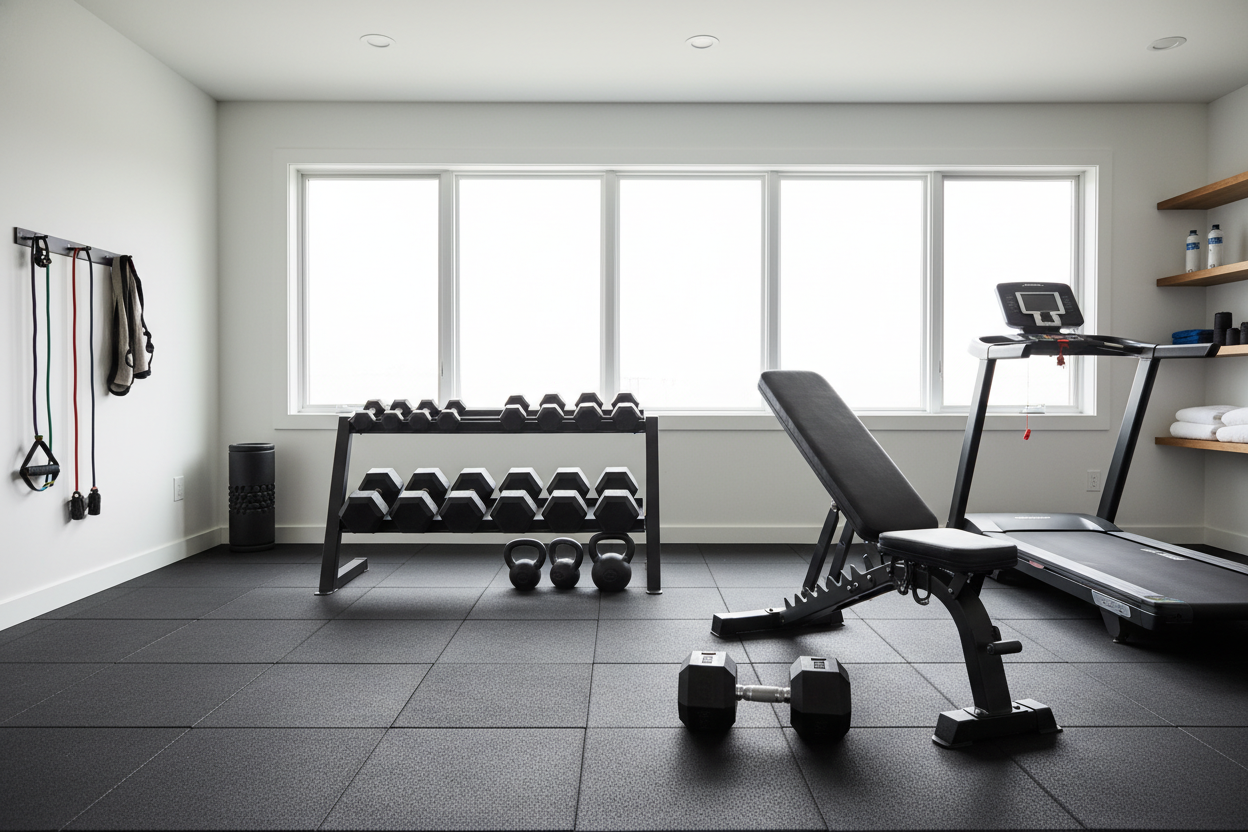
I spent three years training in a garage with a ceiling so low I couldn't overhead press standing up. I’ve bought every type of at home weights you can imagine—from those cheap concrete-filled plastic plates that leak grey dust on your floor to high-end urethane dumbbells. Most of it is trash. It’s designed to look good in a thirty-second ad, not to survive a heavy set of Bulgarian split squats or a high-volume shoulder day.
Quick Takeaways
- Avoid concrete-filled plastic; it cracks and leaks under pressure.
- Adjustable dumbbells are great for space but usually can't be dropped.
- Standard 1-inch plates are a dead end; go for 2-inch Olympic gear if you plan to get strong.
- A solid bench is just as important as the iron itself.
The Trendy Space-Saving Gimmick Trap
The 'space-saving' obsession is a total trap for new lifters. Companies sell you these weird, bulbous weights or sand-filled bags that don't balance right. If you're doing a curl and the weight is shifting inside a bag or clanking inside a plastic housing, you aren't focusing on the muscle. You're focusing on not breaking the equipment or your own wrist.
These 'lifestyle' weights usually end up as expensive doorstops because they feel like toys. When your exercise weights set is shaped like a kettle-bell-hybrid-block-thing, the center of gravity is all over the place. Real lifting requires predictable mechanics. If you want to actually build muscle, you need weights home that mimic the feel of a real gym, not a gimmick that fits neatly in a designer basket.
Dial, Spin, or Fixed? The Truth About Home Dumbbells
Dial-a-weight systems are the most popular dumbbells for at home workouts. They are convenient, but they have a fatal flaw: they are fragile. If you're pushing for a PR and have to drop them, the internal plastic gears can shatter. I've seen it happen, and it's a $400 mistake you only make once. If you're a heavy hitter, stay away from the dials.
If you want something that lasts, look at spin-lock handles or PowerBlocks. You can save a ton of cash building the best home gym weight setup by grabbing old 10-lb plates from a garage sale and loading them onto a heavy-duty threaded handle. It takes an extra minute to change weights, but those handles will outlive you. Fixed hex dumbbells are the gold standard for feel, but a full set of weights for home gym use in hex form will eat up your entire floor plan and your savings account.
Spotting Fake Heavy-Duty Home Equipment
Be wary of 'heavy-duty' claims on budget sites. A lot of weight lifting sets for home use 14-gauge or even 16-gauge steel. That’s basically a soda can. I’ve seen cheap racks buckle under 225 lbs because the 'steel' was actually thin-walled tubing designed for a clothes rack, not a squat session. That is exactly why most compact gym for home setups snap under heavy weight—they prioritize shipping weight over structural integrity.
Look for 11-gauge steel if you plan on actually lifting. If the box says '300-lb capacity' and the entire rack weighs only 40 lbs, it's lying to you. Real weight for home workout setups should feel heavy before you even put the plates on. If you can pick up your squat stand with one hand, don't trust it with a loaded barbell over your neck.
When Hand Weights Stop Working (And What to Do Next)
You will eventually outgrow a simple set of weights for home. Once you can comfortably goblet squat your heaviest dumbbell for 15 reps, your progress will stall. You can only do so many lunges before you need real load. That’s the moment you need a real weight bench with barbell rack. A barbell allows for micro-loading—adding just 2.5 lbs at a time—which is the secret to getting strong without hitting a wall every three weeks.
Transitioning to a barbell setup also opens up the world of Olympic lifting and heavy deadlifts. You can't get the same posterior chain development from a 50-lb dumbbell that you can from a 300-lb pull. Don't be afraid of the transition; it's the natural evolution of any serious home weight set. Buying a gym set with weights that includes a 7-foot bar is the best investment you'll ever make for your long-term strength.
The Only Order You Should Buy Home Weights In
Don't buy everything at once. Start with one pair of adjustable dumbbells that go up to at least 50 lbs. This covers 90% of your isolation work and accessory movements. Next, get a flat or adjustable utility bench. Finally, move to the rack and barbell. Following this path ensures you actually use what you buy before expanding into a complete home gym.
I once bought a '300lb Olympic set' that was so poorly machined the plates rattled like a tambourine every time I moved the bar. The center holes were nearly 2.1 inches instead of the standard 2 inches. It drove me crazy. I eventually sold them and bought a set of used iron plates that actually fit. Lesson learned: specs matter more than the 'new' smell of cheap paint.
FAQ
Are rubber hex dumbbells better than iron?
Rubber is quieter and won't rust, but they smell like a tire fire for the first month. Iron is cheaper and lasts forever if you keep it dry. If you're in a garage, go iron; if you're in a spare bedroom, go rubber.
Can I use standard 1-inch weights?
Only if you never plan on lifting more than 100 lbs. The bars bend under real weight, and the plate selection is terrible. Stick to 2-inch Olympic gear from the start to save money in the long run.
Is it safe to drop adjustable weights?
Generally, no. Unless they are specific heavy-duty brands like Ironmaster, the internal locking pins are the weak point. If you drop a dial-style dumbbell from shoulder height, expect it to break.
Share:
Why Real Military Exercise Equipment Rarely Belongs in a Home Gym
The Only Types of Weight Machine Actually Worth Your Floor Space