
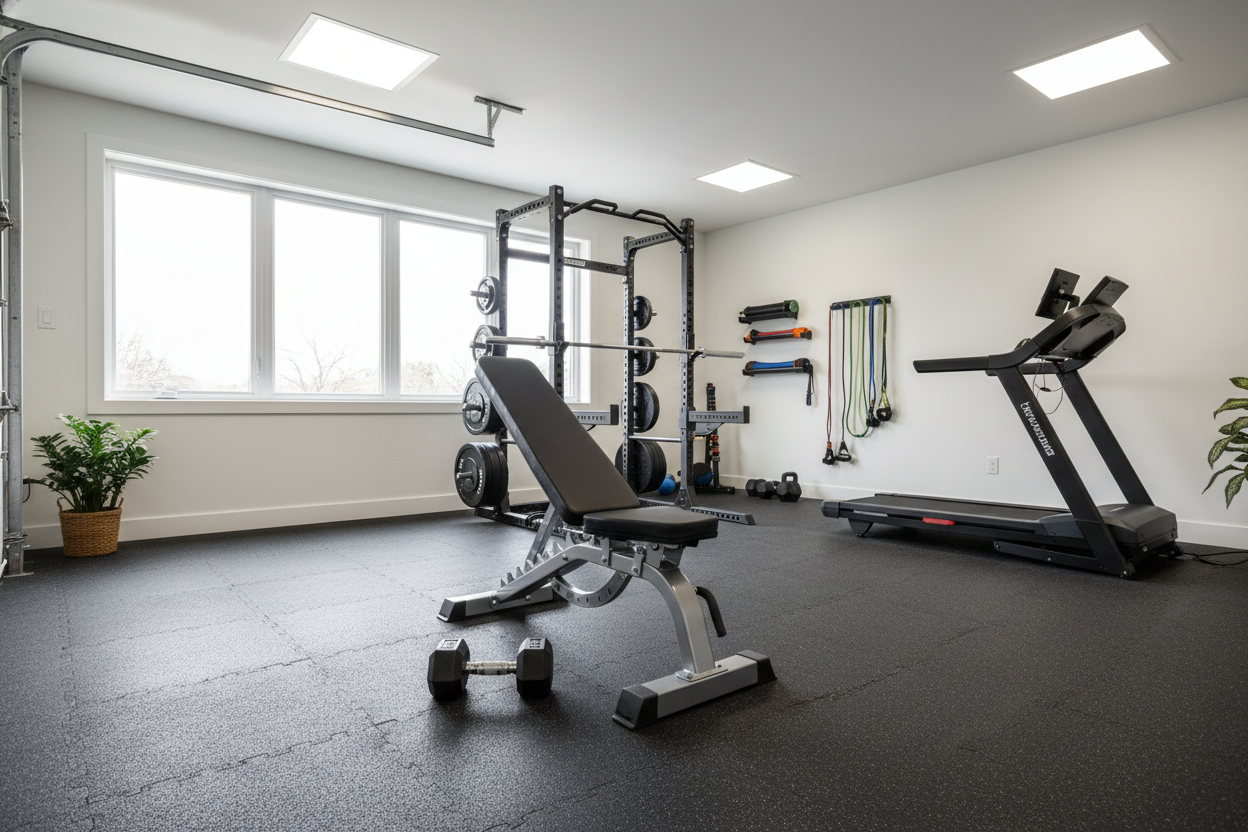
I remember the first time I felt a bench give way. It was a Saturday morning, 225 lbs on the bar, and as I went for the third rep, the back pad shifted two inches to the left. That is the exact moment you realize adjustable fitness benches shouldn't be the place you try to save fifty bucks. When you're pinned under a heavy bar, the last thing you want to wonder is if a $0.50 spring is about to shear off.
- Ladder mechanisms beat pop-pins for safety and speed every single time.
- Ignore 'static' weight limits; if the steel is thinner than 11-gauge, it will wobble.
- A pad gap over two inches will ruin your arch and your lower back.
- Look for a tripod front-foot design to allow for proper leg drive.
The Moment You Realize Your Bench Is Garbage
You’re focused on the press, your breathing, and your leg drive. You aren't supposed to be thinking about the structural integrity of the steel beneath you. But when that cheap metal starts to groan under a moderate load, your central nervous system sends a massive 'abort' signal. You can't hit a PR if you don't trust the platform.
A 'bench adjustable' frame that wobbles isn't just annoying; it’s a mental anchor. I’ve seen budget benches with so much side-to-side play that the lifter had to consciously balance the bench while balancing the barbell. That is a recipe for a torn rotator cuff or worse. If your bench feels like a folding card table, it belongs in the scrap heap, not your garage.
Pop-Pin vs. Ladder Mechanisms: Don't Get Trapped
Pop-pins are the industry standard for 'cheap.' They get stuck, the internal springs lose tension, and if you don't seat the pin perfectly into the hole, the whole back pad can collapse under load. It’s a binary failure point that I’ve seen fail more than once. A ladder-style workout adjustable bench is a massive upgrade because it uses gravity and thick steel 'teeth' to lock the angle.
Ladder systems are faster to adjust and significantly harder to break. This is exactly why that $150 adjustable bench with weights is a terrible idea. You are essentially trusting your spine to a thin piece of mystery metal. I prefer a ladder because I can see with my own eyes that the support is locked in before I lie down.
The Dreaded Pad Gap (And Why Your Lower Back Hates It)
The gap is the enemy of any serious lifter. On a low-end exercise adjustable bench, you often find a three-inch canyon right where your lumbar needs support when the bench is flat. If you’re trying to set a powerlifting arch, your butt ends up on one pad and your mid-back on the other, leaving your spine bridging a literal hole.
Premium designs use a sliding seat or a specific hinge geometry to keep that gap under two inches. I’ve trained on benches where the gap was so wide I actually felt the hard plastic edge of the plywood base digging into my vertebrae. It’s distracting, painful, and completely avoidable if you buy a bench designed by people who actually lift weights.
Why Most Weight Capacity Ratings Are Complete Lies
Brands love to slap a '1,000-lb capacity' sticker on a box made of thin, 14-gauge steel. What they don't tell you is that's a static load rating. They slowly piled sandbags on it in a factory until it buckled. That has nothing to do with a 200-lb man dropping two 100-lb dumbbells onto the pads after a set of presses.
That’s a dynamic load. A cheap bench might hold the weight, but it will flex and twist under the impact. I look for benches that weigh at least 60 to 80 lbs themselves. If the bench is light enough to pick up with one finger, it’s going to dance across the floor the second you try to put some real weight on it.
What to Actually Look For When You Upgrade
When you're ready to stop gambling, look for 11-gauge steel and a frame that uses a tripod (three-post) design. A T-shaped front foot always gets in the way of your feet, killing your ability to get a good stretch and leg drive. The Adjustable Weight Bench OWB01 is a great example of a bench that uses a ladder system and keeps the footprint out of your way.
Check the pad firmness too. You want high-density foam that doesn't bottom out. If you can feel the wood through the vinyl with your thumb, your shoulders will feel it during a max effort set. Do your back a favor and browse for a real weight bench that actually meets these specs before you end up as a 'gym fail' video contributor.
How wide should a bench pad be?
Ideally, 11 to 12 inches. Anything narrower and your shoulder blades will hang off the sides, which is unstable. Anything wider than 12.5 inches can start to interfere with your range of motion at the bottom of a press.
Are bolt-together benches worse than welded ones?
Not necessarily. A well-engineered bolt-together bench using Grade 8 hardware can be just as stiff as a welded one, and it's often cheaper to ship. Just make sure you use a real wrench to tighten it, not the flimsy toy tool they include in the box.
Can I use an adjustable bench for step-ups?
You can, but be careful. Because the weight is offset, a light adjustable bench can tip if you put all your weight on the very edge of the headrest. If you're doing step-ups, keep your foot directly over the main support post.
Share:
Where Do Gyms Buy Their Equipment? (And Can You Buy Direct?)
Why Most Fitness Bundles Are Trash (And the Best At Home Workout Set)