
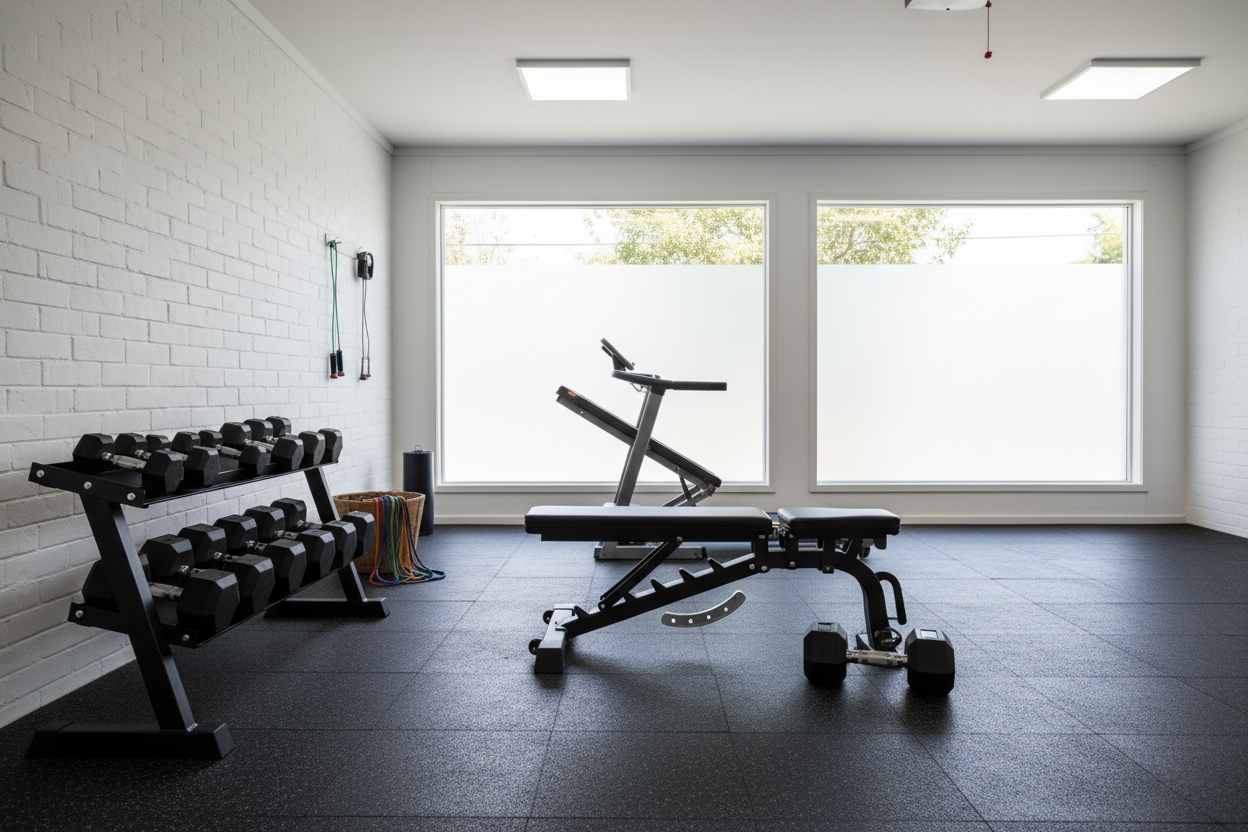
I’ve spent the last decade building and rebuilding my garage gym, and I’ve learned a hard lesson: marketing teams love to sell you 'clutter' under the guise of 'completeness.' You’ve seen the ads—a 50-piece kit for the price of a decent steak dinner. You open the box and find two light dumbbells, a jump rope that tangles if you look at it wrong, and forty-seven different colored rubber bands that will snap the moment you try a real row.
Finding the best at home workout set isn't about maximizing the item count in your cart. It’s about buying the three or four pieces of heavy-duty gear that will actually survive a high-volume session. If your equipment feels like a toy, your brain will treat your workout like a game. We want iron, steel, and stability—not a box full of plastic landfill.
Quick Takeaways
- Ignore the '50-in-1' bundles; they are 90% plastic filler.
- Prioritize a high-capacity adjustable bench over variety.
- Cast iron or urethane dumbbells offer the best ROI for strength.
- If a piece of equipment folds into a suitcase, it’s probably not safe for heavy lifting.
The Pre-Packaged 'Starter Kit' Trap
The fitness industry has a dirty little secret. They know that beginners are intimidated by the price of a real rack or a set of quality bells. To solve this, they create 'starter kits' that look like a bargain. They’ll give you one semi-decent item—maybe a 20-lb kettlebell—and then pack the box with 'best at home training equipment' that is essentially trash. I’m talking about thin yoga mats that tear on day one and plastic collars that don't actually hold weight on a bar.
These bundles are designed for the 'unboxing' experience, not the training experience. When you see a kit advertised with forty different accessories, ask yourself: 'How many of these would I buy individually?' Usually, the answer is zero. You’re paying for the convenience of one-click shopping, but you’re sacrificing the structural integrity of your gym. I’ve seen 'heavy duty' door-frame pull-up bars in these kits that wouldn't hold a toddler, let alone a 220-lb man doing weighted reps.
Stop buying filler. If you have $500 to spend, spend it on two things that will last twenty years, not twenty things that will last two months. A curated setup beats a bundled mess every single time. You want gear that can handle sweat, chalk, and the occasional dropped plate without shattering into a thousand pieces of 'high-impact' plastic.
What the Best At Home Workout Set Actually Needs
A functional Home Gym foundation rests on three non-negotiable pillars: progressive resistance, mechanical stability, and joint safety. If your setup doesn't allow you to add weight over time, you aren't training; you're just moving. You need a setup that grows with you. That means dumbbells that go heavy enough to challenge your press and a bench that doesn't wobble when you're holding 80s over your face.
Mechanical stability is where most cheap sets fail. If the bench creaks when you sit on it, your nervous system will subconsciously hold you back from pushing your limits. You can't hit a PR if you're worried about the welds on your equipment snapping. Your setup should feel like an extension of the floor—immovable and reliable.
Heavy Iron Beats Flimsy Tubes Every Time
Resistance bands have their place for warm-ups and face pulls, but they are not the best at home weight training equipment for building raw strength. The resistance curve of a band is wonky—it’s easiest at the bottom and hardest at the top. Iron doesn't lie. A 50-lb dumbbell is 50 lbs at the start of the rep and 50 lbs at the end. This consistency is vital for tracking progress.
I always tell people to invest in cast iron or urethane-coated dumbbells. They don't leak sand, they don't lose their shape, and they have a resale value that stays high. If you buy a cheap set of water-filled weights, you’re just buying future trash. Buy the iron once, and you’ll never have to buy it again.
A Bench That Won't Collapse Mid-Press
The bench is the most underrated safety feature in your gym. I’ve seen guys spend $800 on dumbbells and then try to press them on a $49 folding bench from a big-box store. That is a recipe for a trip to the ER. You need a frame made of at least 11-gauge or 12-gauge steel with a wide footprint. Look for a bench with a weight capacity of at least 600 lbs—remember, that includes your body weight plus the dumbbells.
I personally recommend the Adjustable Weight Bench Owb01 because it handles the heavy stuff without that terrifying side-to-side sway. It has the structural integrity required for incline work and flat presses, and the padding doesn't bottom out after six months of use. If you can’t trust your bench, you can’t trust your training.
Curating the Best At Home Workout Accessories
Once you have the big items, you can look for the best at home workout accessories. But again, keep it lean. You don't need a fancy electronic jump rope. You need a pair of fat grips to build forearm strength and maybe some horse stall mats for the floor. Quality flooring is an 'accessory' that people always forget until they crack their foundation dropping a deadlift.
Thick grip attachments are a cheap way to make your current dumbbells feel twice as heavy and twice as difficult. That’s a smart investment. A 'core slider' that is just a piece of plastic with foam on it? Not so much. Stick to accessories that solve a specific problem, like grip fatigue or floor protection.
Scaling Up: When You Outgrow the Basics
Eventually, you’re going to max out those dumbbells. It’s a great problem to have, but it means your 'set' needs an upgrade. This is the point where you stop looking for things that hide under your bed. Realize that The Best At Home Weight Lifting Equipment Doesn't Fold Away. If you want to move serious weight, you need a permanent footprint.
When you reach the limit of what a standalone bench and dumbbells can provide, the logical next step is a Smith Machine Home Gym Station. This allows you to push to failure on squats and presses without needing a spotter. It’s the ultimate 'set' upgrade because it combines the safety of a machine with the versatility of a rack, all while keeping your garage organized. Stop thinking in terms of 'kits' and start thinking in terms of 'stations.'
My Personal Lesson in 'Cheap' Gear
A few years ago, I bought a 'complete' barbell set from a guy on Craigslist. It was one of those cheap, hollow bars with plastic-coated cement plates. I thought I got a steal. Three weeks in, I was doing floor presses and the bar literally bent—permanently—under 150 lbs. It didn't snap, but it was ruined. I ended up spending more money replacing that junk with a real Olympic bar than if I had just bought the good stuff first. Buy once, cry once.
FAQ
Is a 40-lb dumbbell set enough to start?
For most people, yes, but you will outgrow it for lower body movements like lunges and squats within three months. Look for an adjustable set that can expand to 50 or 80 lbs so you don't have to buy a whole new rack later.
Are resistance bands a good substitute for weights?
They are a supplement, not a substitute. They are great for travel or rehab, but for building muscle density and bone strength, you need the mechanical tension that only weights provide.
How much space do I really need for a home set?
You can get a world-class workout in a 6x6 foot area if you have a quality adjustable bench and a set of dumbbells. The key is vertical storage—keep your weights off the floor and you’ll have plenty of room to move.
Share:
The Spine-Pinching Reality of Cheap Adjustable Fitness Benches
Why a Single Free Weight Barbell Beats a Room Full of Machines