
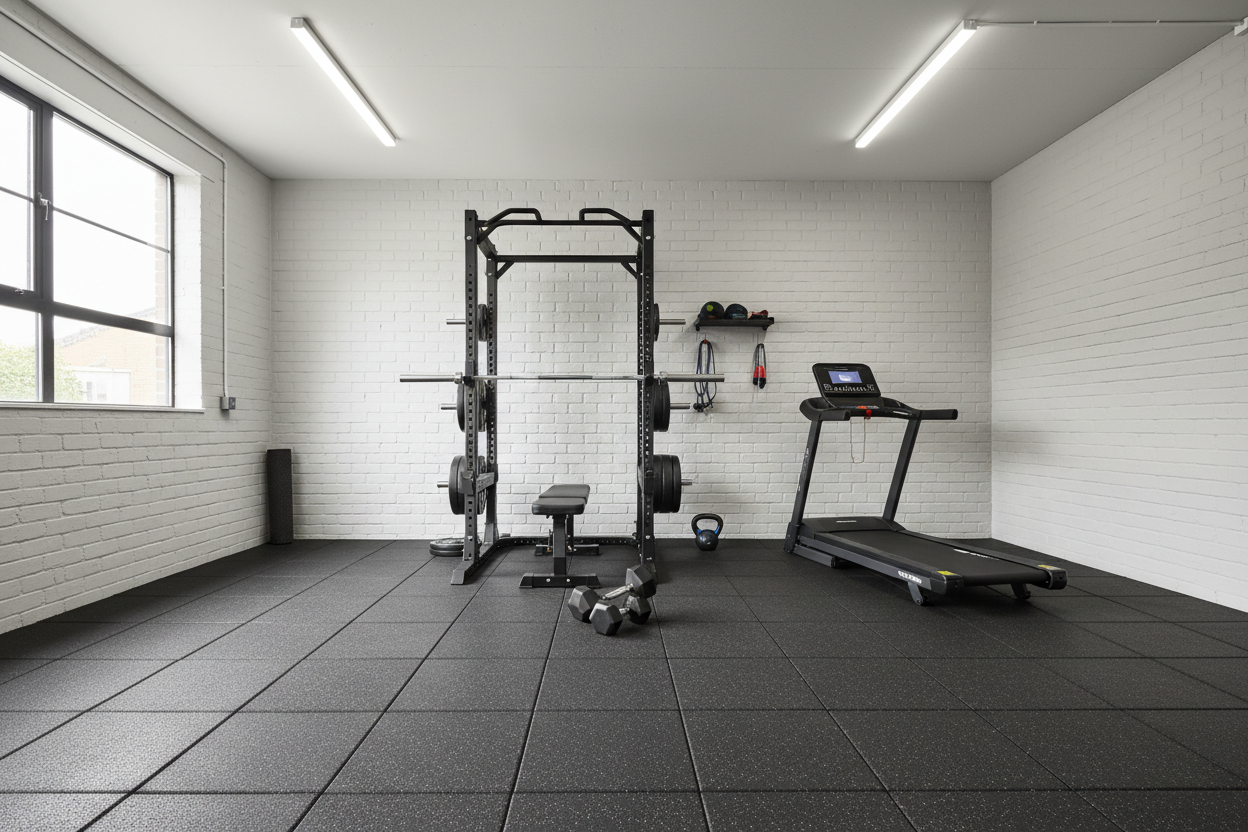
I remember the day my first 'budget' cable machine arrived. It looked great in the photos, but the moment I loaded 100 pounds, the frame flexed like a pool noodle. That’s the reality of researching exercise machine types online—most of what you see is built for a showroom, not a heavy training session.
If you’re tired of your local gym raising rates while half the equipment sits with 'Out of Order' signs, you’re likely looking to bring some iron home. But you cannot just buy everything. You need to know which pieces of common gym equipment are actually worth the floor space and which will end up holding your laundry.
Quick Takeaways
- Plate-loaded machines usually beat selectorized stacks for home use due to lower cost and easier maintenance.
- Cables are the most versatile investment you can make outside of a power rack.
- Avoid 'all-in-one' machines that use thin-walled 14-gauge steel; they simply won't last.
- Dedicated leg machines are great, but only if you have at least 40 square feet to spare.
Welcome to the Jungle (Why Most Equipment Floors Are Traps)
Walk into any big-box gym and you’ll see rows of common machines at the gym that you probably never use. Why are they there? Because a gym with 50 machines looks more 'professional' than a gym with five racks and a lot of open space. It’s a marketing tactic to justify membership fees.
For those of us training in a garage or basement, redundancy is the enemy. You don't need three different chest press machines. You need one high-quality setup that covers multiple angles. Most common workout machines are designed to isolate a single muscle in a way that’s easily replaceable with a set of dumbbells or a cable handle.
Selectorized vs Plate-Loaded: The Great Debate
When looking at typical gym equipment, you have two choices: weight stacks (selectorized) or pegs you slide plates onto. Weight stacks are fast. You move a pin and go. But they are incredibly heavy to ship and usually cost twice as much as their plate-loaded cousins.
If you are investing in a home gym, I almost always recommend plate-loaded gear. You already own the plates. Why pay a manufacturer $500 extra to ship you 200 pounds of milled steel? Plus, if a cable snaps on a plate-loaded machine, it’s a five-minute fix. If the guide rods on a selectorized stack get bent or rusted, you’re looking at a real nightmare.
The Big Four: Exercise Machine Types That Actually Matter
Not all typical gym machines are created equal. If you’re going to spend money on something that isn't a barbell, it should provide a strength curve or a level of stability that free weights can't match. These are the four categories that actually earn their keep in a serious program.
Cable Cross and Functional Trainers (The Versatility Kings)
A good functional trainer is the only piece of common workout machines that I’d argue is mandatory. It provides constant tension throughout the entire range of motion—something a dumbbell cannot do because of gravity. Whether it's face pulls, cable crossovers, or tricep pushdowns, the versatility per square foot is unbeatable.
Smith Machines (Stop Hating, Start Growing)
The Smith machine gets a bad rap from the 'functional training' crowd, but if your goal is hypertrophy, it’s a beast. When you’re training solo in a garage, a Smith machine home gym station allows you to push to absolute failure on squats or presses without worrying about a bar crushing your windpipe. The fixed path lets you focus entirely on the muscle contraction.
Dedicated Isolation Rigs (Leg Presses and Hack Squats)
Lower body machines are the biggest space hogs. A real-deal leg press has a footprint of about 4x7 feet. If you’re buying one, skip the cheap bolt-together units with plastic pulleys. Look for linear bearings and a weight capacity of at least 1,000 lbs. If the machine wobbles when you're doing calf raises, it’s a paperweight.
Niche Builders (Glute Drives and Pullovers)
Some movements are just awkward with a barbell. Hip thrusts are the prime example—setting up a bar across your lap with pads and a bench is a chore. A dedicated hip thrust machine glute muscles building HT01 turns a 10-minute setup into a 10-second one. These niche pieces are worth it if that specific movement is a cornerstone of your programming.
Spotting the Fakes: Common Gym Machines to Avoid
Be wary of common gym machines sold at big-box sporting goods stores. If the steel is thinner than 11-gauge (roughly 3mm), it’s going to feel shaky. I’ve seen 'lat pulldown' attachments for power racks that use nylon bushings instead of ball bearings; they feel like pulling a sled through sand.
You need to understand what actually makes the best workout gym machines worth buying. It’s the pulleys, the cable rating (look for 2,000 lb aircraft grade), and the pivot points. If a machine uses a simple bolt as a pivot instead of a pillow block bearing, it will develop 'play' and start squeaking within months.
How to Actually Build Your Setup
Start with your rack and a bench. Then, add a cable system. Only after you have those should you look at specialized exercise machine types like hack squats or row machines. Your space is finite. Every machine you add is one less square foot for deadlifts or mobility work. Buy once, cry once.
Personal Experience: The $300 Lesson
Early in my lifting days, I bought one of those '7-in-1' home gym towers. It had a bench, a fly deck, and a leg extension all built into one frame. It was miserable. The range of motion on the fly deck was so short it didn't even hit my chest, and the leg extension hit my shins in the wrong spot. I ended up selling it for $50 on Craigslist just to get it out of my sight. Now, I only buy pieces that do one thing perfectly rather than five things poorly.
FAQ
Are plate-loaded machines as good as the ones with weight stacks?
Yes, and often better for home use. The resistance is the same, but they are easier to move, cheaper to buy, and you can micro-load them with 1.25 lb plates for incremental progress.
How much space do I need for a functional trainer?
Most require a footprint of about 3 feet deep and 5 feet wide, but you need at least 2 feet of clearance on each side to actually use the handles through their full range.
What is the most durable brand for home gym machines?
Look for companies that use 11-gauge steel and commercial-grade pulleys. Brands that cater to garage gym owners specifically usually offer better durability than generic Amazon sellers.
Share:
Finding the Best At Home Leg Machine When You Have Zero Space
I Finally Bought Fun Home Exercise Equipment That Isn't Junk