
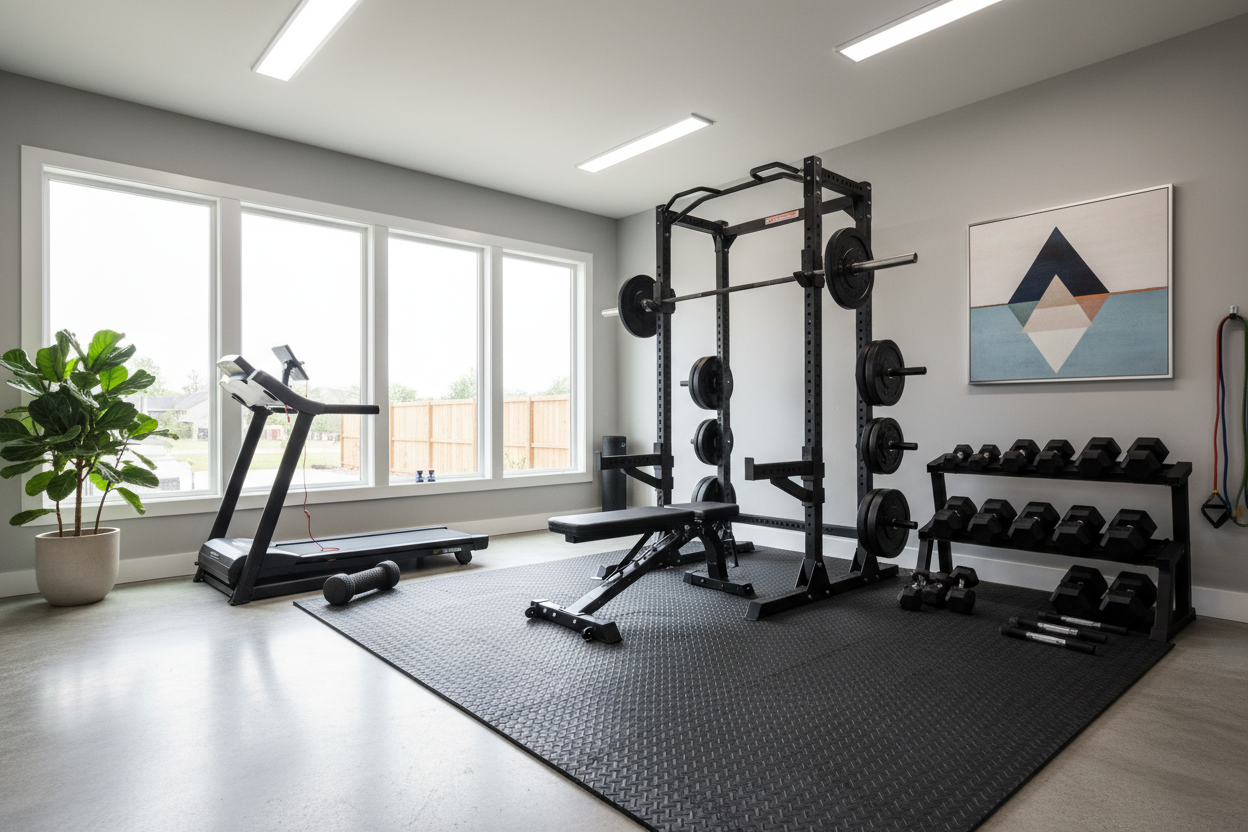
We've all been there. You're scrolling through Amazon at 11 PM after your local gym hiked its membership fees again, convinced that a new set of exercise equipment in home spaces will be the magic bullet for your consistency. You buy the foldable treadmill or the 'as-seen-on-TV' core carver. Three weeks later, that treadmill is draped in wet hoodies and the core carver is tucked behind the guest bed, never to be seen again.
I've spent over a decade building, breaking, and selling off gear. I've tested dozens of pieces of exercise equipment for home use, and I’ve learned that most of it fails because it ignores human nature. We buy for the person we want to be, but we train as the person we actually are—tired, busy, and looking for the path of least resistance.
Quick Takeaways
- The 3-Minute Rule: If it takes longer than 3 minutes to set up, you won't do it.
- Visibility is Key: Gear stored under the bed is gear that is never used.
- Safety First: Solo training requires self-spotting mechanisms.
- Quality Over Variety: One heavy kettlebell beats five cheap resistance bands.
Why Your $800 Treadmill is Now a Laundry Rack
The treadmill is the ultimate victim of the 'guilt-buy' cycle. It’s a massive piece of machinery that represents a significant financial commitment, yet it’s the first thing to stop moving. Why? Because walking to nowhere in a basement is boring, and if the belt isn't commercial grade, the deck feels like running on a wet marshmallow. The psychological gap between the 'New Year, New Me' purchase and the 'Tuesday at 6 PM' reality is where fitness dreams go to die.
Most fitness tools for home are sold on the promise of convenience, but they actually add mental load. You have to clear the floor, plug it in, wait for the console to boot up, and navigate three menus just to start walking. When I see people hunting for at-home training equipment, they often overlook the fact that the best gear is the stuff that’s ready to go the second you drop your keys.
The 3-Minute 'Friction' Rule Nobody Talks After
Friction is the enemy of the home workout. In a commercial gym, the friction happens during the commute. Once you're there, you're locked in. At home, the friction happens in the transitions. If you have to move a coffee table and unhook a bungee cord to start your set, your brain will find a reason to skip it. This is why I’m often skeptical of multi-functional machines. I often ask, is all in one exercise equipment for home just a gimmick? If it takes ten minutes to adjust the pulleys between chest flys and leg extensions, it's a gimmick.
Real training happens when you can walk into your space and grab a handle. I once owned a 'compact' cable system that required me to swap three different pins just to change the weight. I used it twice. Now, I stick to things with zero setup time. If you’re looking for workout equipment for home use, prioritize items that stay 'live.' A rack that’s always loaded or a bike that’s always plugged in will see 10x the usage of a 'stow-away' system.
Out of Sight, Out of Mind (And Other Storage Lies)
The biggest lie in the industry is 'folds for easy storage.' If you store your indoor fitness equipment under the bed, you are essentially burying it. Out of sight truly is out of mind. I’ve seen countless people buy home exercise sets thinking they’ll pull them out every morning, only to realize that the effort of dragging a 50-lb box out of a closet is enough to kill their motivation.
If you don't have a dedicated spot where your gear can live permanently, you need to buy smaller. A pair of high-quality adjustable dumbbells on a stand is infinitely better than a full weightlifting at home equipment set that lives in the garage rafters. Keep your tools where you can see them. The visual cue of a kettlebell sitting by the TV is a much more powerful motivator than a hidden gym.
Gear That Actually Survives the 'Daily Use' Test
So, what actually gets used? In my experience, it’s the 'Big Rocks.' This means a solid place to squat, a way to pull your own body weight, and a reliable piece of cardio gear. For many, a foldable upright exercise bike is the perfect entry point because it has a small footprint but offers a high-intensity return. It doesn't require you to be a master of technique to get a sweat going.
When building a functional home gym, you want to invest in durability. Avoid the plastic-heavy 'newest workout equipment' and stick to steel and iron. A 300-lb capacity bench and a set of iron plates will outlive you. I’ve dropped 45-lb bumpers on my floor for years, and while the floor is a bit beat up, the gear is fine. Cheap gear, on the other hand, develops rattles and loose bolts within six months.
Going Heavy Without a Spotter
Training at home means you’re often flying solo. This changes the math on safety. You can’t go for a 1-rep max on a bench press in your bedroom without a plan for when you fail. This is where a smith machine home gym station becomes a legitimate lifesaver. It allows you to push to absolute failure on movements like squats and presses because a quick turn of the wrist locks the bar in place.
I used to be a free-weight purist, but after a close call with a 225-lb bar pinned to my chest while my wife was at work, I changed my tune. If you’re training alone, you need mechanical safety. Whether it’s spotter arms in a power rack or a guided smith machine, don't let your ego get you injured in your own house.
How to Buy Stuff You'll Actually Pick Up
Stop buying gear for the person you want to become on January 1st. Instead, audit what you actually do. Do you hate running? Then don't buy a treadmill. Do you enjoy lifting heavy things? Then stop buying 5-lb neoprene dumbbells. Buy the equipment that facilitates the workouts you already enjoy doing at the commercial gym.
The best at-home fitness equipment is the stuff that makes you feel like an athlete the moment you touch it. It should be heavy, it should be stable, and it should be ready to work when you are. Start small, buy quality, and for the love of your floorboards, stop buying gear that's designed to be hidden away.
FAQ
How much space do I really need for a home gym?
You can do a lot in a 6x8 foot space. That's enough for a yoga mat, a set of dumbbells, and a bench. If you want a full rack, you'll need at least 10x10 to account for plate loading on the sides of the bar.
Is cheap exercise equipment for home worth it?
Generally, no. Cheap steel vibrates, cheap welds crack, and cheap cables snap. Spend the extra 20% on a reputable brand; it will last ten times longer and have a much higher resale value if you decide to upgrade later.
How do I stop my home gym from smelling?
Airflow is everything. If you're in a garage, get a high-velocity fan. If you're indoors, use a dehumidifier. Also, wipe down your gear. Sweat is corrosive and will rust your bars and rot your bench upholstery over time.
Share:
The Only Beginner Gym Machine Workout You Actually Need
Why Stock Pictures of Weight Benches Are Lying to You