
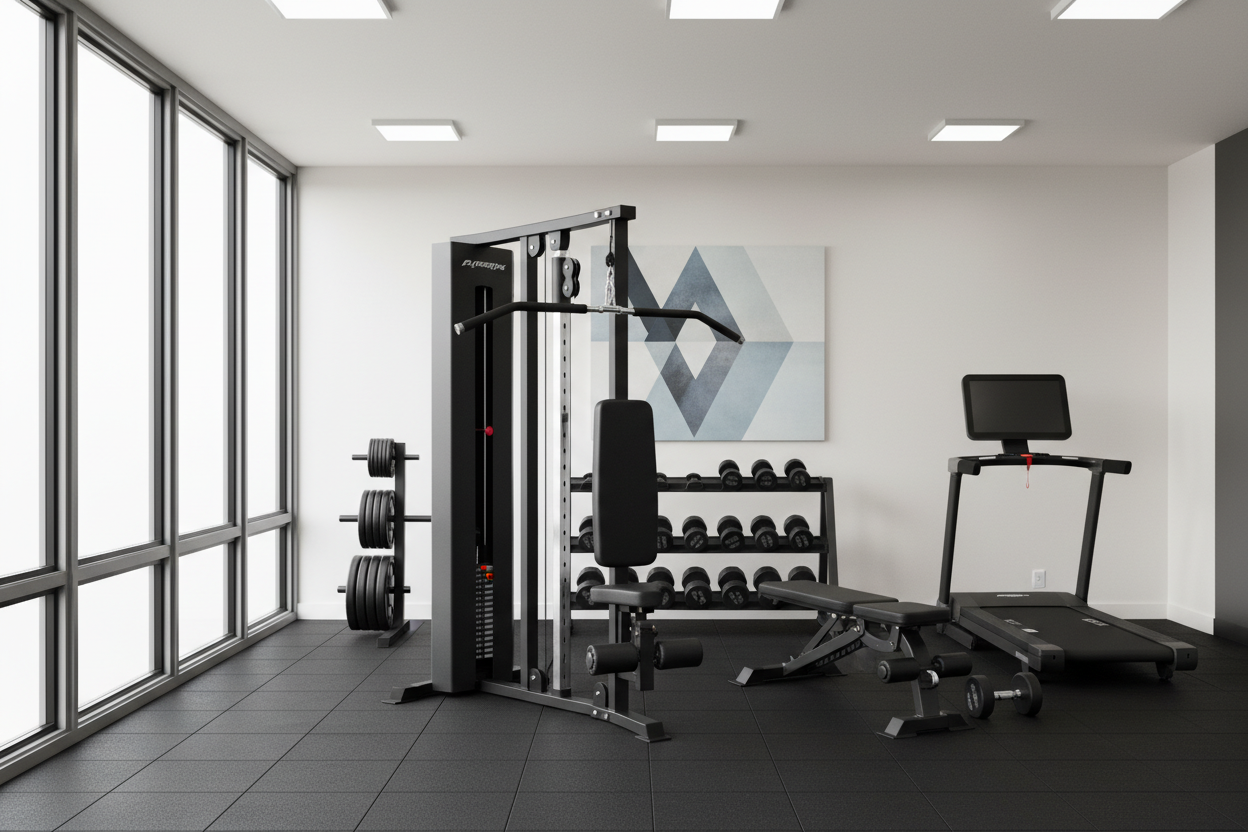
Walking into a big-box gym at 5:15 PM feels like entering a low-stakes battlefield. You are dodging influencers, navigating around puddles of spilled pre-workout, and staring down a sea of back exercise machines at gym floors that look more like flight simulators than training tools. Most of these machines are designed to look impressive to new members during a tour, not to actually build a thick, powerful back.
I have spent twenty years tugging on cables that felt like they were lubricated with sand and testing high-tech levers that had the resistance curve of a wet noodle. After thousands of sets, I have realized that most lifters waste their prime energy on suboptimal selectorized junk. If you want to actually grow, you need to be picky about which back machine gym equipment you occupy.
Quick Takeaways
- Chest support is non-negotiable for maximum lat and rhomboid isolation.
- Independent arm movement is superior for fixing strength asymmetries.
- Avoid machines with 'sticky' friction or awkward, fixed paths of motion.
- A simple cable stack often beats a complex 10,000-dollar leverage machine.
The 5 PM Rush Hour Test (What Is Actually Worth Your Time)
When the gym is packed, your time is your most valuable resource. You see people hovering around the latest 'ergonomic' back workout machine at gym facilities, waiting for a piece of equipment that provides about 40 percent of the stimulus of a basic barbell. The flashy gym back exercise machine with the digital counter and the leather-stitched seat is often the least effective tool in the room.
I look for machines that allow for a full range of motion without forcing my joints into a 'pre-set' track that feels unnatural. If a gym back workout machine makes your elbows click or your shoulders pinch, it is a space-filler, not a muscle-builder. Most lifters would be better off ignoring the fancy gadgets and sticking to the three or four pillars of back training that actually provide a heavy, consistent load.
The Holy Grail: Chest-Supported Rows
If I could only use one workout machine for back day, it would be a chest-supported row—either a T-bar or a plate-loaded ISO-lateral version. The beauty of these machines is that they remove your lower back from the equation. When you are doing heavy bent-over rows, your spinal erectors often give out before your lats do. By pinning your chest to a pad, you can take those lats to absolute failure without your lumbar screaming for mercy.
This is the ultimate way to Stop Trashing Your Back Why I Bought A Gym Roller Machine and focus on the actual target tissue. When the sheer load is removed from the spine, you can handle significantly more weight. Look for a back exercises machine that offers multiple grip options—neutral, overhand, and angled—to hit the mid-back and lats from different perspectives.
Pulldown Variations: Cables vs. Leverage Systems
The standard lat pulldown is a staple, but I prefer leverage-based pulldown machines where each arm moves independently. Fixed bars often allow your dominant side to do 60 percent of the work while the weaker side just hitches a ride. A gym back equipment setup with independent arms forces each lat to pull its own weight, which is the only way to build a symmetrical V-taper.
It is the same logic we use for the front of the body; a Weight Bench Chest Press Machine Independent Arms Z1 Pro is effective because it prevents the 'strong-side lean.' On a back machine, this unilateral movement allows you to really stretch the lat at the top and drive the elbow deep into the hip at the bottom. If the machine feels like it is binding or catching, the pulleys are likely cheap or poorly maintained.
The Overhyped Junk You Should Walk Right Past
Some back exercise gym machine designs are just plain bad. I am talking about those seated 'row' machines where the handles move in a strictly horizontal line, or the ones with massive plastic shrouds that limit your range of motion. If you cannot get a full stretch at the start of the rep, you are leaving gains on the table. These are the machines I classify as 'ego-lifter bait'—they let you move the whole stack because the leverage is so high, but your muscles aren't doing much work.
You should learn to spot the 5 Red Flags To Look For In Any Exercise Machine Home Gym or commercial facility. If the machine has excessive friction, a 'dead spot' in the resistance, or handles that don't rotate to match your wrist's natural angle, walk away. Your joints will thank you, and your back will actually grow because you're using machines that respect human biomechanics.
How to Steal These Commercial Gains for Your Garage
If you are tired of the 5 PM crowd, you can replicate almost all of these 'big gym' movements at home without spending ten grand. You don't need twenty different back weight machine options; you need one or two versatile pieces. A high-quality cable tower or a specialized row station can handle 90 percent of your back training needs. The goal is to find equipment for back exercise that offers a smooth stroke and heavy weight capacity.
A solid Smith Machine Home Gym Station is actually one of the best ways to mimic those expensive commercial row machines. You can set the bar height perfectly for heavy rows, or even use it for 'rack pulls' to build that thick upper-back 'shelf.' When you control the environment, you don't have to worry about whether the equipment is maintained—you know it is.
My Honest Experience
I remember spending months on a fancy, circular-motion lat pulldown at a high-end club. It looked like a piece of art. My lats, however, looked exactly the same after sixteen weeks. The resistance curve was so light at the bottom that I couldn't get a contraction. I switched back to a basic, 'ugly' plate-loaded row and put on more mass in two months than I had in a year. The lesson? Don't be fooled by the paint job. If it doesn't feel heavy where it's supposed to, it's a waste of a set.
FAQ
What is the best machine for back width?
The lat pulldown, specifically with a neutral or slightly wide grip, is the gold standard for building width. Focus on driving your elbows down, not pulling the bar with your hands.
Are machines better than free weights for the back?
Machines are better for isolation and safety at high volumes. Free weights are better for overall structural strength and stabilizer muscle engagement. A good program uses both.
How do I stop my biceps from taking over on back machines?
Use a 'thumbless' grip and think of your hands as hooks. Your arms are just the cables; the power should come from your elbows driving back or down.
Share:
How to Pick a Weight Set for Home That Won't Gather Dust
I Finally Found the Best Gym Machine for Home (It Weighs 400lbs)