
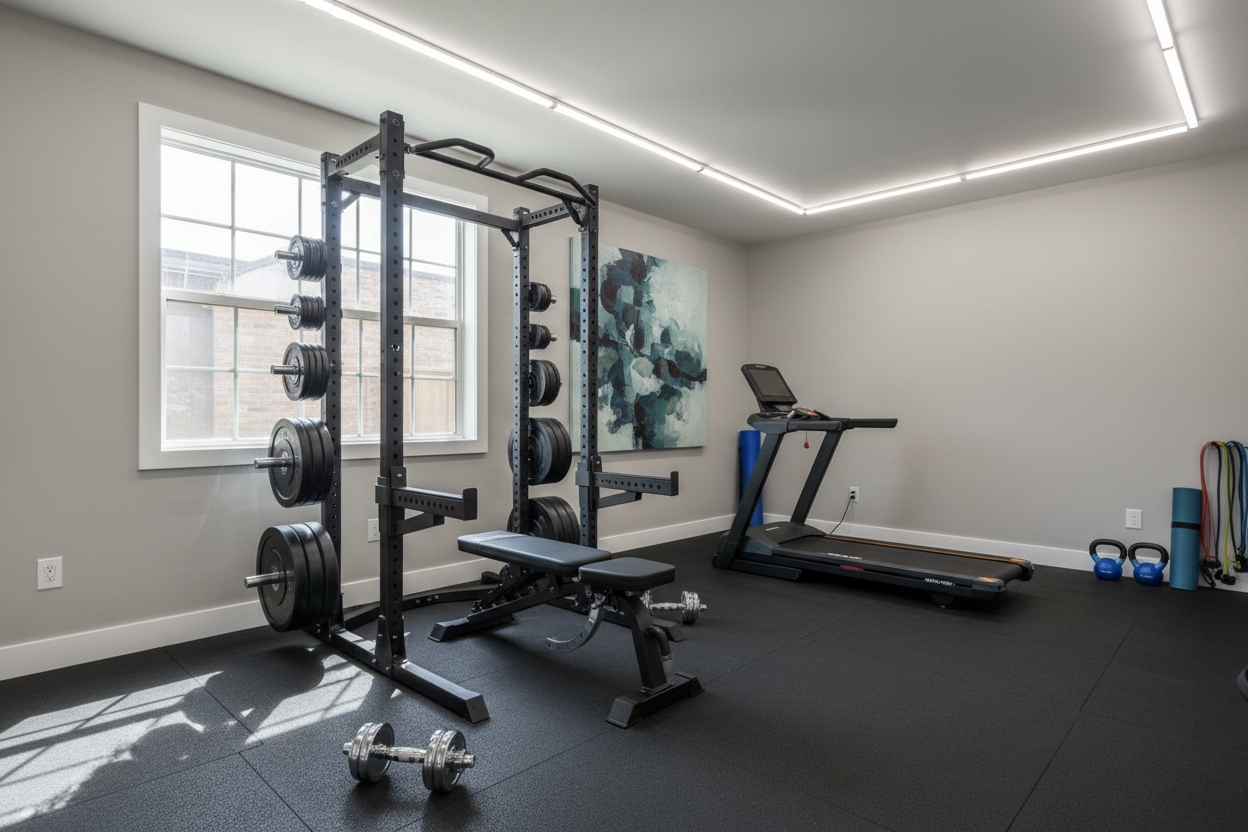
I have spent the last decade in garages and basements, surrounded by the smell of rubber and the sound of clanging iron. I have also wasted thousands of dollars on equipment that looked great on a 2 a.m. infomercial but felt like a toy once I actually tried to move some weight. If you are hunting for the best home exercise machines, you have probably noticed the market is flooded with plastic junk that prioritizes Netflix integration over mechanical integrity.
My garage is currently a graveyard of 'as seen on TV' failures. I have seen cables snap under 150 pounds of tension and frames that wobble like a folding chair during a simple chest press. You deserve better than a glorified clothes hanger.
- Steel gauge (11 or 14) is the only spec that truly guarantees stability.
- Weight stack ratios (1:1 vs 2:1) dictate how heavy the weight actually feels.
- Aluminum pulleys are always superior to the cheap plastic ones found on budget rigs.
- The best gear doesn't need a subscription to work.
The Infomercial Trap: Why Most Residential Gear Fails
Most 'best exercise equipment for home use' is designed by people who prioritize shipping costs over structural safety. They use thin-walled 2-inch tubing that flexes the moment you add a second plate. When you are pushing your limits, the last thing you want to feel is the frame groaning under the load.
These companies sell you on the dream of a 15-minute workout, but they build the machines out of materials that belong in a toy store. If a machine arrives in a box that a single person can carry easily, it is probably not going to survive a year of heavy lifting. Real training requires mass. If the machine doesn't have the heft to stay planted on your floor, it is a liability, not a tool.
Structural Steel Over Fancy Touchscreens
I do not care if a machine has a 22-inch 4K screen if the linear bearings feel like they are full of sand. A machine's value is found in the thickness of the steel and the smoothness of the travel. I always look for at least 14-gauge steel for residential use, though 11-gauge is the gold standard if you are planning on moving serious weight.
The weight stack is another area where manufacturers cut corners. A 200-lb stack sounds impressive until you realize the pulley system is a 2:1 ratio, meaning you are only actually moving 100 lbs of resistance. Always check the effective load before you pull the trigger. A heavy, physical weight stack will outlast any digital resistance system ten times over.
Why Cable Quality Dictates Your Gains
Smoothness is not just about feel; it is about constant tension. Cheap machines use aircraft cables that stretch over time or, worse, use resistance bands that lose their 'snap' after a few months. When the resistance is jerky, your joints take the hit. High-quality cables and ball-bearing pulleys ensure the weight stays consistent throughout the entire range of motion, which is exactly what builds muscle.
The Only 3 Types of Rigs Worth Your Floor Space
If you have limited square footage, you have to be ruthless. I categorize the winners into three buckets: guided barbells, functional trainers, and heavy-duty cardio. A solid Smith machine home gym station is often the best centerpiece because it allows you to squat, bench, and row safely without a spotter. It provides the stability of a machine with the movement patterns of a barbell.
Functional trainers are the runners-up. They offer the most versatility per square foot, allowing for everything from cable crossovers to lat pulldowns. Finally, you need one piece of 'misery equipment'—something that handles your metabolic conditioning without taking up the space of a commercial treadmill.
Cardio Gear That Does Not Eat Your Garage
I hate treadmills in home gyms. They are loud, they break, and they take up half the room. For my own space, I prefer a foldable upright exercise bike. It gives me a brutal HIIT session or a steady-state recovery ride, then tucks into a corner when I need the floor space for deadlifts. Magnetic resistance is the way to go here—it is silent and requires zero maintenance compared to friction-based pads.
How to Vet the Best Exercise Machines for Home Use
Before you invest in complete home gym setups, you need a checklist. First, measure your ceiling height—then subtract six inches for your head clearance during pull-ups. Second, look at the warranty. If a company won't guarantee the frame for at least five years, they know it is built to fail. This is the only way to find the best exercise machines for home use that actually last.
Check the footprint, then add two feet of 'buffer' on every side. A machine might be 4 feet wide, but if you need to load plates on the side, you actually need 7 feet of clearance. Don't forget to check the floor loading capacity of your room if you are putting a 500-lb weight stack on a second-story floor.
Stop Overthinking It: Your Next Move
I have seen people spend six months researching the 'perfect' setup while their old gym membership fees keep bleeding them dry. The truth is, there is no single best exercise machine for home that will do the work for you. Pick a heavy-duty system that fits your primary goal, get it delivered, and spend a Saturday afternoon putting it together properly.
Once the bolts are tightened and the cables are lubed, stop reading reviews and start moving weight. The best machine is the one you actually use until the paint starts wearing off the handles. That is where the progress happens.
FAQ
What is the best steel gauge for a home gym?
For most people, 14-gauge steel is the minimum for safety and stability. If you are an advanced lifter or want something that feels 'commercial grade,' 11-gauge is the way to go.
Are cable machines better than free weights for home use?
They aren't 'better,' but they are often safer for solo training. Cables provide constant tension and allow for a huge variety of exercises in a compact footprint.
How do I maintain my home exercise machines?
Keep the guide rods clean. Wipe them down with a microfiber cloth and apply a small amount of silicone-based lubricant every few months. Check the cable tension and tighten any bolts that might have vibrated loose during use.
Share:
The Only 4 Items That Are Absolutely Essential for Home Gym Training
Don't Buy Affordable Gym Equipment Without Checking These 3 Things