
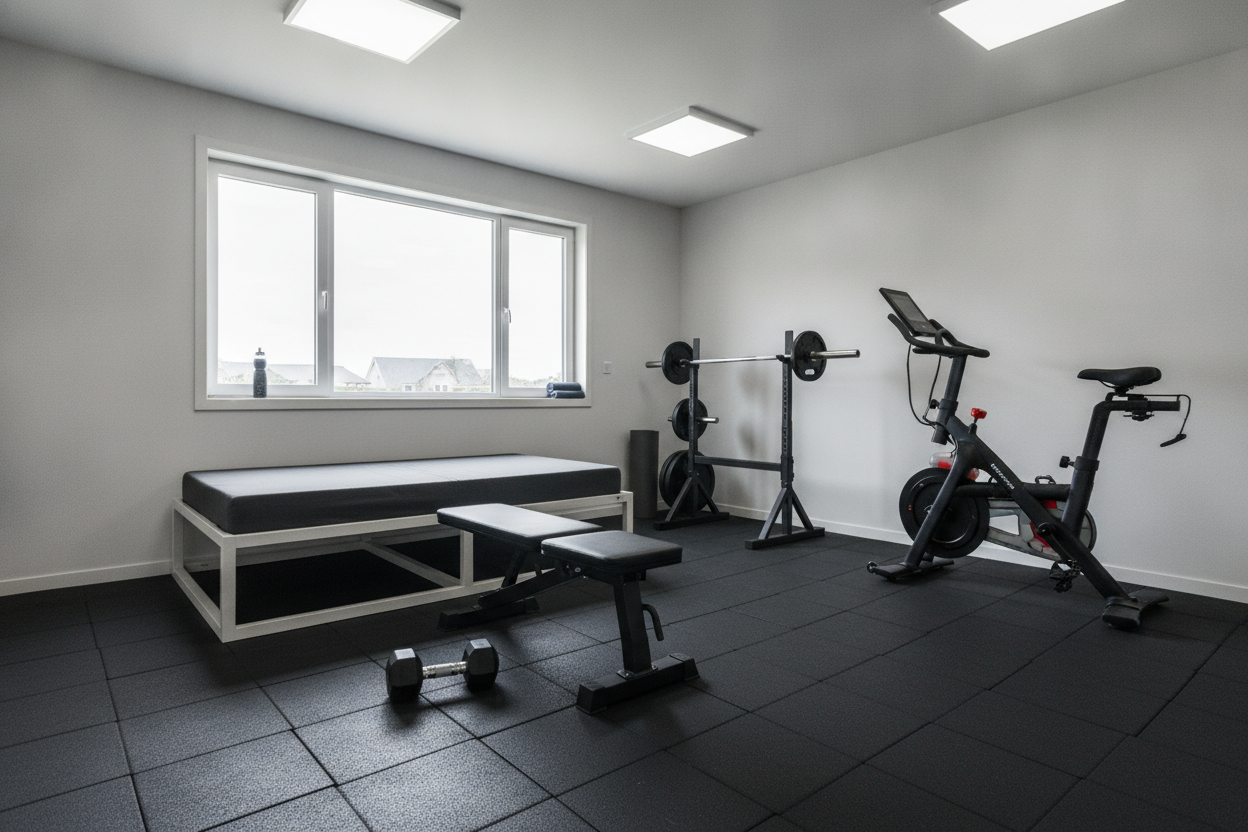
I remember my first studio apartment in the city. I was trying to run a serious strength program while my 'living room' was basically a glorified hallway. I spent weeks scrolling through Amazon at midnight, looking for a foldable weight bench under bed that wouldn't snap the first time I loaded up a heavy set of dumbbells. I eventually bought a cheap one, and three weeks later, I was selling it on Marketplace because it felt like I was benching on a wet noodle.
Quick Takeaways
- Most flat-folding benches use thinner steel (14-gauge) to keep the weight manageable for sliding under furniture.
- The hinge is the primary failure point; look for bolt-through designs rather than simple spring pins.
- Measure your bed clearance from the floor to the lowest support rail, not the mattress edge.
- Stability often scales with footprint—narrow legs are easier to store but prone to tipping.
The Brutal Reality of Flat-Folding Hinges
Physics is a cruel mistress when it comes to gym equipment. To make a folding weight bench under bed stowable, manufacturers have to remove the rigid cross-bracing that keeps a standard bench stable. Instead of a solid steel frame, you get a series of hinges. Every hinge is a potential point of failure and a source of 'slop'—that annoying side-to-side wiggle that makes you feel like you're balancing on a tightrope during a max effort press.
When you're looking at a portable weight lifting bench, you have to realize that the shear force on those pins is massive. If you're a 200-lb lifter moving 75-lb dumbbells, you're putting 350 lbs of pressure on a tiny steel pin. I've seen cheap hinges shear off or the holes ovalize over time, leading to a permanent tilt. If the bench doesn't have a secondary locking mechanism or a massive oversized bolt at the pivot, don't trust it with your heavy days.
The lateral sway is what kills your confidence. A bench that folds flat usually has a narrower base to ensure it fits between bed legs. This creates a high center of gravity with a narrow support base. If your form isn't perfect, or if you have to bail on a lift, that bench is going to tip. I've had more close calls with 'space-saving' benches than I ever had with a rusty 80s-era flat bench in a garage.
Measuring Your Clearance (Don't Guess Your Bed Height)
The biggest mistake people make is reading a product description that says 'folds to 6 inches' and assuming it fits. Bed frames are notorious liars. Most modern frames have center support legs or decorative rails that sit lower than the side rails. I once bought a workout bench fold under bed that was 6.5 inches thick, only to realize my bed's center support bar left me with exactly 5.75 inches of clearance. I ended up having to prop my bed up on blocks like a college dorm room.
You also have to account for the padding. Cheap foam compresses, but high-density foam (which you actually want for lifting) stays thick. A standard fixed weight bench usually sits around 17 inches high, but a folded model might still be 7 or 8 inches tall because of the way the legs tuck behind the backpad. Take a tape measure and check three spots: the foot of the bed, the head, and the middle. If you have a plush rug, subtract another half-inch because the bench won't 'slide' easily; it'll catch on the fibers.
How to Spot a Folding Weight Bench Under Bed That Won't Snap
If you're dead set on an under-bed model, you have to be a stickler for specs. Ignore the '1,000-lb capacity' claims you see on generic listings—those are static loads tested in a factory, not dynamic loads with a human moving on top. Look for 11-gauge or 12-gauge steel. If the manufacturer doesn't list the steel gauge, it's almost certainly 14-gauge (thin) or worse.
Check the feet. A compact weight lifting bench needs wide stabilizers with rubber end caps. If the feet are just bare metal tubes, the bench will slide across your floor the moment you try to drive your legs during a press. You want a tripod or a wide H-frame base. Also, look at the gap between the seat and the backpad. Foldable designs often have a massive 2-3 inch 'butt crack' gap to allow the hinges to clear each other. It's incredibly uncomfortable and can actually mess with your lumbar positioning during heavy lifts.
Finally, look for a 'ladder' style adjustment for the backrest rather than a pull-pin. A ladder system uses gravity and a thick steel bar to hold the weight. It’s much harder to mess up and far less likely to fail mid-set than a spring-loaded pin that might not have clicked fully into place.
Will a Workout Bench Fold Under Bed Without Pinching Your Fingers?
The 'user experience' of these benches is usually a nightmare. To get a bench thin enough to slide under a bed, you usually have to pull three different pins, collapse the legs, and fold the frame in half. It sounds easy, but doing this after a grueling leg day is the last thing you'll want to do. I've pinched my palms in the hinge of a cheap folder more times than I care to admit. It’s always when you’re tired and just want to be done.
Then there's the dust. Your under-bed area is a vacuum for dog hair and dust bunnies. Unless you're vacuuming under there every single day, your bench pad is going to act like a Swiffer. You’ll pull it out to lift, and it’ll be covered in grime. If you don't have a smooth hardwood or laminate floor, sliding a 40-lb steel bench in and out is a genuine chore that will eventually make you stop working out altogether. Friction is the enemy of consistency.
The Verdict: Is the Space-Saving Worth the Stability Trade-Off?
In my experience, the 'under bed' dream is usually a compromise too far. If you are lifting heavy—meaning you're pushing toward a bodyweight bench press or using 50+ lb dumbbells—the lack of stability in a flat-folding frame is a safety hazard. You're better off finding a 12-inch wide strip of wall in a closet or a corner and standing a quality adjustable weight bench upright. Many high-end benches now come with built-in wheels and a 'stand-up' feature that lets them sit vertically.
However, if you're doing light accessory work, high-rep toning, or simply have zero other options, a folding bench is better than no bench. Just don't cheap out. Buy the heaviest, beefiest folding model you can find, and double-check those clearance measurements before you click buy. Your floor, your bed frame, and your fingers will thank you.
FAQ
Is a foldable bench safe for 300+ lbs?
It depends on the steel. A 12-gauge steel frame with a ladder-style adjustment can handle 300 lbs easily. A 14-gauge frame with a single thin pop-pin is pushing its luck. Always include your own body weight in that total capacity calculation.
Will a foldable bench scratch my hardwood floors?
Most come with plastic or rubber caps, but because you're sliding it under a bed, those caps can wear down or pop off. I always recommend putting a thin yoga mat or a specialized equipment mat under the bench to protect your floors and add a bit of grip.
Can I do incline or decline work on a bench that folds flat?
Most 'under-bed' benches are flat-only or have limited incline. To get the 'decline' feature, the frame usually needs to be much taller and more complex, which prevents it from folding thin enough to fit under a standard bed frame.
Share:
The Only 3 Back Machines at Planet Fitness You Actually Need
The Honest Answer to 'Do I Need a Bench for Home Gym Lifting?'