
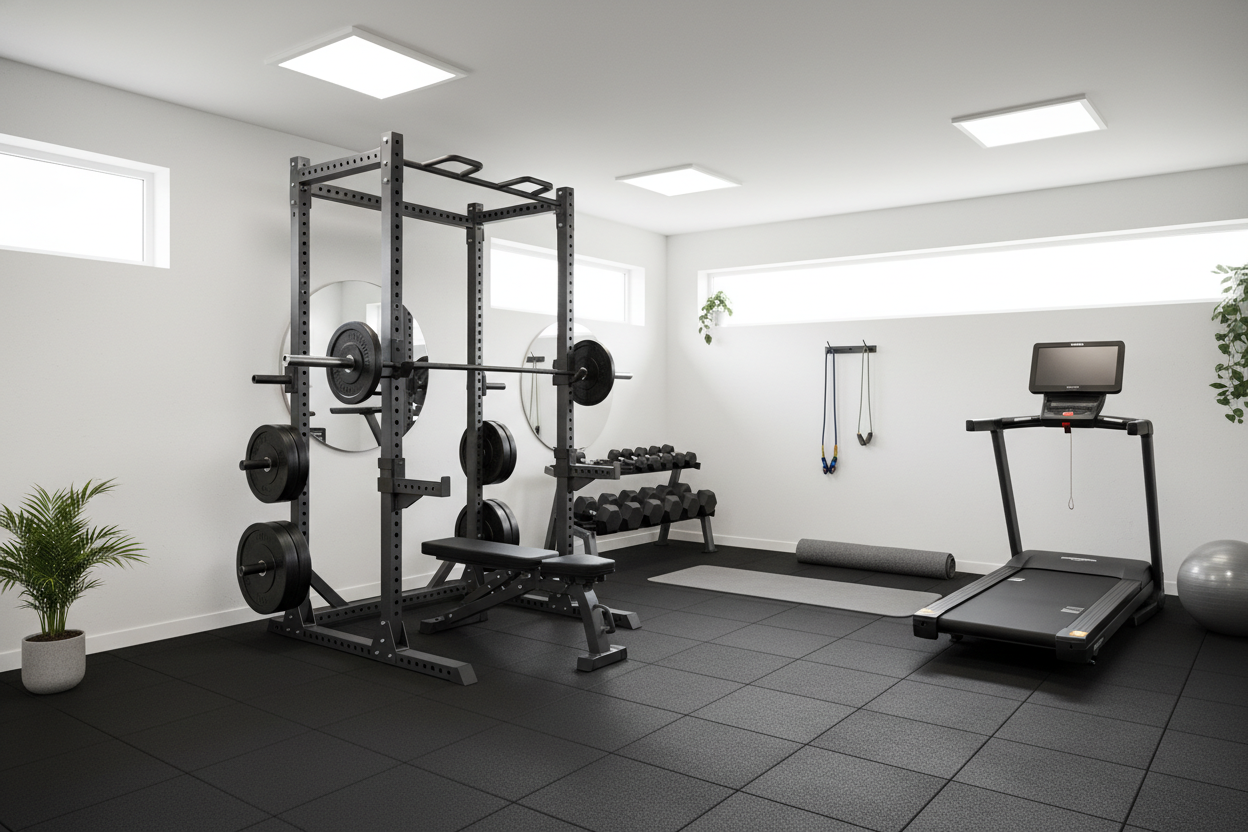
I remember the day I finally had enough of my local big-box gym. The monthly fee had just climbed again, the squat rack was permanently occupied by a teenager on his phone, and the air had that distinct 'unwashed gym bag' aroma. I went home, opened my laptop, and started hunting for gyms equipment to build my own sanctuary. I thought I needed exactly what the pros used. I was wrong.
- Footprint is King: Commercial machines are built for 20,000-square-foot warehouses, not your 10x12 spare room.
- Multi-functionality Wins: One piece of gear that does five things is better than five pieces that do one.
- Quality Over Quantity: Three high-end gym products beat a room full of cheap gym items every time.
- Floor Space = Freedom: If you can't move around your gear, you won't use it.
The 'Mini LA Fitness' Trap
The biggest mistake I see beginners make is trying to buy giant, single-use commercial machines for a residential space. You go to a fitness machine store and see a leg press that looks like it belongs in a NASA lab. It’s shiny, it’s heavy, and it’s also six feet long. By the time you get it home, you realize you have zero room left for your gym and exercise equipment. You’ve effectively turned your workout space into a storage locker for one muscle group.
Trying to replicate Fitness 19 equipment on a garage gym budget is a recipe for frustration. Commercial facilities have the luxury of space; you don't. When you buy weight equipment for a home setup, every square inch has to earn its keep. If a machine only lets you do one movement, it’s probably a waste of your money and your floor space.
Why Footprint is Your Most Valuable Currency
In a commercial gym, 'equipment for fitness' is spread out to accommodate hundreds of people. At home, your layout is the bottleneck. Those massive selectorized exercise equipment for gym environments have huge steel shrouds and wide bases for liability reasons, not performance. They are designed to be indestructible in a high-traffic setting, but they are overkill for a guy training three times a week.
Instead of chasing single-station machines, look for a Smith machine home gym station. This kind of multi-functional unit replaces a squat rack, a bench press station, and often a cable crossover in one footprint. It gives you the stability of a commercial machine without the 80-square-foot requirement. When you're shopping for exercise gym equipment, always check the 'working area' specs, not just the machine dimensions. You need room to load plates and actually move.
The Only Essentials You Actually Need to Start
You don't need a gym equipment center to get strong. In fact, most of the workout fitness equipment you see in big-box gyms is fluff. If you have a solid barbell, a set of plates, and an adjustable bench, you can perform 90% of the exercises known to man. This core training equipment for gym enthusiasts saves thousands of dollars and leaves your room feeling like a gym, not a warehouse.
I’ve found that the best home gym fitness equipment is just 3 things: a power rack, a barbell, and a bench. This trio replaces the chest press machine, the shoulder press machine, the squat station, and the pull-up bar. When you focus on these fitness workout equipment staples, you can invest in higher quality—like a bar with better knurling or plates with tighter weight tolerances—rather than buying ten different gym exercise tools that will just collect dust.
What About Cardio? (Don't Buy a Giant Treadmill Yet)
The urge to buy a commercial-grade treadmill is strong, but unless you’re a competitive marathoner, it’s a space-killer. Those things are heavy, loud, and impossible to move once they’re assembled. For most people looking for workout equipment for gyms at home, a foldable upright exercise bike is a much better call. It provides a brutal metabolic hit but can be tucked into a closet when your session is over.
If you’re tight on space, look for gym material online that emphasizes portability. Jump ropes, kettlebells, and slam balls are all fitness gym tools that provide high-intensity cardio without requiring a dedicated permanent footprint. Your muscle workout equipment shouldn't prevent you from having enough space to actually stretch or do burpees.
Building a Realistic Space You'll Actually Use
Stop looking at gym instruments online as a one-time 'buy the whole catalog' event. The most successful home gyms I’ve seen were built piece by piece. Start with the heavy hitters, then add gym exercise items as your training evolves. If you find yourself missing a specific cable movement, buy a pulley attachment, not a whole new machine.
By curating your home gym slowly, you ensure that every piece of fitness room equipment serves a purpose. You’ll end up with a high-functioning, streamlined space that actually makes you want to train, rather than a cramped room full of overpriced, oversized gym products. Focus on the work, not the gear list.
My Biggest Gear Mistake
Early on, I bought a used commercial leg extension machine for $300. I thought I was a genius. It was built like a tank and weighed about as much as one. Within two months, I realized it took up a 5x5 foot area and I only used it for 10 minutes a week. I couldn't even fit my deadlift platform in the garage because of it. I ended up selling it for $100 just to get someone to haul it away. Don't be like me—prioritize your floor space.
FAQ
Is commercial gym equipment more durable?
Yes, it's designed for 12+ hours of daily use. However, for a home user, high-end residential or 'light commercial' gear will still last a lifetime without the massive footprint and price tag.
How much space do I need for a basic gym?
You can do a lot in an 8x8 foot space. That's enough for a compact rack and a barbell. If you have 10x12, you can fit a full power rack, a bench, and some storage for your gym supplies.
Can I put heavy gym equipment on a second floor?
Usually, yes, but you need to be smart. Standard residential floors can handle the weight of the machines, but dropping a 300-lb deadlift is a different story. Use thick rubber stall mats to distribute the load and protect the subfloor.
Share:
The Beginner Home Gym Equipment You Should Actually Ignore
My Go-To Marcy Smith Machine Exercises for a True Full Body Split