
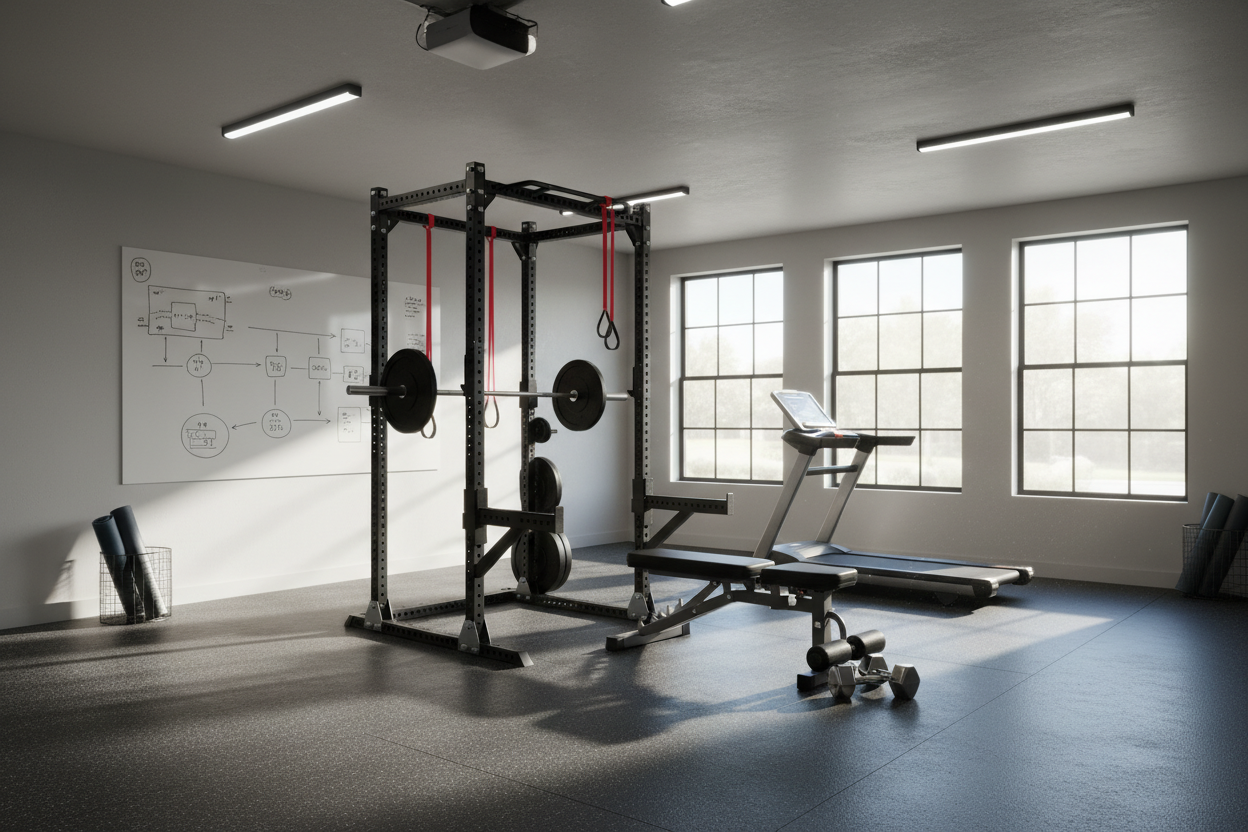
You spent three weeks comparing upright dimensions, checking hole spacing, and debating whether a stainless steel barbell is worth the extra eighty bucks. The gear arrived, you spent a Saturday afternoon bolting it into the concrete, and for the first month, you were a machine. But then, the novelty died. Now, you walk past the rack to grab a beer from the garage fridge, and those expensive plates are just a glorified drying rack for your laundry. Learning how to exercise at home gym setups isn't about the equipment; it is about surviving the mental void of training alone.
Quick Takeaways
- Your commercial gym routine is too long for a garage setting; cut the fluff.
- If you have to move a lawnmower to start your first set, you will skip the workout.
- Temperature and lighting are just as important as your max squat.
- Isolation exercises are for people with too much time; stick to the big lifts.
The 'Build It and They Will Come' Lie
We all fall for it. We think that removing the twenty-minute commute to the local powerhouse will magically give us an hour of extra energy. The reality is that the commercial gym provides a psychological 'third space.' When you step through those doors, you are there to work. When you are trying to exercise at home or gym environments, the lines get blurry. Your dog is barking, your kids are asking for snacks, and the unfinished drywall is staring you in the face.
The honeymoon phase of new iron lasts about four weeks. After that, the silence of a garage becomes deafening. You don't have the social pressure of other lifters watching you, which makes it incredibly easy to shave a rep or skip the last set entirely. To survive, you have to stop treating your garage like a room in your house and start treating it like a destination. If you don't make that mental shift, your expensive rack will just become the world's heaviest coat hanger.
Why Your Commercial Gym Routine Will Fail Here
If you are trying to run a pro-bodybuilder 6-day split with forty sets of isolation work, you are going to burn out in a month. Gym home workouts need to be punchy and efficient. In a commercial space, you can bounce from machine to machine. At home, every cable change or plate swap takes time. If your workout takes two hours because you're doing four types of bicep curls, you'll eventually start dreading the setup more than the lift.
Focus on the big rocks: squats, presses, and pulls. If you are training solo and want to push the intensity without a spotter, a Smith machine home gym station is a massive asset. It allows you to take sets to true failure on movements like incline presses or split squats without the fear of getting pinned under a live bar. Keep your gym home exercise sessions under 60 minutes. Get in, move heavy weight, and get out before the domestic distractions pull you back into the house.
The 10-Minute Friction Rule That Saves Your Session
Friction is the silent killer of the gym workout in home. I have a rule: if it takes more than ten minutes to prep the space, the workout isn't happening. I’ve seen guys with incredible setups who have to pull their cars out, move three bikes, and unstack boxes just to get to their barbell. That is a recipe for failure. Your equipment needs to be ready to strike. If you find yourself constantly rearranging, you need to stop blaming your gear and start looking at your floor plan.
Organize your plates so the ones you use most are at waist height. Keep your collars in the same spot every time. If you use a bench for 80% of your lifts, don't store it in the corner behind the power rack. Every small annoyance adds up. By the time you've spent fifteen minutes just clearing a path to the pull-up bar, your motivation has already evaporated. Efficiency isn't just for the factory floor; it’s for the garage lifter who wants to stay consistent.
Dialing in Your Solo Atmosphere
The vibe of your space dictates the intensity of your at home gym workouts. If you're lifting under a single, flickering 60-watt bulb in a damp basement, you're going to feel like a dungeon prisoner, not an athlete. Spend fifty bucks on some LED shop lights. It sounds trivial, but a bright, well-lit space naturally keeps your heart rate up and your focus sharp.
Temperature control is the other big one. I’ve lived through 100-degree garage sessions and 20-degree winter lifts. If you are shivering or dripping sweat before you even touch the bar, your brain will find a reason to stay inside. A simple infrared heater or a high-velocity floor fan can be the difference between a PR and a 'maybe tomorrow.' Control the environment, or the environment will control your consistency.
Doing Cardio When You Hate Running Outside
Cardio is usually the first thing to go in a garage setup. Most of us don't have the floor space for a commercial-grade treadmill that weighs 400 lbs and costs as much as a used Honda. But you can't just ignore conditioning if you want your gym home exercise routine to be well-rounded. The key is finding tools that have a small footprint but high output.
I’m a big fan of the foldable upright exercise bike for this exact reason. You can tuck it into a 2x2 foot corner when you're doing heavy deadlifts, then wheel it out for a 20-minute flush at the end of your session. It solves the space problem without forcing you to run in the rain or snow. High-intensity intervals on a bike are far more effective for most lifters than a half-hearted jog around the block anyway.
How to Finally Lock In Your Garage Training Habit
The final hurdle is the people you live with. If your family thinks your workout time is 'free time,' you will never get a solid session in. You have to set boundaries. When the garage door is closed or the headphones are on, you are at the gym—not in the kitchen. It sounds harsh, but without that separation, your training will always be secondary to whatever 'quick question' someone has for you.
Treat your setup with respect. You didn't buy this gear to let it rust. Every time you step into your home gym, remember the investment you made in yourself. It’s not just about the money spent on the steel; it’s about the promise you made to stop making excuses. Lock the door, turn up the music, and do the work.
FAQ
Is it better to train in the morning or evening at home?
The best time is whenever the house is quietest. For most garage owners, that’s 5:00 AM before the rest of the world wakes up. If you wait until 6:00 PM, the 'to-do' list of home life will almost always win.
How do I stop my equipment from rusting in a garage?
Keep a 3-in-1 oil rag handy and wipe down your barbell once a week, especially if you live in a humid climate. A simple dehumidifier can also save your rack from the 'orange plague' over the long term.
Do I really need a full power rack?
If you're training alone, yes. The safety arms are your only spotter. Unless you plan on never pushing your limits, having a cage to catch a failed rep is the most important insurance policy you can buy.
Share:
How I Fit a Real Functional Trainer for Home Gym in a 1-Car Garage
How to Pick Equipment for a Gym Without Wasting Thousands