
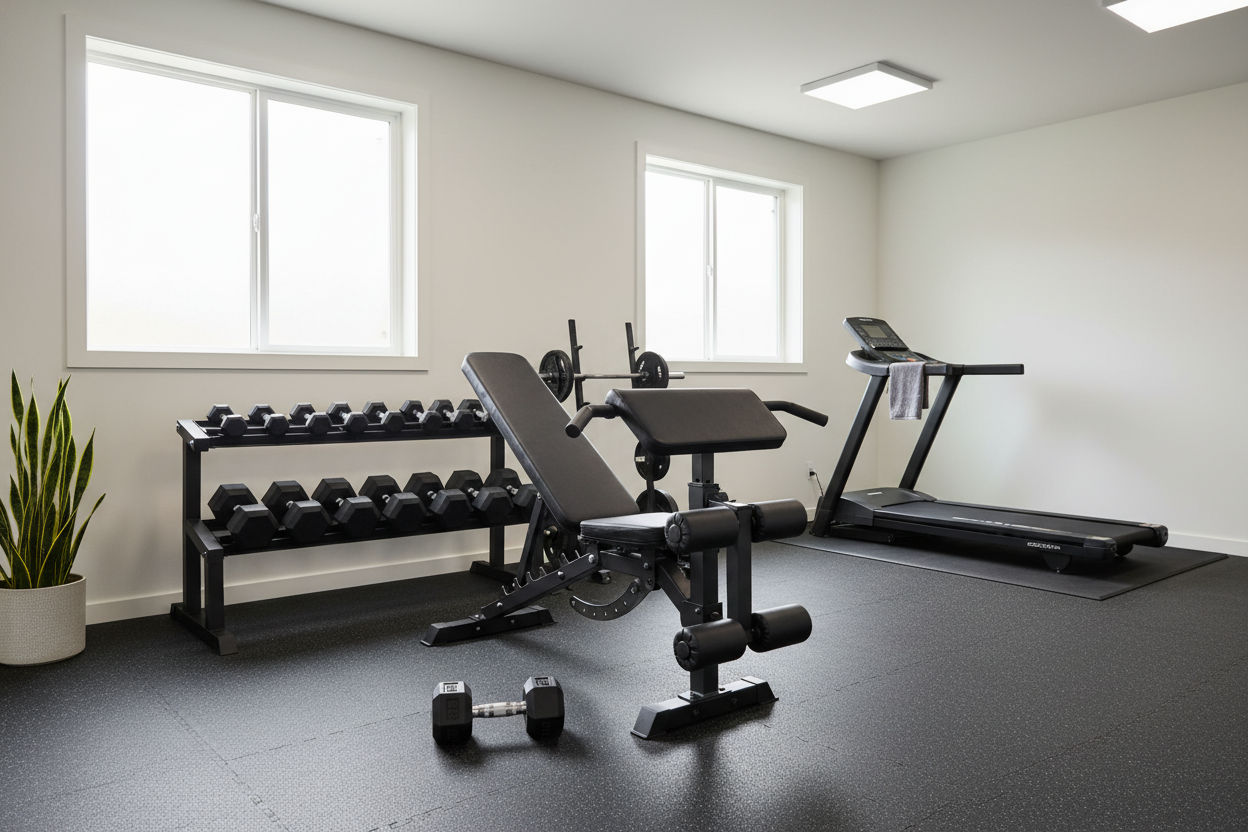
I remember staring at my 10x10 garage gym space, realizing I had exactly enough room for a rack, a bar, and maybe a thin coat of dust. Naturally, I spent my midnight hours scrolling through workout bench attachments, convinced that a few pieces of bolt-on steel could replace a commercial leg extension machine and a preacher curl station. It’s the ultimate home gym dream: one footprint, infinite exercises.
Quick Takeaways
- Most attachments suffer from 'play' in the receiver tube, leading to side-to-side wobble.
- Leg developers are only worth it if the pivot point aligns with your natural knee hinge.
- Preacher pads require a multi-point locking system to feel stable under 50-lb+ loads.
- If you have the floor space, a standalone unit will always outperform a modular weight bench and accessories.
The Swiss Army Knife Problem
We all want the one-tool-to-rule-them-all. In a garage gym, space is the most valuable currency you have. Manufacturers know this, so they market a weight bench with accessories as the ultimate space-saver. But there is a massive engineering hurdle most brands ignore: the tolerances of the receiver tube. Most attachments slide into a 2-inch or 2.5-inch steel tube and are held by a single pop-pin. Because the attachment has to be slightly smaller than the tube to slide in, you get 'the rattle.'
When you are trying to grind out a heavy set of curls or leg extensions, that rattle becomes a distraction. It’s not just an annoying sound; it’s a shift in your center of gravity. I’ve tested setups where the preacher pad tilted five degrees to the left every time I reached failure. If the base unit isn't heavy enough, adding a 150-lb load to the very front of the bench can even make the back legs lift off the ground. That is a fast way to turn a workout into a trip to the ER.
Leg Developer Attachments: The Good, Bad, and Painful
Leg extensions and seated leg curls are the most popular add-ons, but they are also the hardest to get right. The issue is the pivot point. On a commercial machine, the cam is designed to track with the natural arc of your lower leg. On a cheap bench with a leg extension station, that pivot is often fixed too low or too high. This puts shearing force on your ACL instead of tension on your quads.
You also need to look at the weight horn. Most of these use 1-inch standard pegs, which means you’re stuck using small plates or buying an adapter for Olympic iron. If the horn is too short, you’ll max out the capacity before you even get a decent pump. A proper setup should have thick, 4-inch vinyl rollers that don't bruise your shins and a bushing system at the pivot that doesn't squeak like a rusted gate. If it feels like a friction-based movement rather than a smooth arc, walk away.
Preacher Curl Pads: Will They Hold Up to Heavy Weight?
The preacher curl attachment is the 'ego' add-on. We all want bigger peaks, but doing them on a wobbly pad is a recipe for a torn bicep. The problem is usually the single-post design. When you lean your chest into the pad and start pulling a heavy EZ-bar, the post acts like a lever. If there is even a millimeter of play in the mounting bracket, that pad is going to sway side-to-side.
I look for attachments that use a threaded tightening knob in addition to the pop-pin. This 'locks' the attachment to the frame and kills the wobble. Also, check the pad density. Cheap foam will bottom out in six months, leaving your elbows grinding against the plywood backing. You want high-density, dual-layered foam that’s at least 2 inches thick. If you can pinch the foam and feel the board underneath with your thumb, it’s not going to survive a heavy arm day.
When to Buy Add-Ons vs. Standalone Machines
If you are working in a literal closet or a single-car garage that still needs to fit a Toyota, a modular weight bench and accessories are your best friend. It’s better to have a slightly wobbly leg extension than no leg extension at all. However, once you cross the threshold of 'serious' lifting—think 400-lb squats and 300-lb benches—you start to outgrow these toys. A dedicated weight bench that does one thing perfectly is often better than a bench that does five things poorly.
Standalone machines have a dedicated base and a wider footprint, which means zero tipping risk. They also use cable systems or specialized cams that provide a consistent resistance curve. If you find yourself constantly spending 10 minutes swapping out pins, pads, and rollers just to move from chest to legs, you’re losing training intensity. The 'hidden cost' of attachments is the time and friction they add to your session. If you have a 6x8 ft corner to spare, buy a dedicated leg curl/extension machine and keep your bench for pressing.
The Final Verdict: Do You Actually Need Them?
Attachments are a compromise. If you acknowledge that from day one, you’ll be much happier with your purchase. They are fantastic for accessory work and high-rep hypertrophy training where absolute stability isn't the primary goal. But don't expect them to feel like the Life Fitness gear at your local powerhouse gym. My advice? Spend your money on a solid adjustable weight bench first. A rock-solid foundation is the only thing that matters when you have a heavy bar over your face.
Once you have a bench that doesn't budge, then you can look at the bells and whistles. Just make sure the brand you choose uses at least 11-gauge steel and has a reputation for tight manufacturing tolerances. A little bit of play in the shop becomes a massive headache in the heat of a PR attempt. Keep your expectations realistic, tighten those knobs down hard, and stop worrying about the 'perfect' setup—just get to work.
Personal Experience: My Scrap Metal Mistake
Years ago, I bought a budget-tier combo bench from a big-box store. It had every attachment under the sun. The first time I tried a heavy leg extension, the entire bench tipped forward because the front stabilizer was too narrow. I ended up having to bolt a 45-lb plate to the back leg just to stay upright. Eventually, the receiver tube flared out because the steel was too thin, and the preacher pad became a permanent 'leaning tower of Pisa.' I ended up giving it away and buying a heavy-duty flat bench. Sometimes, less really is more.
FAQ
Do attachments fit all brands of benches?
Usually, no. Most brands use proprietary tube sizes (like 2x2, 2.5x2.5, or 3x3) and different hole spacings. Always buy attachments from the same manufacturer as your bench to ensure the pins align.
Can I use Olympic plates on leg developer attachments?
Many come with 1-inch pegs for standard plates. You will often need to buy a separate Olympic sleeve adapter to use your 2-inch hole plates without them rattling around.
How do I stop my attachment from wobbling?
The best trick is to use a shim—like a thin piece of plastic or a cut-up soda can—to fill the gap between the attachment post and the receiver tube. Tightening knobs also help significantly if your bench supports them.
Share:
I Broke Two Weight Lifting Benches Before Learning This
Why Most Weightlifting Machines for Sale Online Are Complete Junk