
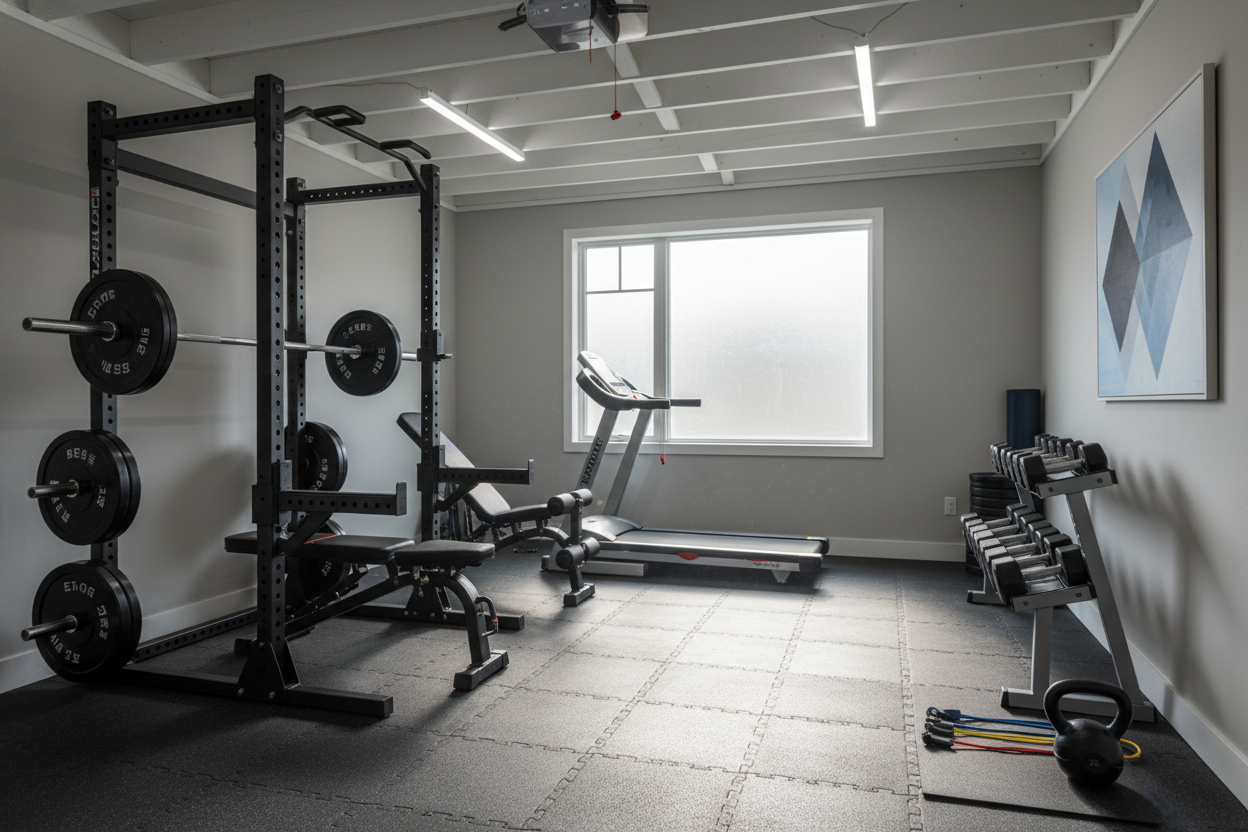
My first home gym was a $150 Craigslist haul that smelled like a damp basement and despair. The bench wobbled so hard during 225-lb presses I thought I’d end up as a cautionary tale on a lifting forum. We’ve all been there, staring at the screen wondering if premium exercise equipment is actually worth the four-figure price tag or if we're just being marketed into a hole.
- Splurge: Barbells, adjustable benches, and racks with 11-gauge steel.
- Save: Cast iron plates, pull-up bars, and simple storage.
- Avoid: Subscription-heavy screens and proprietary tech.
- The Rule: If it moves or supports your body weight, buy quality.
The Trap of Diminishing Returns in Home Gyms
There is a sweet spot in the equipment market. The jump from a 'mystery metal' rack found at a big-box retailer to a mid-tier 3x3-inch steel rack is massive. You go from a shaky frame to something that feels like it’s bolted to the Earth’s core. But once you cross into the 'ultra-premium' territory, you’re often just paying for laser-cut logos and custom powder coat colors.
When building out a complete home gym, you need to be ruthless with your budget. A $4,000 rack doesn't make you stronger than a $1,000 rack if the steel specs are the same. I’ve seen guys spend five figures on a setup that looks like a showroom but has the same utility as a garage gym built for a third of the price. Don't pay for the vanity of a brand name when the weld quality is identical.
The 3 Places I Will Always Pay the Premium
Barbells are the first place to spend. A cheap bar has 'mushy' knurling and bushings that seize up after six months of sweat. A premium bar offers a consistent whip and a grip that feels like it’s glued to your palms without drawing blood. It’s the primary interface between you and the weight—don't cheap out here.
Second is the bench. A budget bench with a 300-lb capacity is a liability once you factor in your body weight plus the dumbbells. I look for a 1,000-lb rated tripod design that won't trip me up during foot drive. Third is any complex station. If you are looking at a heavy-duty smith machine home gym station, the premium price covers the linear bearings and pulley ratios. Cheap versions of these 'stick' during the eccentric phase, which is a fast track to a shoulder tweak.
Where Budget Iron Gets the Exact Same Results
I will never understand paying $4 per pound for 'designer' weight plates. A 45-lb cast iron plate from a local liquidator weighs 45 lbs. Unless you are a competitive powerlifter who needs calibrated plates within a 10-gram tolerance, the budget iron works perfectly. They’re going to get chipped and rusted anyway if you’re actually training.
The same applies to pull-up bars and plate trees. A piece of powder-coated steel bolted to a wall doesn't need 'advanced engineering.' If the welds are solid and the diameter is right for your grip, the $50 version does the exact same job as the $200 version. Save that cash for a better barbell.
Why I Avoid the 'Tech Tax' on New Fitness Machines
The market is currently flooded with new fitness machines that are basically iPads attached to mediocre resistance systems. These companies want to lock you into a $40-a-month subscription just to use the manual mode. It’s a racket. I’ve talked to designers about why cheap gym machines suck, and it usually comes down to the pivot points and cable quality, not the lack of a touchscreen.
Mechanical quality is what builds muscle, not a 24-inch 4K display. When looking at new fitness machines, I check the pulley diameter and the weight stack ratio. If a machine uses plastic pulleys and thin cables but has a 'smart' interface, keep walking. You want iron and ball bearings, not software updates that brick your equipment.
The Smart Way to Test Drive New Gym Machines
Before you drop three grand on new gym machines for your garage, go find them in the wild. Most high-end commercial gyms or specialty equipment stores have floor models. Pay the $15 day pass fee. It is the cheapest insurance policy you can buy.
Check the 'feel' of the movement. Does the resistance curve feel smooth? Does the seat adjustment have play in it? I once almost bought a premium functional trainer online until I used one at a hotel gym and realized the handles were too wide for my frame. Testing in person saves you the massive headache of trying to ship a 500-lb crate back to a manufacturer.
Personal Experience: The 'Budget' Barbell Disaster
I once tried to save $150 by buying a 'heavy-duty' barbell from a generic Amazon seller. It claimed a 1,000-lb capacity. During a set of rack pulls at 405 lbs, the bar took a permanent 'U' shape. It didn't snap, but it was ruined. I ended up buying the premium bar I should have bought in the first place, meaning I spent $450 total instead of $300. Buy once, cry once.
FAQ
Is premium equipment safer?
In categories like racks and benches, yes. Higher-grade steel and better weld penetration prevent structural failure under load. For things like jump ropes or foam rollers, the safety difference is negligible.
Do I need a 3x3 rack?
If you're lifting over 400 lbs or plan on adding heavy attachments like lever arms, the 3x3 11-gauge steel is the industry standard for a reason. It offers the stability you need for peace of mind.
Are urethane dumbbells worth it?
Only if you hate the smell of rubber. Urethane is more durable and doesn't 'off-gas,' but a standard rubber hex dumbbell will last 20 years in a garage if you don't leave it in a puddle.
Share:
Why Most Home Workout Equipment for Men Is a Total Rip-Off
Power Rack or Smith Machine for Home Gym? I Tried Both.