
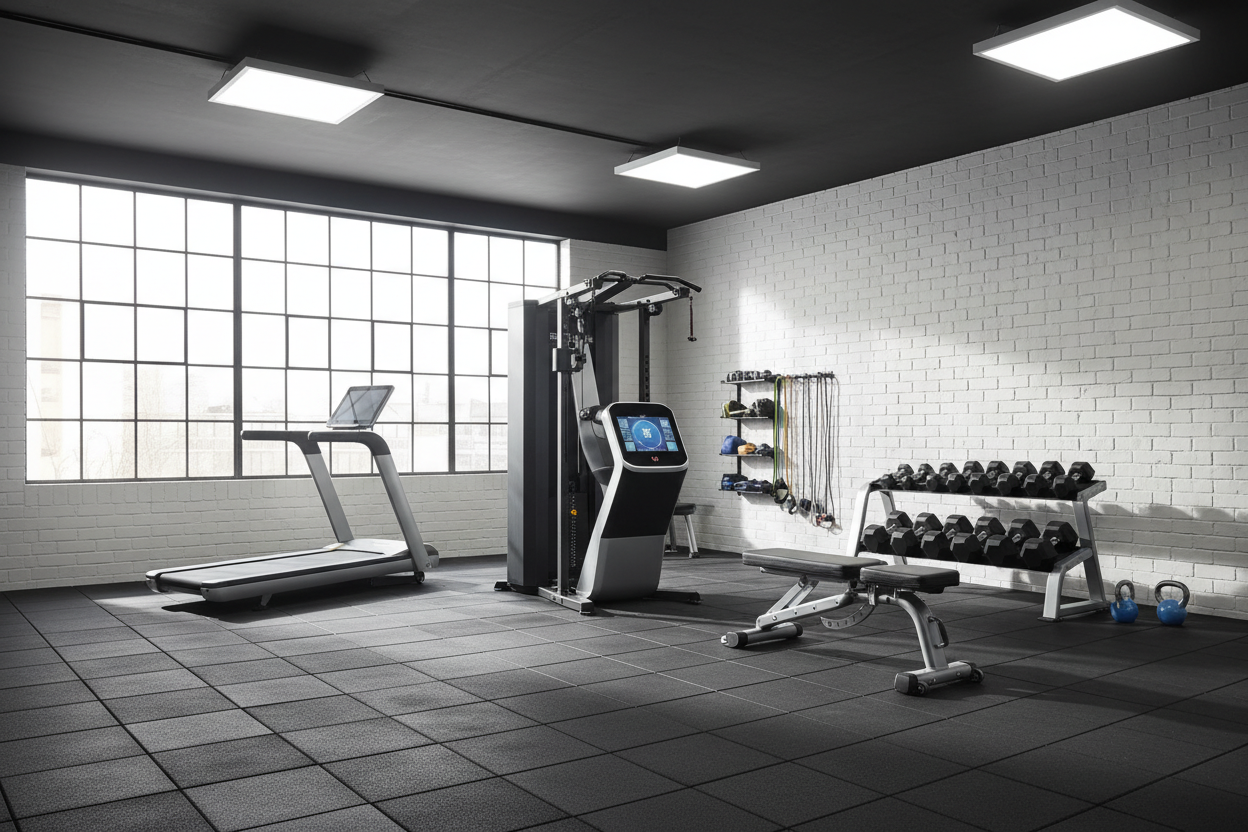
I remember the day my garage floor finally begged for mercy. Between the 45-lb plates, the kettlebells, and the power rack, I had about three square feet of space left to actually move. I spent my nights scrolling through equipment forums, wondering if a digital weight machine could actually deliver a 'real' workout or if it was just a fancy tablet attached to some expensive magnets.
- Constant tension means no momentum—every inch of the rep is earned.
- Eccentric loading features can trigger muscle growth that traditional iron struggles to match.
- Most stock benches included with these systems are surprisingly flimsy.
- Software subscriptions are a mandatory 'hidden' cost you need to budget for.
Ditching the Plates: How Electromagnetic Resistance Actually Feels
When you pull on an electronic weight machine, the first thing you notice is the lack of 'slack.' In a traditional gym, you can use a bit of 'body English' to get a heavy barbell moving. Gravity is predictable, but it also allows for momentum. With electromagnetic resistance, the motor is fighting you with the exact same force from the bottom of the rep to the very top. It is a sterile, unforgiving kind of heavy.
I tested this by running a high-volume back day. On a standard cable row, the weight stack starts to float if you pull too fast. On a digital system, the resistance is 'sticky.' It feels like pulling through heavy molasses. While it lacks the satisfying 'clink' of iron, the time under tension is significantly higher. You can't cheat the motor.
The tech usually tops out around 200 to 300 lbs of total resistance. For most of us, that is plenty for accessories, but heavy pullers might find the ceiling a bit low for deadlifts. However, because the tension never drops, 200 lbs on a digital screen feels more like 240 lbs on a pin-loaded stack. It is a different kind of fatigue that hits your nervous system hard.
The Eccentric Hook: Where Algorithms Beat Traditional Racks
The real 'magic' happens when the software takes over the eccentric portion of the lift. We all know that the lowering phase is where the most muscle damage (the good kind) happens, but we rarely maximize it because we are limited by what we can push back up. A smart gym can add 30% more weight on the way down automatically.
Safety is the other big win here. I’ve had my share of close calls flying solo in the garage. The auto-spotter on these machines is far more reactive than any mechanical system. While I appreciate the reliability of The Exact Body-Solid Smith Machine Bar Weight (I Measured It) when it comes to physical safety hooks, a digital machine simply 'zeroes out' the weight the moment it senses you struggling or tilting the bar. You don't get pinned; the weight just vanishes.
This allows you to train to absolute failure without a human spotter. It changes your psychology. You stop holding back those last two reps because there is no fear of a barbell crushing your windpipe. That alone can make up for the lack of raw poundage.
Navigating the Jargon: Smart Gyms vs. Trackers
Let's clear something up because the search results are a mess. If you are looking for a weight machine electronic system to build a chest like Arnold, you are looking for a resistance motor. Do not get confused and accidentally order an electronic body weight machine or a digital weighing machine thinking you are getting a deal. One builds muscle; the other just tells you how much pizza you ate last night.
I’ve seen people get frustrated because 'smart gym' marketing is intentionally vague. A 'digital weighing machine' is a bathroom scale. A 'digital weight machine' is a resistance-based training station. If the price tag is under $500, you are almost certainly looking at a scale or a very basic tracker, not a motorized resistance unit. Read the specs before you click buy.
Do You Still Need a Real Bench With a Smart Gym?
Here is my biggest gripe with the weight machine digital industry: the accessories. Most of these companies spend 95% of their budget on the software and the motor, leaving the 'physical' parts as an afterthought. The benches that come bundled in the box are often narrow, lightly padded, and have a weight capacity that makes me nervous.
If you are pressing 200 lbs of digital resistance, and you weigh 200 lbs, you are putting 400 lbs of stress on a bench that might only be rated for 500 lbs. That doesn't leave much of a safety margin. I almost always recommend ditching the stock unit and upgrading to a dedicated Adjustable Weight Bench Owb01. A solid, heavy-duty bench provides a wider base of support, which is crucial when you are fighting the constant lateral pull of digital cables.
Stability is the foundation of strength. If your bench is wobbling while the magnets are humming, your brain will subconsciously limit your output. Don't let a $100 piece of plywood and foam be the bottleneck for your $3,000 high-tech gym.
The Final Verdict: Who Should Actually Buy Into the Hype?
If you are a competitive powerlifter, you still need a rack and iron. There is no substituting the specific skill of balancing a physical barbell. But for the 90% of us who just want to look better and stay strong without losing our entire garage to a sea of metal, the digital era is actually here. It saves space, tracks every rep, and the eccentric loading is a legitimate advantage.
If you decide the subscription model and the 'hollow' feel of magnets aren't for you, there is no shame in sticking to the classics. You can get a high-quality Weight Bench and a set of dumbbells and do 99% of what a smart gym does. For those who want the isolation of a machine without the software, something like the Weight Bench Chest Press Machine Independent Arms Z1 Pro offers that heavy-duty, mechanical feel that never needs a firmware update.
Personal Experience: The Day the Wi-Fi Died
I was halfway through a heavy set of digital deadlifts when my router decided to reboot. On some machines, the resistance stays locked; on mine, it just went limp. It’s a weird feeling to go from 200 lbs of tension to zero in a millisecond. It reminded me that while this tech is cool, you are at the mercy of your internet connection and the company's servers. It’s the price you pay for convenience.
FAQ
Does a digital weight machine feel like real weights?
Not exactly. It feels 'smoother' but more constant. There is no momentum, so you can't use speed to get through a sticking point. It is often harder than the equivalent weight in iron.
Can I use these machines without a monthly subscription?
Usually, yes, but you lose the 'smart' features like progress tracking and eccentric modes. You are basically paying for a very expensive manual cable machine at that point.
Are they loud?
They are much quieter than clanging plates. You’ll hear a low hum from the fans and the motor, but it won't wake up the neighbors during a 5 AM session.
Share:
What Are Those Called? A Quick Guide to the Name of Weights
Your Ceiling Is Too Low: The Truth About Smith Machine Height