
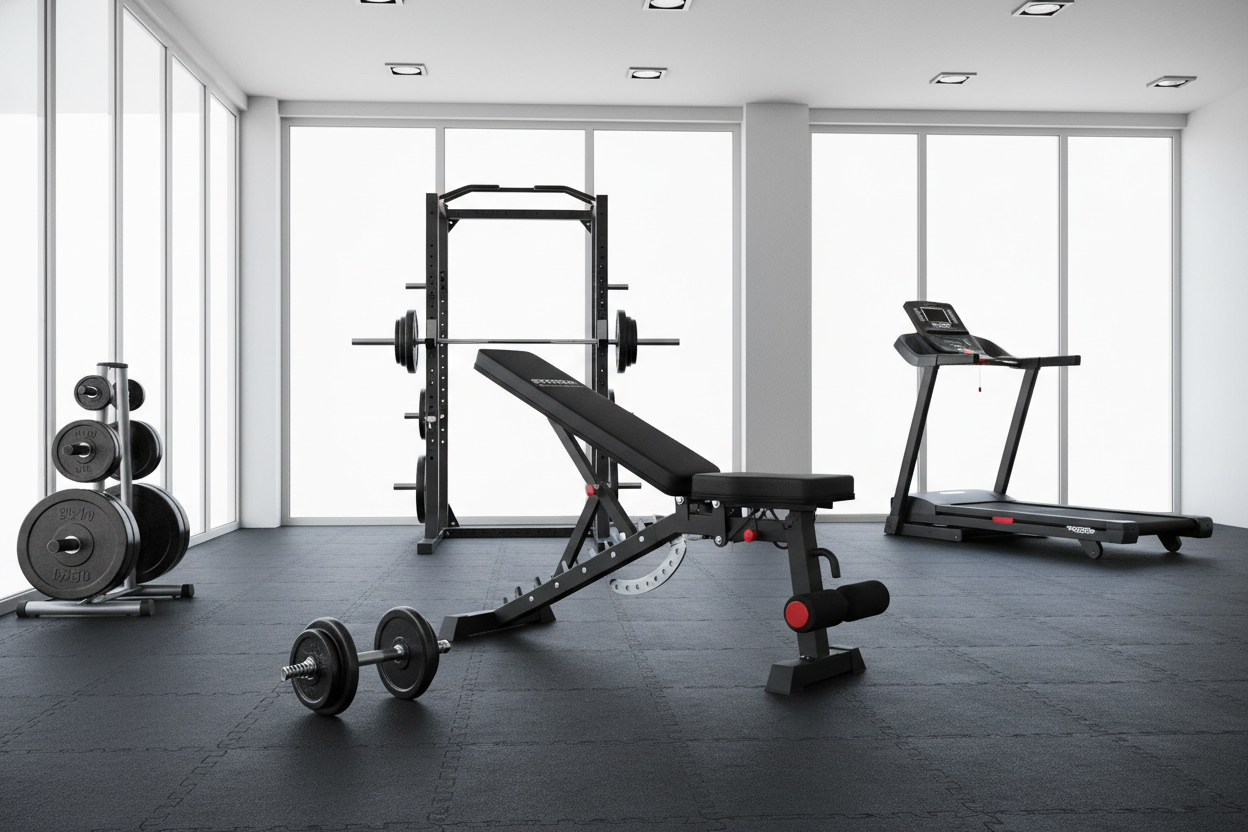
I remember the first time I set up a home gym in a spare bedroom. I spent all my money on a decent barbell and realized I had about fifty bucks left for a bench. You know the feeling—scrolling through budget listings at midnight, trying to convince yourself that a piece of equipment priced like a dinner for two won't collapse under a heavy set of presses. That is exactly where the sport essentials adjustable workout bench enters the conversation.
Quick Takeaways
- Weight Capacity: Rated for 300 lbs (this includes your body weight and the dumbbells).
- Footprint: Compact and light enough to throw in a closet, making it ideal for apartment dwellers.
- Assembly: Takes about 20 minutes with basic tools; don't expect 'overbuilt' hardware.
- The Verdict: A solid starter for light accessory work, but a liability for serious strength athletes.
The Dangerous Appeal of Ultra-Budget Gym Gear
We have all been tempted by the big-box store price tags. When you are just starting out, spending $300 on a competition-grade bench feels like overkill. You just want to stop doing floor presses and actually hit your chest from different angles. If you are upgrading from a flat pad, the lure of incline and decline settings for under a hundred dollars is strong.
But here is the reality check: budget gear is budget for a reason. Manufacturers save money on steel gauge and bolt quality. While a 300-lb capacity sounds like plenty, remember that if you weigh 200 lbs, you only have 100 lbs of 'room' for your weights before you hit the manufacturer's limit. For a beginner, that is fine. For anyone chasing a two-plate bench press, you are flirting with disaster.
First Impressions: Assembly and Build Quality
Out of the box, the Sport Essentials bench feels... light. That is the first thing you notice. It is likely made from 14-gauge or even 16-gauge steel, which is significantly thinner than the 11-gauge steel you find in commercial racks. The powder coating is thin, and I noticed a few flakes coming off just from tightening the bolts.
The wobble test was predictably average. On a flat, hard surface, there is a slight lateral sway. It is not 'falling over' wobbly, but it doesn't have that 'planted' feel of a heavy-duty unit. The padding is about 2 inches thick, which feels okay initially but starts to bottom out quickly under concentrated pressure.
Putting the Sport Essentials Adjustable Workout Bench to the Test
I took this bench through a standard push day. I started with some moderate dumbbell presses. At 50-lb dumbbells (plus my 190-lb frame), I was already at 290 lbs—right on the edge of the rated capacity. You can feel the frame flex slightly when you kick the weights back. It is a bit unnerving if you are used to high-end gear, but for slow, controlled reps, it stayed under me.
The vinyl is quite slick. If you don't have a shirt on or if you are sweating heavily, you will slide around during your set. I had to use a grip pad to keep my shoulders from migrating toward the headrest during incline work. It is a functional bench, but it requires you to be mindful of your balance in a way that a heavier bench doesn't.
The Infamous Pad Gap Problem
Every adjustable bench has a gap where the seat meets the backrest, but on ultra-budget models like this, it can be a canyon. On the Sport Essentials bench, the gap is about 2.5 inches. If you are a shorter lifter, your lower back might land right in that hole during a flat press. It is annoying at best and painful at worst. I ended up stuffing a rolled-up towel in there just to get some lumbar support during my heavy sets.
Does It Feel Stable on an Incline?
Moving to the incline position, the adjustment mechanism uses a simple pin and ladder system. It is quick to change, but there is some play in the hinge. When I leaned back for 45-degree presses, I could feel the backrest shift slightly to the left. It didn't fail, but that micro-movement is enough to throw off your mental focus during a PR attempt.
I have seen people ask if they should get this or a more complex workout bench with leg curl attachments. My advice? Stick to the basics. Adding more moving parts to a budget frame usually just makes it more unstable. This bench is better off being a simple incline/decline tool than trying to be a multi-gym.
When You Should Probably Upgrade
If you find yourself consistently lifting more than 50-lb dumbbells, or if your body weight is north of 220 lbs, you have outgrown this bench. Safety isn't just about the bench not snapping in half; it is about the confidence to push yourself without wondering if the hinge is going to shear off. There are plenty of durable weight bench options that offer 600-lb to 1,000-lb capacities for just a bit more money.
If you want something that bridges the gap between 'cheap' and 'pro-grade,' I usually point people toward the Adjustable Weight Bench Owb01. It uses better steel and has a much more secure locking mechanism. It is the kind of bench you buy once and keep for a decade, rather than something you replace in six months because you're afraid of it.
FAQ
Is the Sport Essentials bench good for tall lifters?
Not really. If you are over 6'1', you will likely find your head hanging off the end during flat presses. The backrest is relatively short to keep the shipping box small.
Can I use this for a barbell bench press?
Technically yes, but I wouldn't. The narrow footprint makes it easy to tip if you rack the bar unevenly. It is much better suited for dumbbell work.
Does it fold flat for storage?
Most versions of this bench do fold down, which is its biggest selling point. You can slide it under a bed or stand it up in a corner when you are done.
Share:
Ego Check: Is Smith Machine Bench Easier Than a Regular Barbell?
Why Your Weights Bench With Storage Ruins Your Leg Drive