
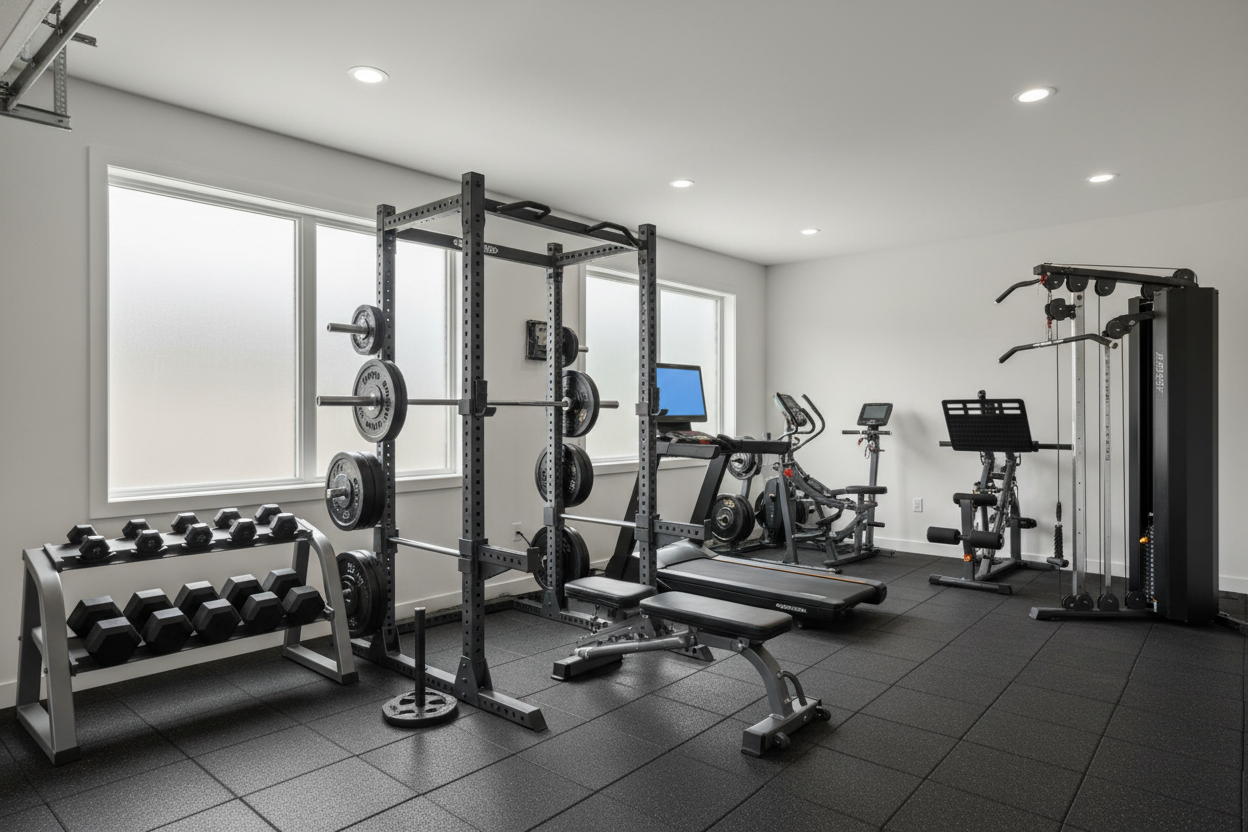
I remember the first time I walked into a high-end commercial club after years of training in a dusty garage. I felt like I had landed in a foreign country. Rows of polished steel and black upholstery stretched out, each unit plastered with stickers like 'Iso-Lateral Plate Loaded Super Incline.' I spent twenty minutes just trying to figure out what the machines gym names actually meant so I didn't look like a total novice.
The truth is, most of that jargon is there to justify a five-figure price tag to gym owners. You don't need a degree in mechanical engineering to get a pump. If you know the basic movement patterns, you know the equipment.
- Most commercial names are just marketing fluff for simple movements.
- Focus on the muscle group being worked, not the brand on the frame.
- Functional trainers and cables offer the most bang for your buck.
- A high-quality adjustable bench is the most versatile tool you can own.
The Marketing Fluff Behind Gym Equipment Terminology
Manufacturers love to invent complex gym equipment terms. Why? Because calling a machine a 'Chest Press' sounds cheap. Calling it an 'Axis-Rotating Pectoral Converging Station' sounds like something worth $8,000. When you see these long-winded gym equipment terminology tags, take a breath. It’s almost always a fancy way of saying 'push' or 'pull.'
I've tested units where the only difference between the 'Pro' and 'Elite' versions was the color of the weight stack shroud and a slightly more aggressive-sounding name. Don't let the vocabulary intimidate you. If you see a seat and two handles that move away from your chest, it’s a chest press. If you see a bar hanging from a cable above your head, it’s a lat pulldown. The fancy stickers are for the accountants, not the lifters.
Upper Body Weight Machine Names (Translated for Humans)
Let’s cut through the noise of common weight lifting equipment names. You’ll often see 'Vertical Press' or 'Converging Press'—those are just chest presses. The 'Converging' part just means the handles move closer together at the top of the movement, which is actually great for a better squeeze on the pecs. If you want that same feel at home, the Weight Bench Chest Press Machine Independent Arms Z1 Pro mimics those high-end commercial machines by allowing each arm to move separately, preventing your dominant side from doing all the heavy lifting.
Then there's the 'Row' category. You might see 'Seated Row,' 'Low Row,' or 'T-Bar Row.' They all target your back. The 'Lat Pulldown' is the one where you pull the bar to your chin. If the machine has a pad against your chest and you pull handles toward your stomach, it’s a row. These are the weight machine names that actually matter because they describe the function, not the brand’s ego.
What Are the Machines at the Gym Called for Leg Day?
Leg day is where the gym stuff names get really weird. You have the 'Leg Press,' which is the big sled you sit in and push away with your feet. Usually, these are at a 45-degree angle. Then there’s the 'Hack Squat.' In a hack squat, you’re standing up with your back against a pad and pushing the weight up. It’s a quad-killer, but don't let the name confuse you—it’s just a stabilized squat.
You’ll also run into the 'Leg Extension' (straightening your legs to hit the quads) and the 'Leg Curl' (bending your legs to hit the hamstrings). Some gyms have 'Seated' vs 'Prone' (lying down) leg curls. The weight gym equipment names might change, but the mechanics don't. If you’re looking at a machine and wondering what it does, look at where the pivot point is. That will tell you which joint is moving and which muscle is working.
The Only Gym Stuff Names You Actually Need to Know
If I were stripping a gym down to the essentials, I’d throw away 80% of the single-use machines. You really only need to know a few gym weights name categories to build a world-class physique. The 'Functional Trainer' is the king—it’s that big unit with two adjustable cable pulleys. You can do almost anything on it. Pair that with a set of dumbbells and a solid rack, and you're set.
The most underrated piece of 'gym stuff' is a high-quality Weight Bench. Whether it’s flat, incline, or decline, a bench is the foundation for your presses, rows, and even some leg work like Bulgarian split squats. I’ve seen people spend thousands on specific 'pec deck' machines when they could have just used a bench and some dumbbells for the same result. Keep your gym equipment terms simple: if it moves, it’s a tool. If it collects dust, it’s an obstacle.
How I Replaced the Confusing Commercial Floor at Home
After years of paying $60 a month to wait in line for a 'Linear Bearing Leg Press,' I finally hit a breaking point. I realized I was paying for the names, not the results. I started looking at how I Missed the Weight Machines at the Gym (So I Built My Own) and realized I could get the same mechanical tension with much simpler gear. I traded the 50-machine circuit for a power rack, a cable tower, and a few select pieces that actually fit my space.
My first mistake was trying to buy the exact commercial units I saw at the gym. They were too big, too heavy, and way too expensive for a 20x20 garage. Once I stopped caring about the 'official' machines gym names and started looking at the actual footprint and pulley ratios, I built a setup that actually gets used every day. Don't get caught up in the jargon—buy for the movement, not the nameplate.
FAQ
What is the most important machine for a beginner?
The cable tower or functional trainer. It’s the most versatile and safest way to learn movement patterns before moving to heavy free weights.
Are plate-loaded machines better than selectorized (pin) machines?
Plate-loaded machines usually feel more 'raw' and allow for a higher weight capacity, but pin-loaded machines are faster for drop sets and easier for beginners to adjust.
What is the difference between a Smith machine and a Power Rack?
A Smith machine has a barbell fixed on a vertical track. A Power Rack is just a steel cage that holds a loose, free-moving barbell. Use the rack for strength and the Smith for hypertrophy or stability.
Share:
Can a Leg Press and Curl Machine Really Replace Three Stations?
Is a Smith Rig the Best Exercise Machine for Full Body Workout Plans?