
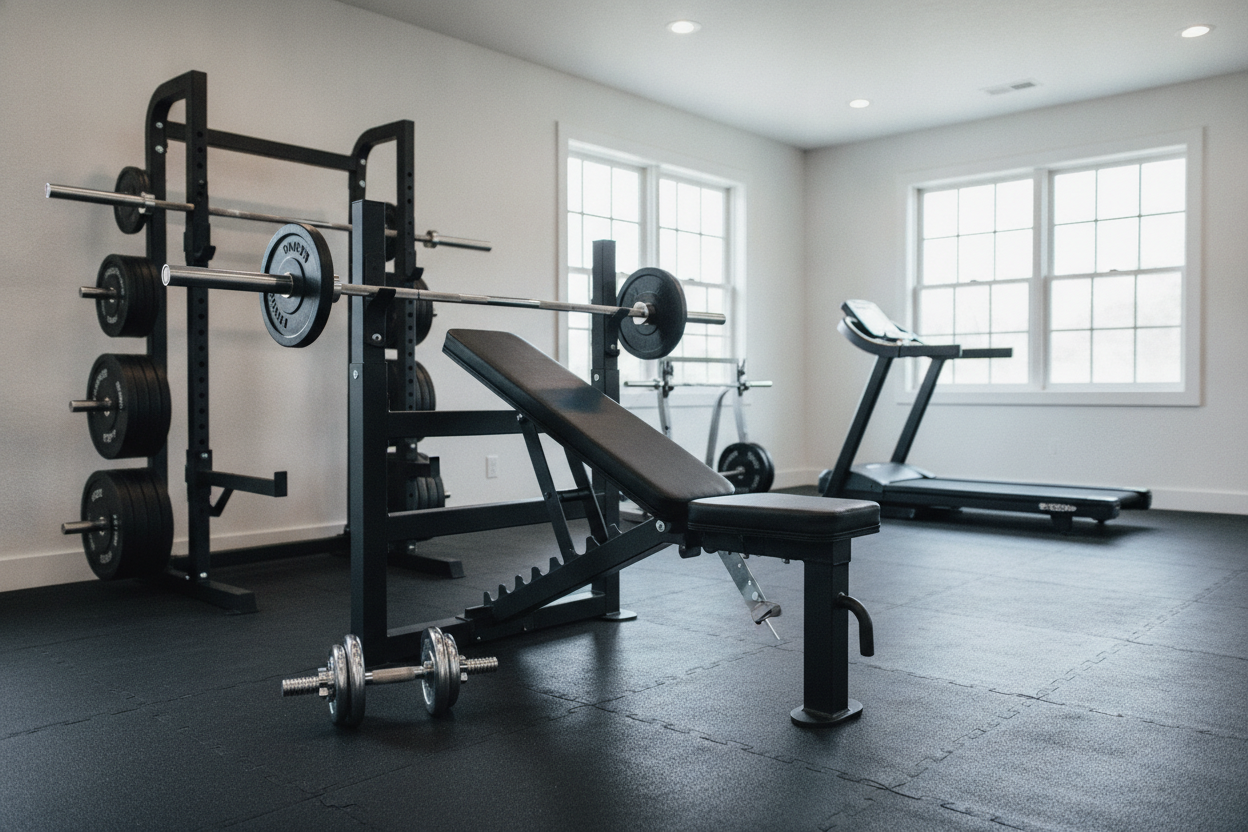
I remember the exact moment I realized my 'good enough' gym setup was actually a liability. I was midway through a set of dumbbell presses with 85s when I heard a distinct, sickening crunch. It wasn't my shoulder, thankfully—it was the cheap plywood backing of my $60 bench giving up the ghost. That split second of instability, where the bench wobbled and I nearly dumped 170 pounds of iron onto my face, changed how I look at gear forever.
If you're serious about lifting, a weight bench professional model isn't just about looking cool in your garage. It's about having a foundation that doesn't flex when you're under a heavy load. You wouldn't build a house on a sand foundation, so don't build your strength on a frame held together by thin bolts and prayers.
Quick Takeaways
- Steel Gauge: Look for 11-gauge steel; anything thinner belongs in a patio chair.
- Weight Capacity: Aim for a 1,000-lb true rating to ensure zero frame flex.
- Pad Density: You want high-density foam that supports your scapula, not soft sponge.
- Footprint: A tripod front design gives your feet more room to drive into the floor.
The Day My Budget Pad Almost Crushed Me
That crack I heard wasn't an anomaly. Cheap benches use MDF or thin plywood under a layer of low-grade foam. When you apply focused pressure—like your shoulder blades digging in during a max effort press—that wood eventually fatigues. I spent the rest of that workout shaking, realizing I'd been risking a trip to the ER to save a couple hundred bucks.
After that close call, I went down the rabbit hole of specs. I realized that my previous bench was actually a glorified lawn ornament. It was then I decided to invest in a heavy duty incline weight bench that could actually handle the progression I was aiming for. If you're planning on moving more than 200 pounds total, budget gear is a ticking time bomb.
The peace of mind you get from a rock-solid frame is worth every penny. You can focus entirely on the lift instead of wondering if the bench is going to tip over if you shift your weight slightly. That mental shift alone added ten pounds to my bench press in a week. Safety isn't an 'extra' feature; it's the baseline requirement for any heavy duty weight lifting bench.
What Actually Makes a Weight Bench Professional?
In the equipment world, 'commercial grade' gets thrown around a lot, but real pros look at the steel. A heavy gym bench should be built from 11-gauge steel tubing. For those who don't speak metal: the lower the gauge, the thicker the steel. Most big-box store specials use 14-gauge or even 16-gauge, which feels like a soda can when you're trying to set a PR.
Then there's the pad. A professional-grade pad uses high-density rebond foam. When you push your thumb into it, it should resist. If it feels like a pillow, your shoulders will sink right through it to the hard frame below, which is a great way to wreck your rotator cuffs. Look for a heavy gym bench with a vinyl thickness of at least 1.5mm and a grippy texture so you don't slide around when you're sweating.
Engineering also matters. A professional bench usually features a tripod base or a very specific rear-stabilizer width. The goal is to maximize stability while keeping the area where your feet go clear. If you find yourself tripping over the front legs of your bench during setup, it's poorly designed. Professional models also use massive Grade 8 bolts or better, ensuring the pivot points on an incline bench don't develop the wobbles after six months of use.
So, What Weight Bench Should I Buy?
This is the question I get most often from guys starting their home gym. The answer depends on your ceiling. If you are strictly a powerlifter, a dedicated flat bench is often the way to go because it's simpler and sturdier. However, for 90% of home lifters, a high-quality adjustable weight bench is the smarter play. It lets you hit inclines, seated presses, and flat work without taking up more floor space.
When asking what weight bench should I buy, look at the adjustment mechanism. Cheap benches use a flimsy pin that you have to screw in and out. Professional models use a ladder-style adjustment or a robust pop-pin. The ladder is my favorite because it's fast and virtually impossible to fail. You also want to check the pad gap. If the hole between the seat and the back pad is more than two inches, it's going to be a literal pain in the butt when you're doing flat benching.
Don't get distracted by attachments like leg developers or preacher curls stuck onto the front. Usually, these just make the bench less stable. A professional tool does one job exceptionally well. If you want to train legs, get a squat rack. If you want a workout bench heavy duty enough to last a decade, buy the one that focuses on the frame and the pad, not the bells and whistles.
The Hidden Cost of Flimsy Equipment
I've spent more money on cheap gear over the last decade than I have on the high-end stuff. Why? Because I had to buy the cheap stuff three times. A $100 bench lasts a year before the vinyl rips and the frame starts to creak. Then you buy another $150 upgraded version that lasts two years. By the time you finally buy a $400 professional model, you've spent $650.
This is the 'buy once, cry once' philosophy. A workout bench heavy duty enough for a commercial gym will literally outlive you in a home environment. It’s a piece of hardware that doesn't have a shelf life. Ten years from now, that 11-gauge steel will still be 11-gauge steel. The powder coating might have a few scratches from your wedding ring or a dropped dumbbell, but the structural integrity will be identical to day one.
There's also the resale value. If you ever decide to move or stop lifting, a professional-grade bench holds about 60-70% of its value on the used market. Try selling a wobbly, ripped budget bench on Marketplace—you'll be lucky if someone takes it for free just to get it out of your garage. You aren't just buying a bench; you're securing an asset for your gym.
Features You Can Skip (And What You Can't)
Marketing teams love to talk about 7-position back pads or extra thick padding. Don't fall for it. You really only need 0, 30, 45, 60, and 85 degrees. Anything more is just extra holes in the steel that can weaken the structure. What you can't skip is a heavy duty weight lifting bench with reinforced hinges. The hinge is the weakest point of any adjustable bench; if it looks thin, it's because it is.
Compare a stationary pro bench to a portable weight lifting bench. While portability is great for small apartments, you usually sacrifice some lateral stability. If you have the space, go for the heavier, non-folding option. The extra 20 pounds of steel in the frame makes a massive difference when you're trying to stay tight during a heavy set.
Lastly, ignore the fancy logos and carbon fiber textured vinyl. It’s purely aesthetic. Focus on the bolt size and the weld quality. If the welds look like a mess of splatter on the steel, stay away. Clean, uniform welds are a sign that the manufacturer actually cares about the structural integrity of the piece. Your safety is worth more than a cool-looking sticker on the side of a flimsy tube.
FAQ
Is a 1,000-lb capacity bench overkill if I only lift 200 lbs?
No. That rating is a measure of structural stiffness. A bench rated for 1,000 lbs won't wobble or flex when you're moving 200 lbs, whereas a bench rated for 300 lbs will feel like a noodle under that same load. You want overhead capacity for stability.
What is the best height for a weight bench?
The standard is between 16.5 and 17.5 inches. This height allows most lifters to get their feet flat on the floor for proper leg drive. Anything taller than 18 inches can make it hard to stay stable if you have shorter legs, which ruins your power output.
How often should I tighten the bolts on my bench?
Check them every three to six months. Even the best benches can have bolts loosen slightly due to the vibrations and lateral forces of heavy lifting. A quick turn with a wrench keeps everything silent and safe, preventing the frame from developing unnecessary play.
Share:
The Weight Capacity Lie Hidden in Your Bench and Weights Package
I Tested the Valor Fitness Bench (And the Independent Arms Surprised Me)