
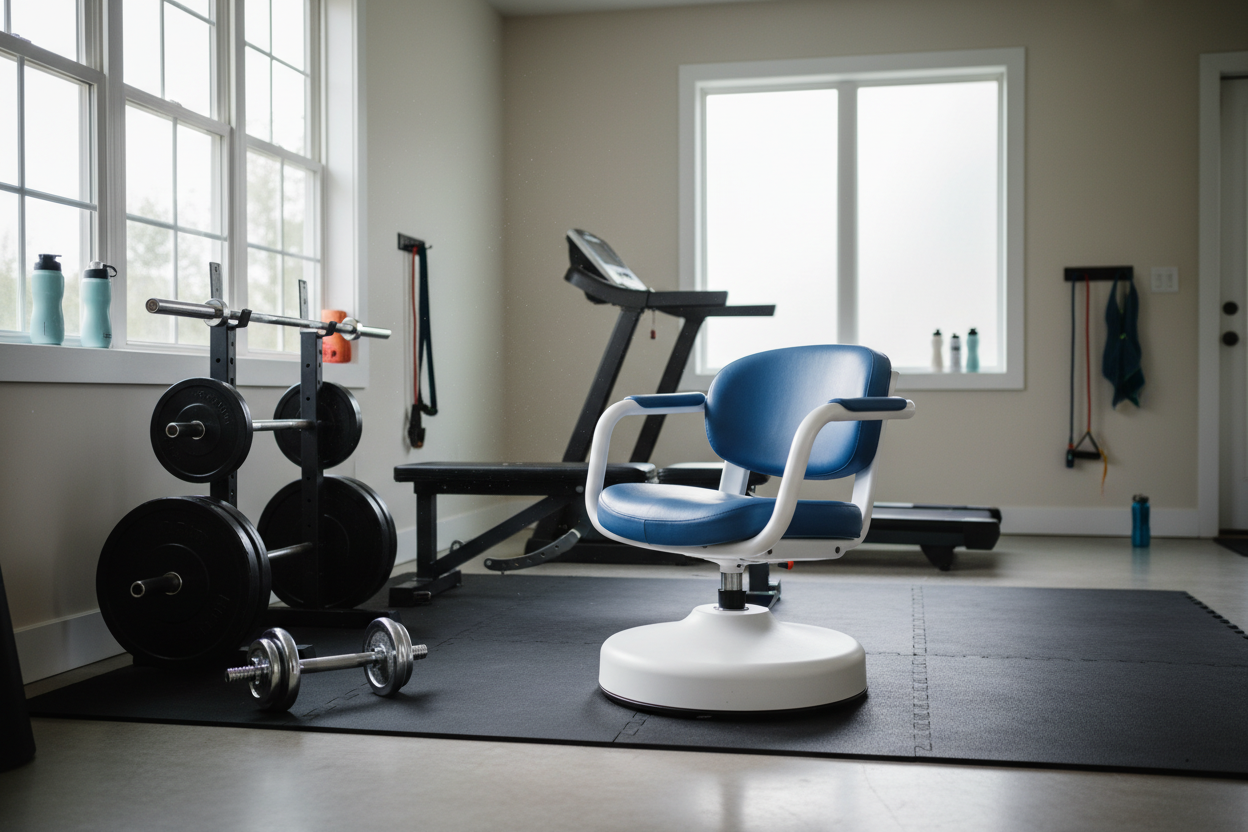
I remember the first time I saw it. It was 2:00 AM, the gym was closed, and I was deep into a rabbit hole of fitness infomercials. Amidst the protein shakers and weighted vests, there it was: a motorized office chair that promised to swivel your abs into a six-pack while you sat at your desk. It looked like a carnival ride gone wrong. Decades later, the question still pops up in my inbox: does the hawaii chair work, or was it the greatest fitness prank ever pulled on the American public?
Quick Takeaways
- The Hawaii Chair is a relic of 'passive exercise' marketing—it moves you; you don't move it.
- It provides zero meaningful resistance, meaning no muscle growth or significant calorie burn.
- Using it at a desk is practically impossible due to the violent hula motion.
- Real core strength requires stabilization against external loads, not vibrating in a seat.
Taking the 'Work' Out of Your Workout (Yeah, Right)
The marketing pitch for the hawaii chair hula chair was peak 2000s audacity. They claimed it 'takes the work out of your workout.' As someone who has spent years under a barbell, that phrase should be an immediate red flag. Fitness isn't something that happens to you while you're passive; it’s an adaptation to stress. The idea that you could sit on an electric hula chair, answer emails, and somehow emerge with a chiseled midsection is a fantasy designed to sell hardware to people who hate the gym.
I’ve seen plenty of gimmicks, but this one was special because it targeted the office worker. We all know sitting is the new smoking, but the solution isn't a chair that tries to shake your soul out of your body. If you’re not creating tension, you’re not creating change. Period.
What Exactly Happens When You Sit on a Hula Chair?
The mechanics of the hawaii chair hula chair are simple and slightly terrifying. It features a base equipped with a motor that supposedly hits 2800 RPM. That motor drives the seat in a circular, hula-like motion. When you sit on it, your hips are forced into a constant, rhythmic rotation. The electric hula chair basically does the hula for you, while you try to maintain some semblance of dignity.
In practice, it’s chaotic. If you’ve ever seen the viral clips of news anchors trying to read the teleprompter while sitting on one, you know the reality. Your head bobs, your coffee spills, and your typing looks like you’re having a localized earthquake. The hula chair exercise fitness machine wasn't just ineffective; it was functionally disruptive. It’s hard to focus on a spreadsheet when your pelvis is being whipped around at high speeds by a budget motor.
The Biological Myth of 'Passive' Core Training
So, does the hawaii chair work for weight loss or muscle tone? To answer that, we have to look at how muscles actually grow. Hypertrophy and strength gains require mechanical tension and metabolic stress. When you use a hula chair exercise fitness machine, the machine is the one doing the work. Your muscles might twitch slightly to keep you from falling off, but they aren't overcoming a load. This is 'passive exercise,' and it’s largely a myth in the context of building a physique.
You aren't burning a significant amount of calories because your heart rate stays low. You aren't building a 'bulletproof core' because your abs aren't bracing against anything. Real core training involves resisting motion (anti-rotation, anti-extension) or moving a weight through a range of motion. Being jostled by a motor doesn't count. It’s the difference between running a mile and riding a bus—one requires effort, the other just requires you to be present.
What You Actually Need to Build Bulletproof Hips and Glutes
If you actually want to see changes in your midsection and lower body, you need to stop looking for shortcuts and start looking for resistance. The 'hula' motion is a joke compared to the stimulus provided by a heavy set of squats or hinges. To build real power in your posterior chain, you need equipment that lets you load the movement safely and progressively.
Instead of a motorized seat, I’d point any serious trainee toward a dedicated hip thrust machine. Why? Because it allows you to isolate the glutes and hips with hundreds of pounds of actual resistance. That tension is what forces the body to adapt, get stronger, and look better. You can't simulate the metabolic demand of a heavy hip thrust by sitting on a vibrating chair. One builds a powerhouse physique; the other just makes you dizzy.
Stop Searching eBay for Vintage Infomercial Gadgets
I see people occasionally looking for a hawaii hula chair for sale on eBay or trying to find an old hawaii hula chair website out of some sense of nostalgia or desperate hope. Save your money. These machines were often built with cheap components and are notorious for breaking down. More importantly, they take up valuable floor space in your home gym that could be used for something that actually produces results.
If you're tight on space but want real leg and core development, look for multi-functional gear. A compact leg press and hack squat combo will do more for your lower body in one month than a lifetime of sitting on a hula chair. You want equipment that challenges your nervous system and forces your muscles to fire. Don't buy a museum piece of fitness failure; buy something that lets you move some iron.
The Final Verdict on the Hawaii Chair
My hawaii chair review is pretty straightforward: it’s a classic piece of fitness kitsch that belongs in a hall of fame for bad ideas. It represents an era where we tried to outsource effort to machines. While it’s fun to laugh at the old commercials, the science hasn't changed. Effort is the currency of fitness. You can't buy a chair that does the work for you.
If you want a strong core, do some planks, hanging leg raises, and heavy carries. If you want better hips, lift heavy things off the floor. The Hawaii Chair might be a great conversation starter at a party, but it’s a terrible way to spend your training budget. Stick to the basics, embrace the sweat, and leave the motorized hula dancing to the late-night TV archives.
My Personal Experience
I actually encountered one of these at a thrift store a few years back. Out of pure curiosity, I plugged it in. Within thirty seconds, I realized that trying to do anything productive—like checking my phone—was a lost cause. The vibration was loud, the motion felt jerky rather than fluid, and I felt exactly zero 'burn' in my abs. It felt like sitting on a washing machine during the spin cycle. I left it at the store, and I suggest you do the same if you ever find one in the wild.
FAQ
Is the Hawaii Chair still being manufactured?
No, the original Hawaii Chair is no longer in mass production. You can occasionally find them on secondary markets like eBay or Craigslist, but the original company has long since moved on.
Does it help with back pain?
There is no clinical evidence to suggest that the Hawaii Chair helps with back pain. In fact, the uncontrolled, rapid twisting motion could potentially aggravate existing spinal issues for some users.
What is a better alternative for an 'active' office chair?
If you want to stay active at work, a standing desk or a simple balance ball chair is a much better bet. They require you to use your own muscles to stabilize yourself rather than relying on a motor.
Share:
I Built a Power Rack Setup But Still Missed The Gym Machines
Why the Best Home Gym All-In-One Needs a Built-In Smith Rack