
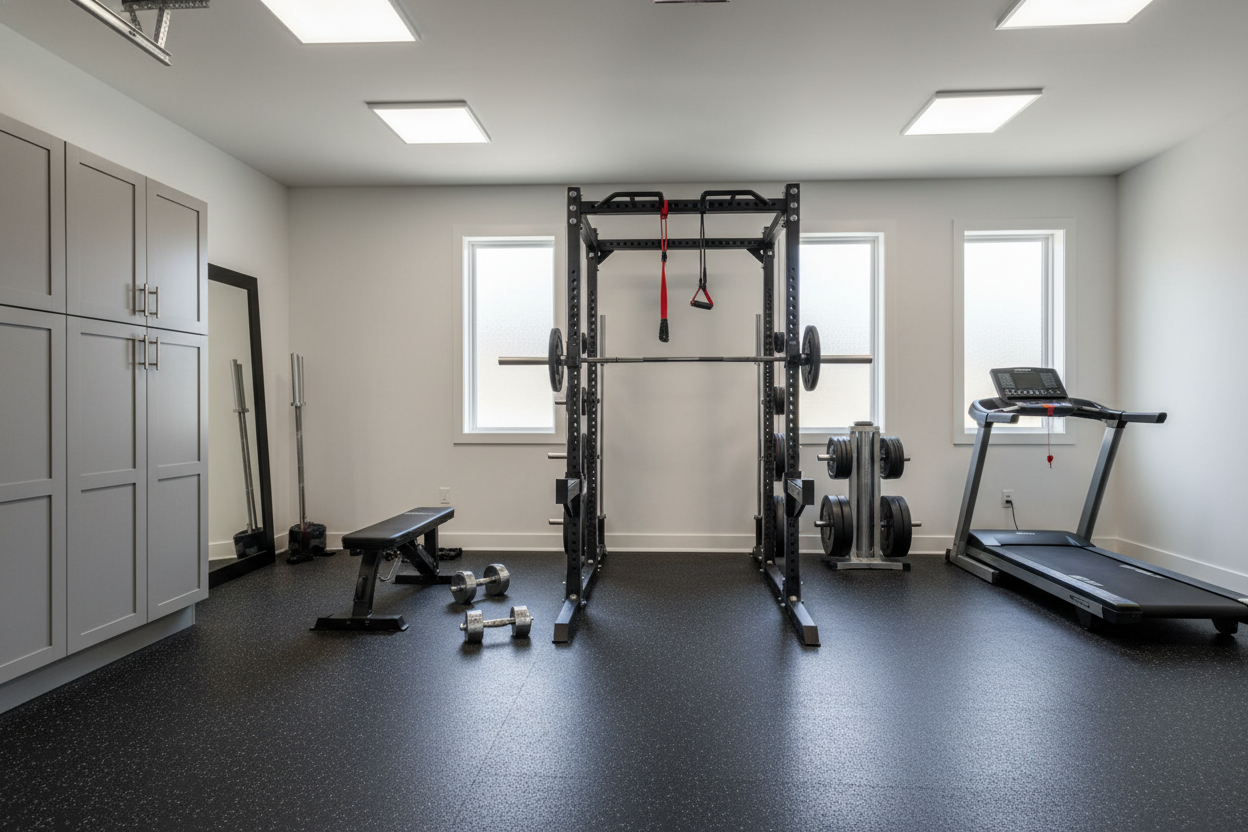
I remember staring at my garage floor with a tape measure in one hand and a cold coffee in the other, trying to figure out how a 7-foot rack, a functional trainer, and a plate tree were all going to fit in a space that barely accommodates my truck. Then the ads started hitting: a massive, chrome-plated power gym machine that promised to replace ten different stations. It looks like a spaceship, costs as much as a used Honda, and promises the world. But I have bought those 'all-in-one' dreams before, and I have got the rusted, wobbly scrap metal to prove that marketing hype rarely survives a heavy leg day.
Quick Takeaways
- Most cheap all-in-ones use 1:1 pulley ratios that feel jerky and limit your range of motion.
- Transition time is the silent killer—if it takes three minutes to swap attachments, you will stop using the machine.
- Look for 11-gauge steel; 14-gauge frames will sway like a palm tree when you re-rack a heavy barbell.
- Integrated Smith machines must have high-quality linear bearings or they will stutter under load.
The All-in-One Fantasy vs. Garage Gym Reality
Marketing photos are a masterpiece of deception. They show a guy with 4% body fat doing cable flyes with perfect form, but they do not show the fifteen minutes he spent moving pins, adjusting pop-pins, and tripping over a bench to set that up. In reality, many of these 'do-it-all' units are built with thin 14-gauge steel that sways when you do a pull-up. If the frame isn't solid, your confidence won't be either. I have tested units where the 'smooth' cables felt like they were being dragged through a bucket of gravel. That friction ruins the mind-muscle connection. You end up fighting the machine's mechanical incompetence instead of the weight stack.
The biggest frustration is the 'clunk factor.' In a commercial gym, you move from the rack to the cable crossover in five seconds. In a garage gym with a poorly designed all-in-one, you are constantly playing Tetris. You have to remove the spotter arms to use the cables, or move the bench out of the way to use the lat pulldown. If you are someone who likes supersets, these machines can be a nightmare. You spend more time as a mechanic than a lifter. I have seen guys sell their $3,000 multi-gyms within six months just because they missed the simplicity of a standalone rack. Do not underestimate how much a clunky transition will drain your motivation to train.
What Actually Makes a Power Gym Machine Worth the Footprint?
If you are going to drop three or four grand and sacrifice half your garage, you need to look at the 'bones' of the unit. I am talking about 11-gauge steel, at least 3x3 or 2x3 inches. Anything less is a toy. Then look at the pulley system. A 2:1 ratio is standard for functional trainers, giving you more cable travel and a smoother pull for accessory work. But for heavy movements, some lifters prefer a 1:1 ratio. If you are looking at a heavy-duty Smith machine station, the linear bearings are the make-or-break point. If they use cheap plastic bushings instead of high-grade commercial bearings, the bar will catch and stutter. That is a recipe for a shoulder injury during an incline press.
Check the weight stacks carefully. Are they cast iron or plastic-shrouded cement? Iron does not crack; cement does. Also, look at the cable rating. You want aircraft-grade cables rated for at least 2,000 lbs. I once snapped a cheap cable doing seated rows, and the handle nearly took my teeth out. It is also about the small details—stainless steel uprights instead of painted ones. Paint chips the first time you adjust your J-cups, leading to rust. Stainless stays smooth forever. A machine is only worth its footprint if it performs as well as the individual pieces of equipment it is trying to replace. If the cable column is too narrow for a real chest flye, or the chin-up bar is too low for a full hang, the machine is failing its primary job.
The Free Weight vs. Fixed Path Debate (Spoiler: You Need Both)
Lifters often get paralyzed by the power rack or Smith machine debate, acting like they have to pick a side in a war. The truth is that both have a place in a real program. You want the rack for your heavy triples in the squat to build stability, but the Smith machine is an incredible tool for high-volume hypertrophy work where you do not want to worry about balancing the load. The best all-in-one rigs do not make you choose. They have a front-facing rack for your barbell work and a Smith bar tucked inside. This integration allows you to move from a heavy free-weight bench press straight into a Smith machine incline press for a burnout set without walking across the room.
However, the biomechanics must be right. Some machines have a Smith bar on a slight angle, while others are vertical. If you are a fan of old-school bodybuilding, that 7-degree slant is great for pressing. If you are a powerlifter, you might hate it. The key is ensuring the cable columns do not interfere with your barbell path. I have used machines where I had to remove the cable handles just to squat without hitting them. That is a design flaw that will drive you crazy. You want a rig that respects the space requirements of a 7-foot Olympic bar while still giving you the versatility of a functional trainer.
Lower Body Woes: The Achilles Heel of Multi-Gyms
This is where almost every multi-gym falls on its face. The 'leg developer' attachments are usually garbage—flimsy foam rollers that hit your shins at the wrong angle and have a weight capacity that a teenager could max out. And do not get me started on using a Smith bar for a leg press. It is an ergonomic nightmare that puts your lower back in a vulnerable position. If you actually care about leg day, you will realize a dedicated leg press and hack squat combo is a far better investment of your floor space. You get a real footplate and a resistance curve that actually targets the quads without wrecking your knees.
Even for glute work, trying to rig a cable belt squat on a machine that wasn't built for it is a pain in the neck. I would much rather have a standalone hip thrust machine that lets me load up 400 lbs in seconds without faffing about with carabiners and floor pulleys. Most power gym machines try to be a 'jack of all trades' but end up being the 'master of none' when it comes to the lower body. If your goals involve building massive legs, you need to look at how much weight the machine can actually handle on the low pulley. If the stack tops out at 150 lbs, you are going to outgrow it for cable pull-throughs and lunges in about a month.
My Golden Rule for Buying Big Equipment
My rule is simple: Don't buy for the lifter you hope to be in a year; buy for the training you actually do today. If your logbook is 90% barbell work, a massive cable-heavy machine is a waste of your money and floor space. But if you are a bodybuilder who thrives on time-under-tension and cable variations, the all-in-one starts to make a lot of sense. Just check the transition time. If it takes you two minutes to switch from a chest press to a row, your heart rate drops, your focus slips, and your workout takes two hours instead of one. Efficiency is the secret to home gym consistency. If the machine makes it hard to work out, you eventually won't.
FAQ
Is 11-gauge steel really necessary for a home gym?
If you are lifting heavy or want the machine to last a decade, yes. Thinner 14-gauge steel flexes under load, which leads to bolts loosening and a frame that feels 'sketchy' during max-effort sets. 11-gauge is the commercial standard for a reason.
What is better: weight stacks or plate-loaded machines?
Weight stacks are faster and keep the gym cleaner, but they are significantly more expensive. Plate-loaded machines save you money up front but add five to ten minutes of plate-shuffling to every workout. If you have the budget, stacks are always the better experience.
How much ceiling height do I actually need?
Most power gym machines are between 82 and 85 inches tall. However, you need to account for your head clearance during pull-ups. If you have an 8-foot ceiling and the machine is 7 feet tall, you are going to hit your head on the drywall every time you do a rep.
Share:
How to Squeeze a Complete Weight Set Into a 1-Car Garage
Which Leg Exercises Machines Actually Belong in a Garage Gym?