
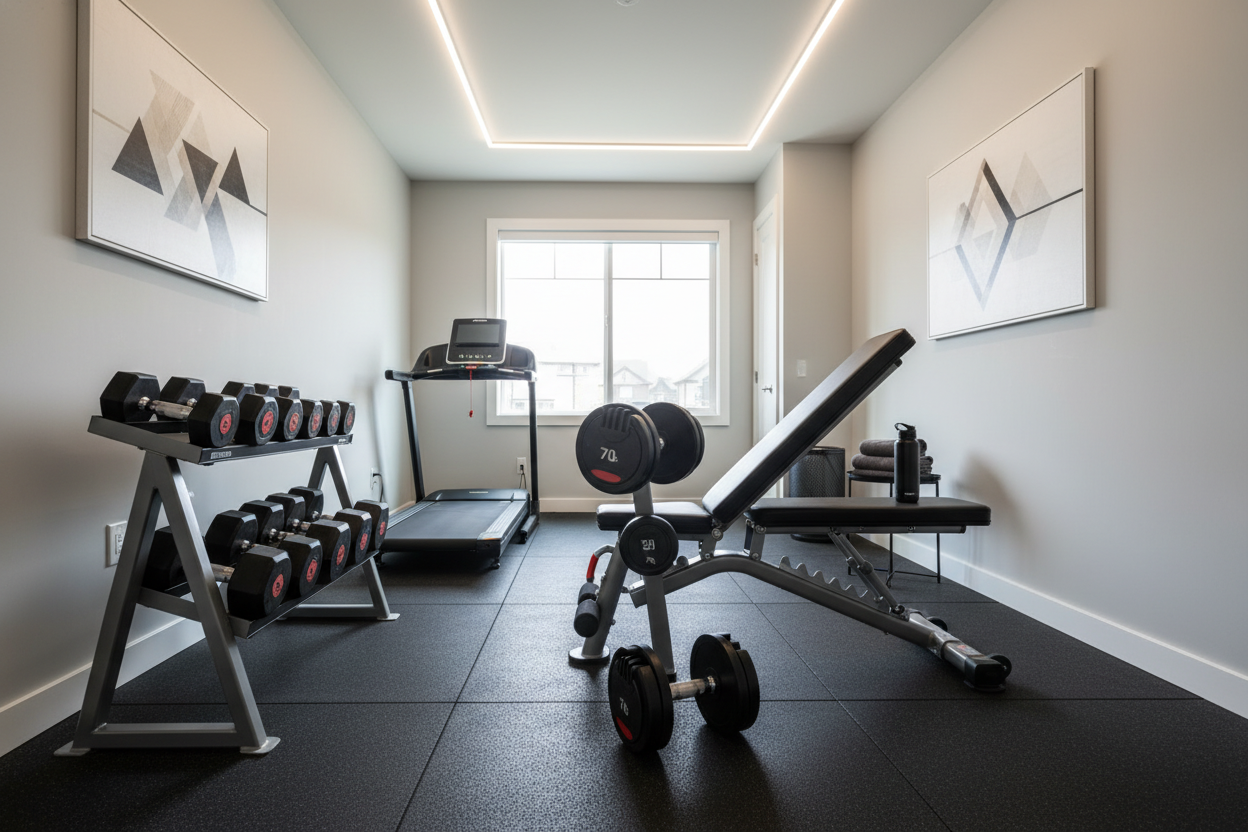
I remember the first time I tried to dumbbell bench with a pair of those massive 100-pound adjustable blocks. It felt like I was trying to balance two suitcases over my chest. I couldn't even get a full stretch because the ends of the weights would smack together before my elbows hit the right depth. That's when I realized that for most of my hypertrophy work, adjustable dumbbells 70 lbs were actually the superior choice for my garage setup.
Quick Takeaways
- Smaller footprint allows for a much deeper range of motion on presses and flyes.
- 70 lbs per hand is the sweet spot for intermediate to advanced hypertrophy.
- Modular sets in this weight range are typically more durable than their 100-lb counterparts.
- Unilateral leg work makes 70 lbs feel like 170 lbs very quickly.
The Clunky Reality of Pressing Massive Weights
Most people think bigger is better when they're building a home gym. But if you've ever tried a heavy incline press with a dial system that looks like a toaster, you know the struggle. Are Adjustable 100 lbs Dumbbells Actually Safe for Heavy Presses? It's not just about the locking mechanism; it's about the physics of the frame. Those ultra-heavy sets are often 18 to 20 inches long regardless of the weight you have selected.
When you're using a massive frame, you lose the bottom three inches of your range of motion because the plates hit your shoulders or each other. You're basically doing board presses without the board. For a bodybuilder, that missed stretch at the bottom is where the growth happens. If the equipment is getting in the way of the muscle contraction, it's failing you.
How Adjustable Dumbbells 70 lbs Save Your Shoulders
Switching to adjustable dumbbells 70 lbs changed my chest day entirely. The shorter overall length of these units means I can actually tuck my elbows and get that deep, skin-splitting stretch that builds a thick chest. If you're looking for a reliable set of adjustable weights, you'll find that the 70-pound tier usually cuts off several inches of unnecessary bulk compared to the 'XL' models.
This reduced footprint is a lifesaver for your rotator cuffs. When you don't have to navigate around a massive block of steel, your joints can move through their natural arc. I found that my nagging shoulder impingement actually started to clear up once I stopped using oversized weights that forced me into a wide, awkward pressing path.
Pushing Past Plateaus With a 70 lb Adjustable Dumbbell
Let's be real: hitting a 70 lb adjustable dumbbell for sets of 10 to 12 on a seated overhead press is serious work. Most intermediate lifters spend years in the 50 to 70-pound range for their primary movements. This weight class gives you enough runway to grow for years without the footprint of a small car taking up your gym floor.
The beauty of the 70-lb limit is the precision. Because the total mass is lower, the adjustment increments are often tighter. You can jump by 5 lbs instead of 10, which is essential when you're trying to grind out progress on movements like rows or overhead extensions. You can push to failure safely because you aren't wrestling with an unwieldy frame that wants to tip your wrists.
Are They Actually Heavy Enough for Leg Day?
I hear it all the time: '70 pounds isn't enough for legs.' Tell that to your quads after three sets of Bulgarian split squats with a 70-lb dumbbell in each hand. That's 140 pounds of total load on a single leg. When you factor in the balance and core stability required to hold that weight, a 70-lb set is more than enough for high-volume hypertrophy.
Try doing deficit RDLs where the smaller plate profile actually lets you get deeper than a standard 45-lb plate on a barbell. The compact nature of these weights allows you to keep the load closer to your center of gravity, which is better for your lower back. You aren't just lifting; you're lifting with better mechanics.
When You Still Might Want Fixed Iron
Look, I'm not saying adjustable sets are the answer for every single lift. If your training style involves heavy cleans, snatches, or if you like to ghost-drop your weights after a grueling set of rows, you need traditional rubber hex weights. Modular systems have moving parts, and moving parts generally hate being slammed onto stall mats from waist height.
I keep a few pairs of fixed hex dumbbells for the 'dirty' work—the high-rep sets where I know I might drop them in exhaustion. But for 90% of my controlled, muscle-building movements, the adjustables stay on the rack. They save space, and they keep the focus on the muscle, not the gear.
My Personal Experience
I once bought a cheap plastic-clad set from a big-box store that rattled so much I thought the plates would slide off during a set of lateral raises. It was a wake-up call. It taught me that the locking mechanism is everything. Now, I prioritize a crisp 'click' and a steel handle over a lower price tag every single time. I've dropped a 70-lb weight once—it didn't break, but the heart attack I nearly had was enough to make me a 'gentle placer' for life.
FAQ
Is 70 lbs enough for a home gym?
For most people, yes. Unless you are a competitive powerlifter or heavyweight bodybuilder, 70 lbs per hand covers almost every upper-body movement and provides plenty of stimulus for unilateral leg work.
Can I drop adjustable dumbbells?
Generally, no. Even the high-end sets have internal pins or gears that can shear under the force of a drop. Treat them like precision equipment, not scrap iron.
Are they better than 100 lb sets?
If range of motion and maneuverability are your priorities, then yes. They are significantly less clunky and much easier to use for movements like curls or lateral raises where a long bar is a disadvantage.
Share:
Stop Paying the Upcharge for Fake Pro Fitness Equipment
Why I Stopped Trusting Most Garage Gym Reviews Online