
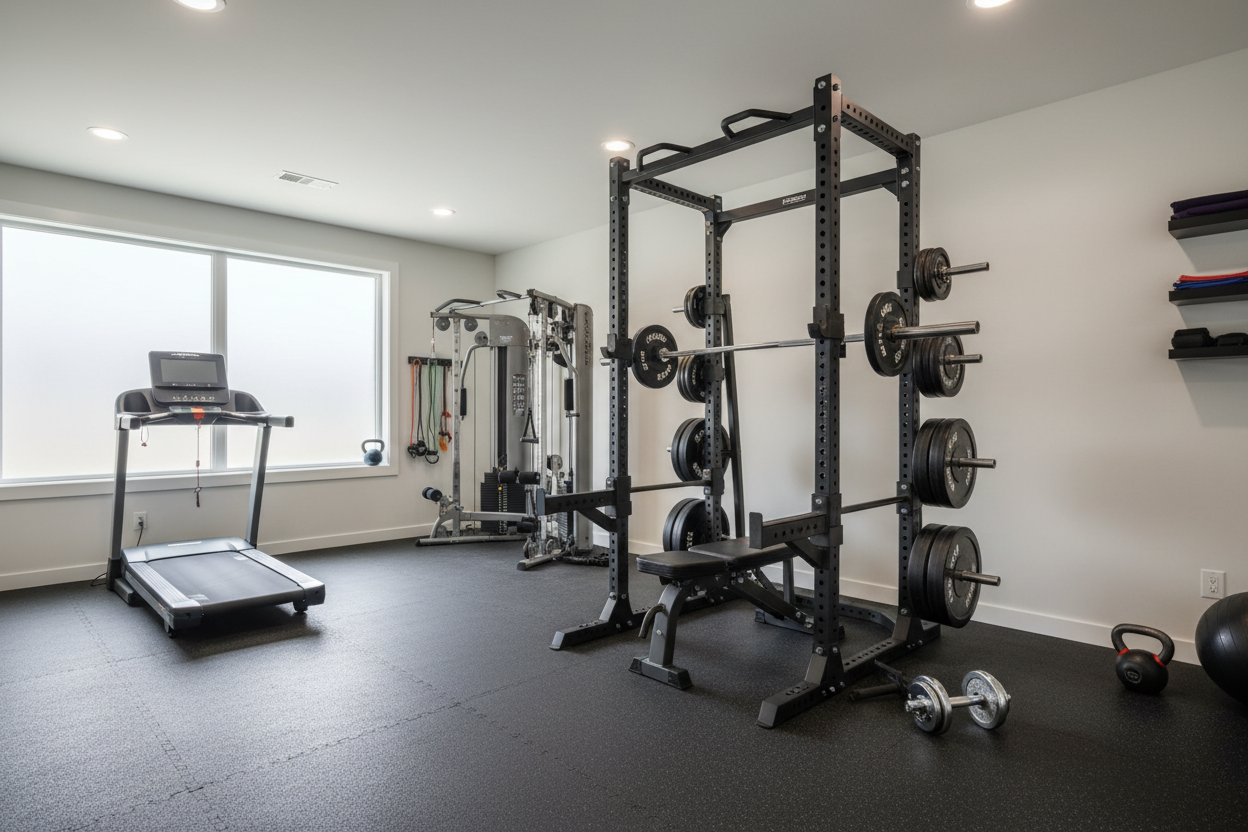
I remember the first time I tried to build a home gym. I spent three hours staring at a catalog, paralyzed because I did not know if I needed a functional trainer or a leg press. I ended up buying a cheap combo unit that rattled like a bucket of bolts every time I did a chest fly. Understanding the different fitness machines types isn't just for gear nerds; it is how you avoid wasting three grand on a glorified clothes rack.
- Selectorized machines are built for speed and ease of use.
- Plate-loaded equipment offers a more natural strength curve and higher weight ceilings.
- Cable systems provide constant tension that free weights cannot replicate.
- Fixed-path machines are safest for training to failure but require careful setup.
Stop Guessing What Everything Does
Walking into a big box facility can feel like entering a factory floor. The sheer volume of equipments at gym locations is enough to make anyone just default to the treadmill. You see rows of steel, pulleys, and pads, but without a plan, you are just guessing. Most people treat gym equipments and uses like a buffet—a little bit of this, a little bit of that—without understanding the mechanics.
When you understand the engineering behind the gear, you stop buying things because they look cool and start buying because they fit your programming. Whether you are looking at gym machines and uses for hypertrophy or just trying to stay mobile, knowing the difference between a pivot point and a linear bearing changes the game. It is about ROI: return on investment for your money and your joints.
The Big Divide: Selectorized vs. Plate-Loaded
This is the most basic split in equipment in gym and their uses. Selectorized machines use a weight stack and a pin. They are the kings of convenience. If you are doing drop sets, you can change the weight in two seconds. However, these units are often massive and heavy. I once tried to put commercial gym machines in my garage and realized too late that a 250-lb weight stack is a nightmare to move through a standard doorway.
Plate-loaded exercise equipment and their uses are different. You provide the resistance with your own Olympic plates. These are usually more rugged and have a higher weight capacity. If you can squat 500 pounds, a selectorized leg press might not cut it. Plate-loaded machines also take up less 'dead' weight space since the machine itself is lighter than a stack, but you have to factor in the room needed to load the pegs.
Why Cable Systems Are the Ultimate Hack
If I could only have one piece of gear, it would be a cable system. The beauty of these gym equipment and their uses lies in constant tension. When you lift a dumbbell, the resistance changes based on gravity. At the top of a bicep curl, the weight feels light. With a cable, the resistance is the same from start to finish. If you are building a complete home gym, a functional trainer is the smartest centerpiece you can buy.
Cables are the most versatile gym equipment and their uses because they are not fixed to one plane. You can adjust the pulley height to hit your chest, back, shoulders, or legs. They are compact, usually fitting into a 4x5 foot footprint, and offer the highest variety of movements per square foot of any machine type.
Fixed-Path Machines: Safe but Limiting?
Fixed-path machines move on a track or a single pivot. Think of a leg extension or a chest press machine. These gym equipment and their uses are designed to isolate specific muscles. Because the path is fixed, you do not have to worry about stabilizing the weight. This is great for pushing to absolute failure without a spotter. A Smith machine home gym station is the ultimate example here—it allows for heavy lifting with a built-in safety net.
The downside? They do not always fit your body perfectly. If the machine's pivot point does not align with your joint, it can feel awkward or even cause pain. I have used gym instruments and their uses that felt like they were trying to tear my rotator cuff because the handles were set too wide for my frame. Always test the range of motion before you commit to a purchase.
The Only Categories Worth Your Floor Space
When you are filtering through gym machine and their uses, ignore the fluff. You do not need a machine for every single body part. You need tools that cover the big movements: push, pull, and legs. Most exercise equipments and their uses are redundant if you have a solid cable setup and a squat rack. Focus on the 4 basic gym machines worth your time and skip the 'as-seen-on-TV' gimmicks.
My biggest mistake was buying a '7-in-1' home gym from a big-box store. It promised to replace the whole gym. In reality, the pec deck felt like it was going to snap my humerus, and the leg extension had a range of motion of about six inches. Specialized machines do one thing well; 'all-in-one' machines often do seven things poorly. Buy for quality, not for the number of stickers on the frame.
FAQ
Is plate-loaded better than selectorized?
It depends on your goals. Plate-loaded is better for raw strength and saving money if you already own plates. Selectorized is better for fast-paced workouts and circuit training.
Are cables better than free weights?
They are different. Free weights build more stabilizer strength, but cables provide better isolation and constant tension. A balanced program uses both.
How much space do I need for a functional trainer?
Most units need about 3 feet of depth and 5 to 6 feet of width. However, you need another 4 to 5 feet in front of the machine to actually perform the exercises.
Share:
The Safest Gym Equipment to Buy Online Without Seeing It
How to Stop Feeling Lost: A Beginner Planet Fitness Workout