
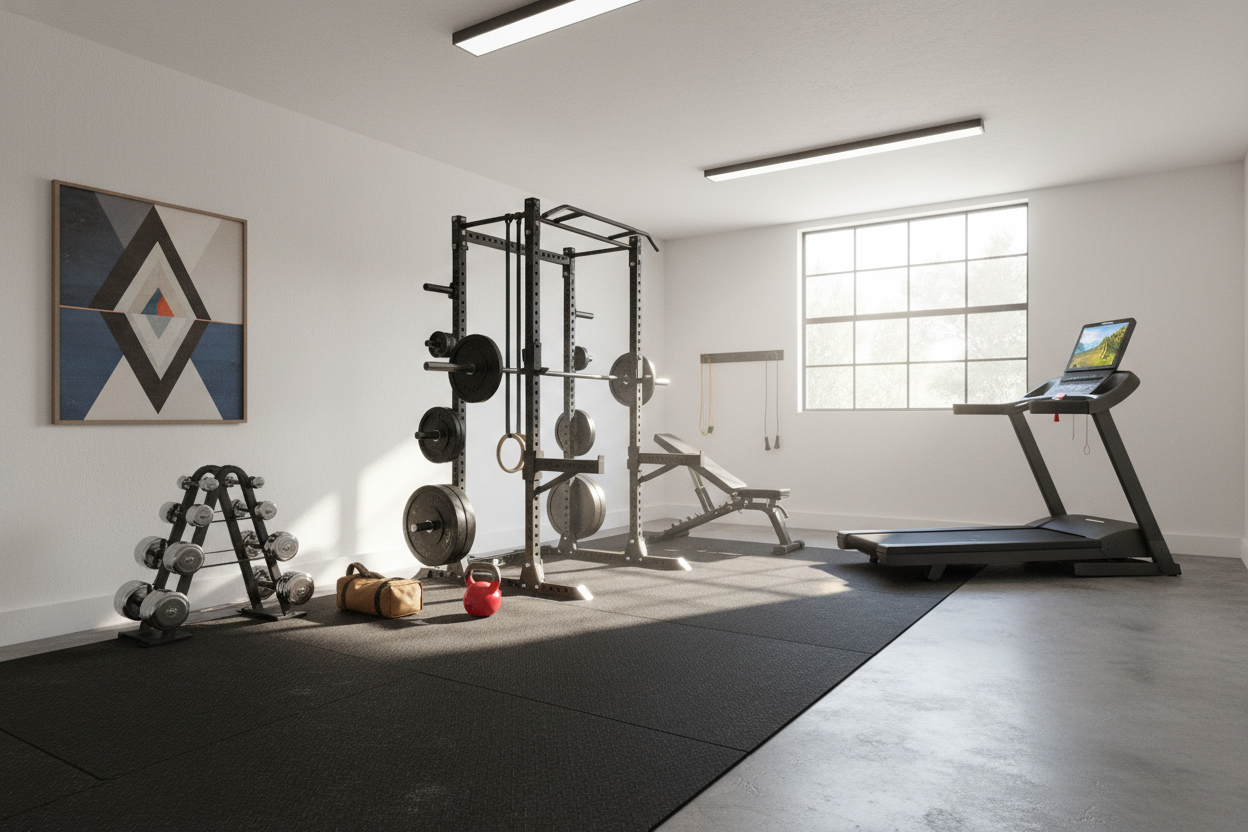
I’ve spent more time staring at a concrete wall while gasping for air than I care to admit. Most people think training has to be a stoic, miserable affair involving nothing but cold iron and silence. But let’s be real: sometimes you just want fun at home workout equipment that doesn't feel like a chore.
The problem is that the fitness industry usually equates 'fun' with 'cheap plastic trash.' You see the ads at 2:00 AM for some folding ab-cruncher that looks like it was built in a toy factory. I’m here to tell you that you can have an engaging workout without sacrificing your dignity or your floor space to a piece of equipment that will snap the first time you put 200 pounds of force into it.
Quick Takeaways
- Avoid anything made of thin-walled plastic or held together by bungee cords.
- True fun comes from engagement—think heavy bags, battle ropes, or gamified resistance.
- If it doesn't offer progressive overload, it's a toy, not a tool.
- Durability is non-negotiable; if you're afraid to break it, you won't use it hard enough.
Why Staring at Your Garage Wall Gets Old Fast
I’m a huge advocate for the basics. Give me a barbell, a rack, and enough plates to make the floor shake, and I’m usually a happy camper. But even the most dedicated lifter hits a wall. When I was first building a heavy-duty home gym, I focused entirely on the 'needs' and completely ignored the 'wants.' I had the 11-gauge steel, but I had zero variety.
Training can become a grind. When your workout feels like a second job, your consistency starts to slip. It is perfectly fine—necessary, even—to want a more engaging experience in your training space. Whether that’s a heavy bag you can take your frustrations out on or a bike that lets you race against a digital pack, that engagement is what keeps you coming back on the days when the iron feels twice as heavy as it did yesterday.
The goal isn't just to move weight; it's to stay in the game. If adding a piece of novelty gear keeps you from skipping your Monday conditioning session, then that gear has earned its footprint in your garage. Just make sure it’s built to survive the intensity you’re about to throw at it.
The Infomercial Trap: Why Most Novelty Gear Breaks
The fitness industry is notorious for selling 'fun' to people who don't know any better. They use bright colors, celebrity endorsements, and 'proprietary technology' to hide the fact that the machine is essentially made of recycled soda bottles. I've tested 50 pieces of exercise equipment for home and the failure rate on novelty gear is staggering.
Most 'fun' gadgets fail because they aren't built for athletic use. They’re built for the person who wants to sit on the couch and move their legs a little. When a real trainee tries to use a cheap balance board or a flimsy sliding disc, the bearings seize, the plastic cracks, or the resistance is so light it might as well not exist. If a piece of equipment weighs less than 10 pounds and claims to replace an entire gym, run the other way.
Look at the frame construction. If it’s not powder-coated steel or high-density composite, it’s not going to last. I’ve seen 'revolutionary' rowers with nylon cords that frayed within three months. I’ve seen 'gamified' bikes with screens that lagged so hard the workout was over before the race started. Don't let the 'fun' factor blind you to the engineering. If it looks like a toy, it’ll perform like one.
What Actually Makes the Most Fun Exercise Equipment Effective?
To be the most fun exercise equipment, a tool has to follow three rules. First, it must offer progressive overload. If you can't make the movement harder as you get stronger, you'll get bored within a month. This is why adjustable kettlebells or variable-resistance battle ropes win over static gadgets.
Second, it has to survive high-intensity impact. Fun usually involves moving fast, hitting things, or jumping. If the equipment rattles or shifts when you give it 100% effort, you'll subconsciously hold back. A heavy bag needs a solid mount; a plyo box needs a wide base. You need to trust the gear so you can focus on the sweat.
Third, the 'game' element cannot interfere with the biomechanics. I’ve tried 'fitness games' that forced me into awkward, joint-straining positions just to hit a target on a screen. That’s a fast track to an injury. The best gear integrates the fun into a movement that actually makes sense for your body—like a rower that uses real water resistance or a bike that mimics the feel of the road.
Legit Fun At Home Workout Equipment Worth the Space
If you're looking for gear that actually delivers, start with high-engagement cardio. A foldable upright exercise bike is a great entry point because it provides 16 levels of magnetic resistance. It’s small enough to tuck into a corner but sturdy enough that you aren't wobbling during a sprint. You can park it in front of a TV or a tablet and knock out 30 minutes of intervals without checking the clock every ten seconds.
Next, consider a heavy bag. There is nothing more satisfying than a heavy-bag circuit after a stressful day. Look for a bag that is at least 100 pounds if you're a grown adult; anything lighter will just fly around like a tetherball. It’s a full-body workout that builds coordination and power, and it’s arguably the most fun you can have while burning 500 calories.
Battle ropes are another winner. They take up almost no space when coiled, but they offer a brutal conditioning workout. I recommend a 1.5-inch diameter rope—it’s the sweet spot for grip and weight. It’s tactile, loud, and incredibly effective for building shoulder endurance. It’s hard to be bored when you’re trying to keep a 30-foot rope in a perfect wave pattern for a full minute.
How to Gamify the Heavy Gear You Already Own
You don't always need new toys to make things interesting. You can use a Smith machine home gym station to run timed burnout challenges. Since the bar is on a fixed plane, you can safely push yourself to failure on squats or presses without needing a spotter. Set a timer for 10 minutes and see how many total reps you can move at 50% of your max. It turns a boring set into a high-stakes challenge.
Another trick is to use 'EMOM' (Every Minute on the Minute) protocols. If you have a rack and a barbell, pick three movements and cycle through them. It keeps the pace high and prevents you from scrolling through your phone between sets. The clock becomes your opponent. Tracking your 'score'—whether it's time, reps, or weight—provides that dopamine hit that makes the training feel like a game.
Finally, use tech to your advantage. There are plenty of apps that sync with basic sensors to turn your standard equipment into an interactive experience. You don't need a $3,000 smart gym; you just need a little creativity and a timer that isn't afraid to yell at you when you're moving too slow.
Personal Experience: The 'Cheap' Mistake
Years ago, I bought a 'portable' cable machine that used rubber bands for resistance. It was marketed as the ultimate fun home gym. Within two weeks, one of the bands snapped and whipped me across the back, leaving a welt that looked like a crime scene. It taught me a valuable lesson: if the resistance is provided by a giant rubber band, it has a shelf life. Now, I only buy gear that uses gravity (iron) or friction (magnetic/air). It’s safer, more consistent, and infinitely more fun because I’m not worried about a localized explosion in my living room.
FAQ
Is 'fun' equipment less effective for muscle growth?
Not necessarily. If the equipment provides enough resistance to challenge your muscles (usually within the 5-30 rep range), you will grow. The key is ensuring the 'fun' gear doesn't sacrifice the load for the sake of the gimmick.
How much space do I really need for battle ropes?
You need about half the length of the rope. A 30-foot rope needs about 15 feet of clear floor space. If you're tight on room, go with a shorter, heavier rope or look into 'weighted' jump ropes for a similar feel.
Are interactive screens worth the extra cost?
Only if you actually use the community features. If you just want to watch Netflix, buy a standard bike or rower and mount a cheap tablet. You'll save hundreds on subscription fees and hardware markups.
Share:
Why the Sticker Cost of Weight Machine Gear Is a Total Lie
"Does Squat Machine Work?" The Truth About Ditching Barbells