
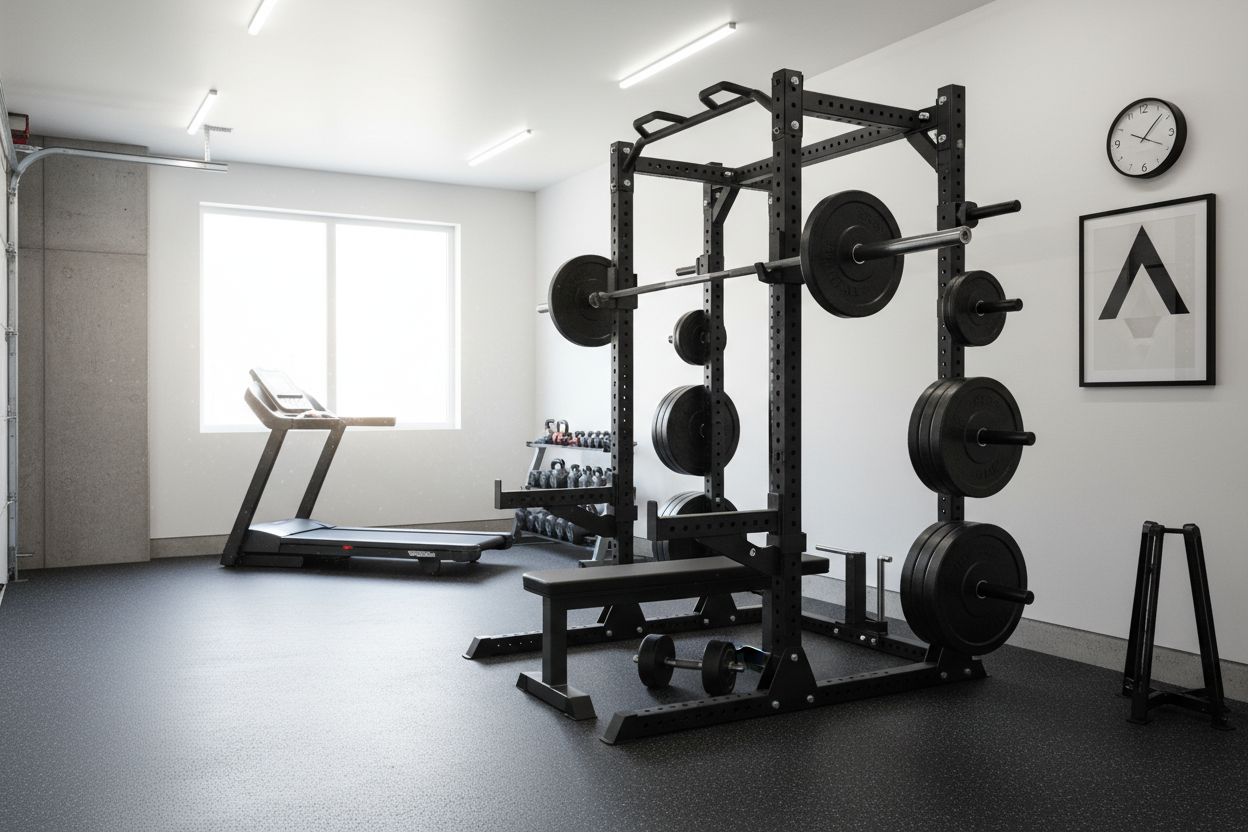
I used to be a barbell purist. I believed that if a movement didn't require you to stabilize a vibrating piece of steel against gravity, it was basically cardio. My garage was a sanctuary of iron, rubber, and zero machines. Then I hit a wall. My squat stalled at 485, and my knees felt like they were filled with crushed glass every time I walked down the stairs.
Adding a powerlifting machine to my setup wasn't about getting soft. It was about realizing that my central nervous system (CNS) was fried long before my muscles actually reached failure. By integrating heavy-duty, plate-loaded gear, I found a way to accumulate the massive volume needed for growth without the high-stakes fatigue of a free-weight barbell.
Quick Takeaways
- Machines allow for targeted muscle failure without taxing the stabilizing joints.
- Look for plate-loaded units that can handle 500+ lbs to match your strength levels.
- Use machines for accessory volume (sets of 8-15) after your heavy primary barbell work.
- Compact combo machines are the only way to justify the footprint in a standard garage gym.
The 'Barbell Only' Mindset Almost Ruined My Knees
For three years, I chased a 500-lb squat using nothing but a rack and a bar. I was a disciple of high-frequency squatting, but my patellar tendonitis became so severe I couldn't even warm up with 135 without wincing. The problem wasn't the weight; it was the sheer amount of 'junk volume' I was doing with a barbell just to get my quads to grow.
I realized I was spending so much mental energy on bracing and bar path that my legs weren't actually the limiting factor—my lower back and joints were. I needed a way to thrash my quads until they turned to jelly without putting another 400 lbs on my spine. That’s when I stopped looking at machines as 'bodybuilding gear' and started seeing them as tools for powerlifting longevity.
What Actually Makes Something a 'Powerlifting Machine'?
Let’s be clear: I’m not talking about the cable-driven, plastic-shrouded machines you see at a hotel gym. Those stacks usually top out at 200 lbs, which is a warm-up for most of us. A true strength machine is plate-loaded, built with 11-gauge steel, and features industrial-grade bearings.
When you're pushing 800 lbs on a compact leg press and hack squat combo, you need zero frame flex. You need a machine that feels as solid as your power rack. These machines allow you to load up 45-lb plates until the pegs are full, providing the kind of resistance that actually translates to a heavier raw squat.
Why Fixed-Path Overload Builds Raw Strength
The beauty of a guided path is the ability to reach true muscular failure. On a heavy barbell bench, you often stop a set because your technique breaks down or your shoulders get wonky. On a machine, you can push until the muscle literally stops moving. This creates a level of hypertrophy that carries over directly to your 'Big Three' lifts.
A plate-loaded Smith machine station is one of the most underrated tools for this. It allows you to perform movements like pin presses or high-incline benches with total focus on the triceps and chest. You aren't worried about the bar dropping on your face; you're just worried about the burn. That mental freedom lets you push past your normal 1RM sticking points.
The Best Machine Accessories for the Big Three
If you want to move the needle on your total, you have to target your weak points. For most, that’s the deadlift lockout and the bottom of the squat. I started using machines to isolate these specific phases of the lift without the systemic fatigue of more barbell reps.
For the deadlift, I swear by a dedicated hip thrust machine to hammer the glutes. It’s a nightmare to set up a barbell for hip thrusts in a garage, but a machine makes it a 30-second transition. If you're struggling with how to integrate these, I recommend looking at specific Smith machine training programs to see how the pros layer accessory work on top of their heavy sets. The goal is to use the machine to build the muscle, then use the barbell to teach that muscle how to perform.
How to Justify the Floor Space in a Cramped Garage
I live in a standard two-car garage, and half of it is taken up by a lawnmower and a workbench. Space is a premium. You can't just buy five different machines. You have to be surgical. Look for 'combo' units—machines that offer two or three movements in one footprint.
I chose a hack squat/leg press combo because it covers about 80% of my lower body accessory needs in a 4x7 foot space. If a machine only does one thing, it better be the thing you're weakest at. Otherwise, stick to multi-functional pieces that let you go from heavy rows to vertical presses in the same station.
FAQ
Do machines make you weaker?
No. They make your muscles stronger. If your quads get bigger on a leg press, your squat will go up. Period. The barbell is for skill and peak strength; machines are for building the engine.
Can I use my existing Olympic plates?
Most high-end powerlifting machines are designed for 2-inch Olympic plates. Always check the sleeve diameter before buying, especially if you're looking at budget-tier gear that might use 1-inch pegs.
How often should I use machines in a powerlifting program?
I typically do my heavy barbell work first while I'm fresh, then move to machines for 2-3 accessory movements. It's the best way to get 10-12 sets of volume without feeling like you got hit by a truck the next day.
Share:
The Real Exercise Machine Names You're Too Afraid to Ask About
You Don't Need an Ab Machine With Weights (Do This Instead)