
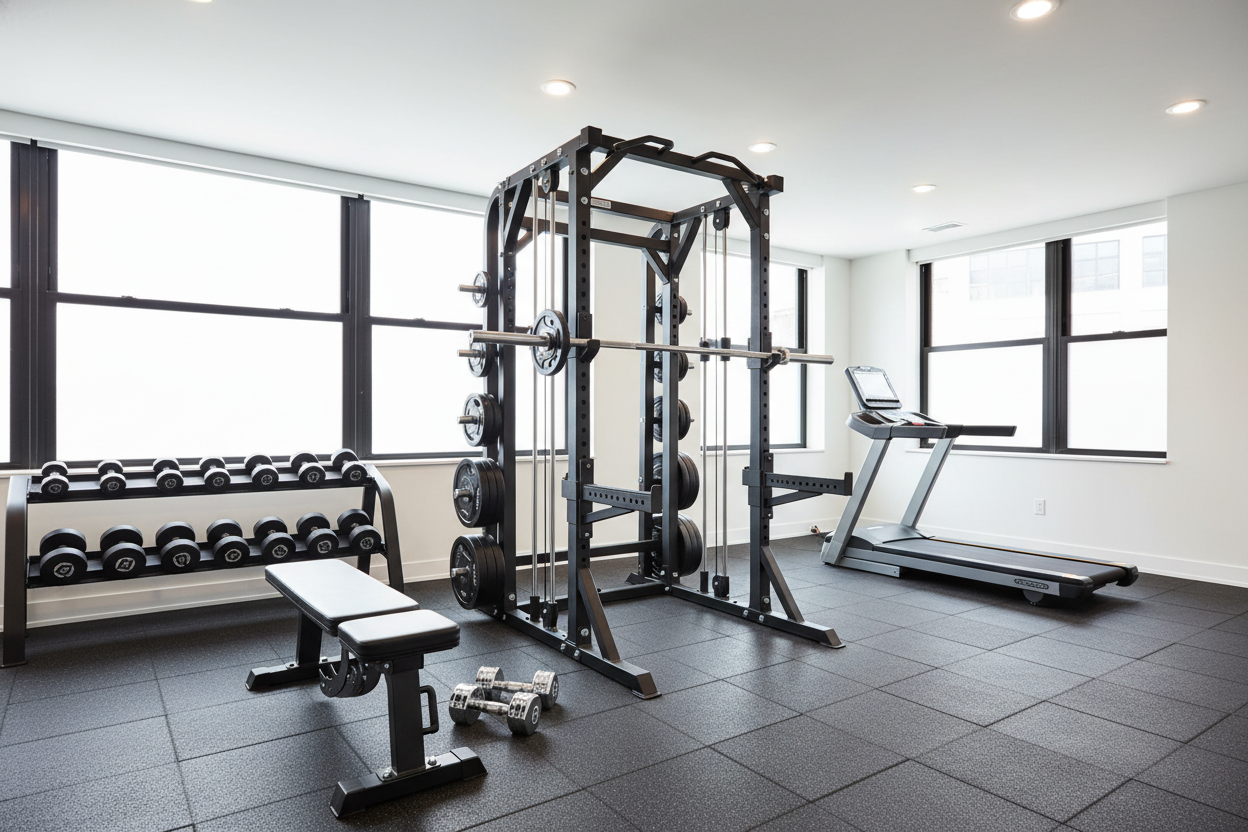
I was staring at a bent upright on my budget power rack after a failed squat set, wondering where it all went wrong. I had tried to save a few hundred bucks on a generic brand, and now I had a piece of scrap metal in my garage. Instead of clicking 'buy' on another mass-produced unit, I had a wild idea: why not just have a local smith's machine shop build me something indestructible?
I figured raw steel is cheap and a local welder could probably knock out a custom rig in a weekend. I was wrong. Dead wrong. After spending three weeks calling fabricators and visiting shops, I realized that 'custom' usually means 'triple the price' for half the functionality. If you are thinking about going the DIY fabrication route, read this before you drop a deposit.
Quick Takeaways
- Local labor rates for skilled welding range from $100 to $175 per hour.
- Precision machining for guide rods and bearings is where the cost explodes.
- Custom rigs lack the modular ecosystem of standard 2x3 or 3x3 racks.
- Buying a high-end manufactured unit is almost always 40-60% cheaper than custom builds.
The Custom Fabrication Delusion (Why I Tried This)
The temptation is real. You see a 3x3 rack online for $1,500 and think, 'I can buy that steel for $300.' I went down this rabbit hole after my thin-walled rack started wobbling under 315 pounds. I didn't want another bolt-together kit; I wanted a tank. I actually drove down to a smith automotive machine shop to see if they could reinforce my existing uprights or just weld me a new cage from 7-gauge steel.
I wanted something that would outlast me. I figured a guy who spends his day boring out engine blocks could easily weld four posts and a pull-up bar. The reality is that automotive shops are geared for high-precision engine work, not structural frames. While they have the tools, their time is worth way more than the cost of a retail rack. I quickly learned that just because someone has 'Smith' in the name doesn't mean they are in the business of building gym gear for cheap.
Quoting the Job: What Local Welders Actually Charge
I took my rough blueprints to a reputable machine shop rome ga to get a real-world quote. I wanted a basic four-post rack with custom hole spacing. The owner looked at my drawings, laughed a little, and did the math on his notepad. Between the cost of structural tubing, the time spent on a drill press for 1-inch holes every 2 inches, and the actual welding time, the quote came back at $2,400. And that was before powder coating.
That is the sticker shock most garage gym owners aren't ready for. A local shop isn't buying steel by the mile like the big manufacturers. They pay retail or small-batch wholesale prices. Then you have to factor in the labor. A skilled fabricator in Georgia or anywhere else isn't going to work for $20 an hour. You are paying for their expertise, their shop overhead, and their equipment. By the time they finish deburring the holes, you could have bought two top-tier racks from a fitness brand.
Why Precision Matters More Than Thick Steel
If you are just building a static squat stand, a local shop can handle it. But the moment you want moving parts, you are in trouble. I asked about adding a sliding barbell mechanism. Making a Smith Machine that actually feels smooth is an engineering nightmare for a general fabricator. It requires case-hardened guide rods and high-quality linear bearings with exact tolerances.
If those rods are even a fraction of an inch out of alignment, the bar will bind and stutter. Most local shops are used to 'close enough' for farm equipment or car frames, but 'close enough' feels like garbage when you are trying to bench press. A manufactured unit uses jigs and automated lasers to ensure every hole and rod is perfectly parallel. Replicating that level of precision in a one-off custom build is why the price skydives into the 'not worth it' category.
The Better Move: Upgrading to an All-In-One Unit
After seeing those quotes, I did what any sane person would do: I looked at the market. For less than the cost of the raw labor at the custom shop, I could get a fully featured, multi-functional rig. I ended up looking at the All In One Smith Machine With Cable Crossover S1 V4. It solved every problem I had. It gave me the heavy-duty Smith bar, a functional trainer with cables, and a rock-solid rack for about $1,000 less than the custom guy wanted for just the frame.
Modern manufacturing scales in a way that local shops can't touch. These units are designed to fit in a standard 7-foot ceiling height and come with attachments that actually fit. When you go custom, you are stuck. If you want a new attachment later, you have to go back to the welder and pay another $200 for a custom-sized J-cup. Buying a standard unit means you can buy off-the-shelf accessories whenever you want.
When Should You Actually Hire a Fabricator?
I am not saying you should never visit a machine shop. They are lifesavers for small, specific problems. If you have a stripped bolt on a vintage barbell or you need a custom bracket to mount a lat pulldown to a weird wall stud, a local welder is your best friend. They are great for repairs, but terrible for full-scale production. Before you commit to a DIY build, read up on How to Shop a Smith Machine Sale Without Buying Total Junk so you know what features actually matter versus what is just marketing fluff.
My advice? Save the custom fabrication for your car or your home repairs. When it comes to the iron you’re lifting over your face every morning, stick to the pros who have the jigs, the lasers, and the volume to keep the price grounded in reality. My 'custom' dream died the moment I saw the hourly rate, and my workouts have been better ever since I bought a real rig.
FAQ
Is custom-built gym equipment safer?
Not necessarily. While the steel might be thicker, custom builds aren't usually stress-tested or drop-tested like commercial-grade retail equipment. A bad weld from a guy who doesn't understand dynamic lifting loads is a huge liability.
Can I save money by drilling the holes myself?
Unless you have a high-end magnetic drill press and a lot of patience, no. Drilling through 11-gauge or 7-gauge steel is a nightmare that will eat through expensive bits and leave you with misaligned holes that make your J-cups sit crooked.
Why is a Smith machine so much harder to build than a rack?
It’s all about the linear motion. A rack is static. A Smith machine requires perfectly parallel guide rods and smooth bearings. If the frame flexes even slightly, the bar catches. Most local shops don't have the precision jigs to guarantee that alignment.
Share:
Counterbalanced vs Angled: Making Sense of Smith Machine Types
Why the Smith Machine Decline Press Is a Lower Chest Cheat Code