
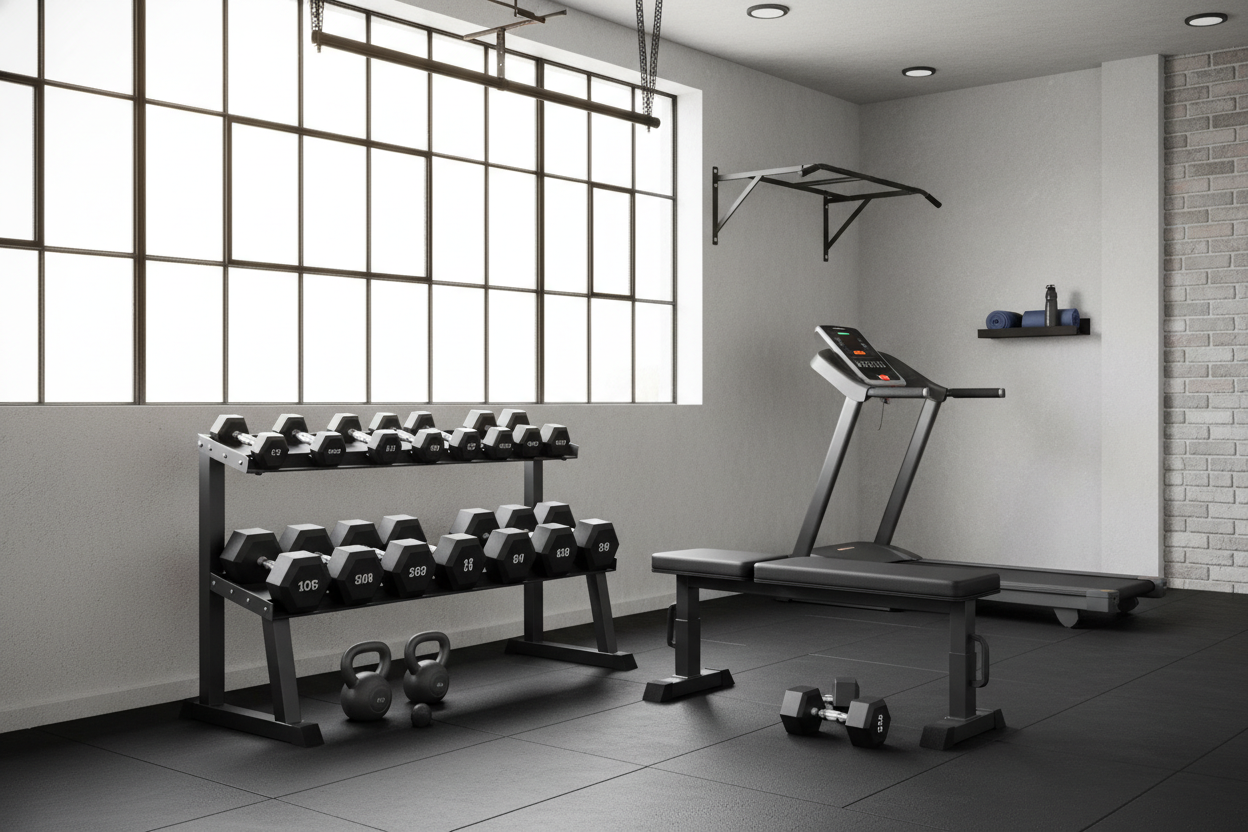
I remember staring at a $1,200 'starter kit' online and realizing half the cost was just moving heavy metal from a warehouse to my driveway. Most guys make the mistake of buying everything at once from a single big-box retailer, only to realize the barbell has the texture of a wet noodle and the bench feels like a lawn chair. Building a men's weights set doesn't require a second mortgage; it requires a bit of strategy and a willingness to hunt for iron.
Quick Takeaways
- Never pay full retail for standard iron plates if you can help it.
- Invest your 'real' money into the barbell and the bench—these are your safety points.
- Skip the full dumbbell rack; go for loadables or high-quality adjustables to save space.
- Check local marketplaces daily to find heavy gear without the shipping tax.
The Problem With Buying a 'Complete Bundle' Online
Bundles are a trap designed for convenience, not performance. To keep shipping 'free' or low-cost, companies almost always swap out a 700-lb capacity bar for one that starts to permanent-bow at 250 lbs. You'll get a bar with chrome plating that flakes off into your palms and knurling so smooth it feels like a PVC pipe once you start sweating.
The same goes for the benches included in these kits. They often feature a massive gap between the seat and the backrest that eats your lower back during a heavy press. Instead of buying a boxed 'solution,' you should piece your kit together. You want a bar that actually spins and a bench that doesn't rock when you're trying to set a PR.
Stop Paying for Shipping: How to Source Local Iron
Finding a weights set nearby is the ultimate hack for the budget-conscious lifter. Iron is a commodity. A 45-lb plate made in 1985 weighs the same as one made last week. I've found vintage York and Ivanko plates for 50 cents a pound just by checking Facebook Marketplace on a Tuesday morning while having my coffee.
When you buy local, you aren't paying the 'freight tax.' Shipping 300 lbs of iron can cost as much as the plates themselves. Look for people moving houses or giving up on New Year's resolutions. Bring a pair of gloves, a towel, and cash. Even if the plates have a little surface rust, a wire brush and a $6 can of 3-in-1 oil will make them look better than new.
The Core Three: Building Your Foundation
Your home free weights set needs three pillars: a stiff barbell, enough plates to grow, and a stable surface. I always tell guys to buy the best bar they can afford. Look for a 28.5mm or 29mm diameter bar with a bronze bushing or needle bearing system. You want that sleeve to spin freely so you don't wreck your wrists during cleans or presses.
For the bench, skip the $80 department store specials. You need a solid adjustable weight bench that features a high weight capacity—ideally 600 lbs or more—so it stays planted when you unrack heavy weight. If you're lifting in a garage with concrete floors, I highly recommend colored rubber plate sets. They save your foundation from cracking and keep the noise down so your neighbors don't complain during 6 AM deadlift sessions.
Don't Forget the Dumbbells (But Skip the Massive Rack)
A full dumbbell set men see in commercial gyms takes up ten feet of wall space and costs thousands. Unless you have a three-car garage dedicated strictly to iron, skip the commercial rack. I personally use loadable Olympic handles. They take up zero space and let you use the 10-lb and 5-lb plates you already have for your barbell.
If you hate changing plates between sets, get a pair of 50-lb adjustable dumbbells. They handle 90% of accessory work like lateral raises and curls without the $1,200 price tag of a 5-to-50 lb fixed set. Use that saved money to buy more 45-lb plates for your bar.
When to Upgrade Your Setup (And When to Stop Buying)
Stop buying gear once you have the basics. I see guys with $5,000 power racks who can't squat 225 lbs. Focus on the mens weights set you already have. Once you're consistently maxing out your plate inventory, that's your signal to buy more iron—not a new fancy cable attachment.
The goal is to build a gym that facilitates work, not a showroom. You need to pick a weight set for home that won't gather dust by keeping the friction low. If your gear is reliable and easy to use, you'll actually use it. Don't let 'shiny object syndrome' distract you from the fact that basic heavy lifting is what actually builds muscle.
My Personal Gear Fail
I once bought a 'gold' finished barbell from a cheap liquidator because it looked cool in photos. The first time I loaded 315 lbs for a rack pull, the sleeves literally seized up. No rotation at all. It turned my deadlift into a wrist-snapping nightmare because the bar couldn't spin independently of the plates. I sold it for scrap and bought a real power bar. Lesson learned: never cheap out on the points where your body meets the weight.
FAQ
Is iron or rubber better for a home gym?
Iron is cheaper and thinner, meaning you can fit more weight on the bar. Rubber (bumpers) is quieter and essential if you plan on dropping weights or lifting on a surface you don't want to destroy.
How much weight do I need to start?
A standard 300-lb set (including the 45-lb bar) is the benchmark. It covers almost everyone for the first year of serious strength training. You can always add individual 45-lb plates later.
Can I build a gym in a small spare room?
Absolutely. Focus on a pair of adjustable dumbbells and a folding bench. You can get a world-class workout in a 6x8 ft corner if you choose gear that stacks or folds.
Share:
I Bought a Hammer Strength Leg Press for Sale. Big Mistake?
Finding the Best Complete Home Gym Comes Down to One Spec