
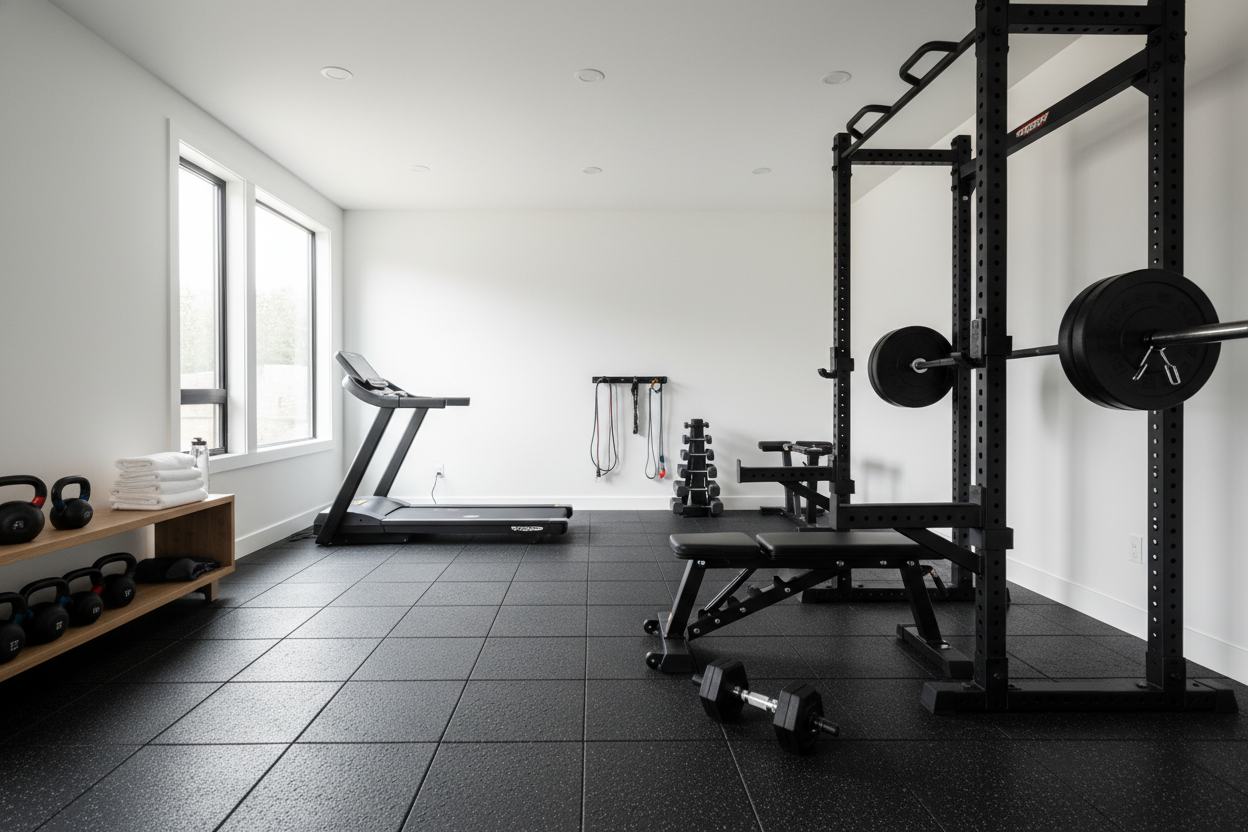
I was three weeks into a high-volume hypertrophy program when I realized my workout log was a total mess. I’d written 'leg thing' for three different exercises, and my 'chest press' entries were a mix of dumbbells, hammer strength machines, and a sketchy old cable setup. It is impossible to track progressive overload when you don't even know what you're sitting on. That is why I finally sat down to build this guide to gym equipment with name and pictures.
Quick Takeaways
- Standardized names help you track weight accurately across different gyms.
- Machines offer the stability needed to push to failure without a spotter.
- Knowing the difference between a rack and a stand can save you hundreds in home gym mistakes.
- Visual recognition allows you to quickly find alternatives when the gym is packed.
The Day I Realized My Workout Log Was Useless
I remember standing in the middle of a crowded commercial gym, staring at a massive piece of steel with four different pulley heights and a pile of attachments that looked like medieval weaponry. My program called for 'Face Pulls,' but I spent ten minutes on my phone trying to figure out if I needed the rope attachment or the straight bar. I felt like a tourist in my own training session.
The worst part wasn't the confusion; it was the wasted time. I’d spend five minutes wandering the floor looking for a specific machine, only to realize I’d walked past it three times because I didn't recognize the frame design. My heart rate would drop, my focus would shatter, and my workout would stretch from 60 minutes to 90. I wasn't training harder; I was just lost.
I eventually started taking photos of the manufacturer labels. I realized that if I couldn't name the tool, I couldn't master the movement. You can't expect to see a 5-lb increase every week if you're accidentally switching between a linear leg press and a pendulum squat because they both 'look like leg machines.'
Why Memorizing Gym Machines Names and Pictures Actually Matters
Precision is the difference between exercising and training. If you're serious about your numbers, 'close enough' isn't good enough. A 200-lb lat pulldown on a 1:1 ratio machine feels vastly different than 200 lbs on a 2:1 functional trainer. If you don't know which is which, your logbook is basically fiction.
This knowledge becomes even more critical when you start planning your home gym. I’ve seen dozens of people buy a 'squat rack' on Craigslist only to realize they actually bought a narrow-width bench rack that they can't safely squat in. Understanding the terminology ensures you don't waste $500 on a piece of equipment that doesn't fit your training style or your ceiling height.
Beyond the logistics, there is the confidence factor. When you walk into a new facility and can instantly identify the gym machines names and pictures in your head, you own the floor. You don't have to wait for the one machine you know; you can pivot to a chest fly machine or a cable crossover because you understand the mechanics are identical. It turns the gym from a confusing maze into a playground of options.
The Lower Body Lineup (No More 'Leg Thingy')
Leg day is usually where the naming confusion peaks. Let's start with the big one: the Leg Press. Most are '45-Degree Linear' presses where you push a sled up a track. Then you have the Hack Squat. It looks similar, but you're standing on the sled and pushing your body up. The Hack Squat is a quad-killer because it stabilizes your back, letting you sink deep into the hole without your lower back giving out.
Then we have the isolation kings. A leg extension curl station is a staple for a reason. The leg extension targets the quads by hinging at the knee, while the leg curl (either seated or lying) hits the hamstrings. If your gym has a 'Seated Leg Curl,' use it—the stretch you get at the hip is usually superior to the lying version for hypertrophy.
Don't overlook the Leg Press variations either. A Vertical Leg Press saves floor space but feels like it's trying to crush your soul (and your spine) if you don't have the mobility. Meanwhile, a Pendulum Squat moves in an arc, mimicking a natural squat path but with the safety of a machine. If you see one of those in the wild, use it—they're rare and incredibly effective for building massive teardrop quads.
Upper Body Stations You Need to Recognize
Upper body machines are often categorized by the 'pull' or 'push' angle. The Lat Pulldown is the most common—a vertical pull that builds back width. But then you have the Seated Row, a horizontal pull. If you see a machine where you're pulling from a low angle upward, that's often a 'Low Row' or a 'Grappler' station. Identifying these helps you ensure you're hitting your back from every angle.
For the chest, the 'Pec Deck' and the 'Chest Fly' are often used interchangeably, but they feel different. A Pec Deck usually has pads for your elbows, whereas a fly machine has handles for your hands. I’ve found that some people—myself included—get a much better mind-muscle connection with the Pec Deck because it removes the biceps from the equation. If you're struggling to find the right tool, check out my breakdown of every weird gym machine with name and purpose to see the obscure ones.
Don't forget the assisted dip and pull-up station. It’s that big tower with a knee pad and a weight stack. It’s not just for beginners; I use it for high-rep burnout sets at the end of a back day. Knowing how to adjust the pin and the platform height is a basic skill that saves you from that awkward 'jumping and missing the handles' moment we've all had.
The Big Racks: Squat Stands, Power Racks, and Smith Machines
The 'big metal cages' are the most important pieces in the gym. A Power Rack is a full four-post cage. It’s the gold standard for safety because you can set 'spotter arms' or 'safety straps' inside. If you fail a 300-lb squat, the rack catches the bar so you don't have to. A Squat Stand, on the other hand, is just two uprights. It takes up less space but offers zero safety if you lose your balance backward.
Then there is the Smith machine home gym station. This is a barbell fixed on vertical or slightly angled rails. I used to be a 'free weights only' snob until I realized the Smith machine is incredible for high-stability movements like Bulgarian Split Squats or incline presses. Because you don't have to balance the bar, you can focus 100% on the muscle contraction.
Finally, look for the 'Half Rack.' It’s a hybrid with two main uprights and two smaller ones for plate storage. It’s more stable than a stand but more open than a full cage. If you’re building a garage gym and have the budget, a 3x3-inch steel power rack with 11-gauge steel is the 'buy once, cry once' choice. It will literally outlive you.
FAQ
What is the difference between a cable machine and a functional trainer?
A functional trainer is typically a double-column cable machine with adjustable heights, designed for versatility. A standard cable machine is often a single station, like a dedicated lat pulldown or a low row, with a fixed path of motion.
Is a Smith machine 'cheating' compared to a barbell?
No, it's just a different tool. It removes the need for stabilization, which allows you to push closer to local muscular failure. It's not better or worse; it's just different for your central nervous system.
How do I know if a rack is safe for heavy lifting?
Look at the steel gauge and the bolt size. A rack with 11-gauge steel and 1-inch bolts is a tank. If the metal feels thin (like 14-gauge) or it wobbles when you shake the uprights, keep the weight light or find a more robust station.
Share:
I Broke 3 Folding Racks Before Finding a Real Home Gym Space Saver
How to Sift Through Work Out Benches for Sale Without Getting Scammed