
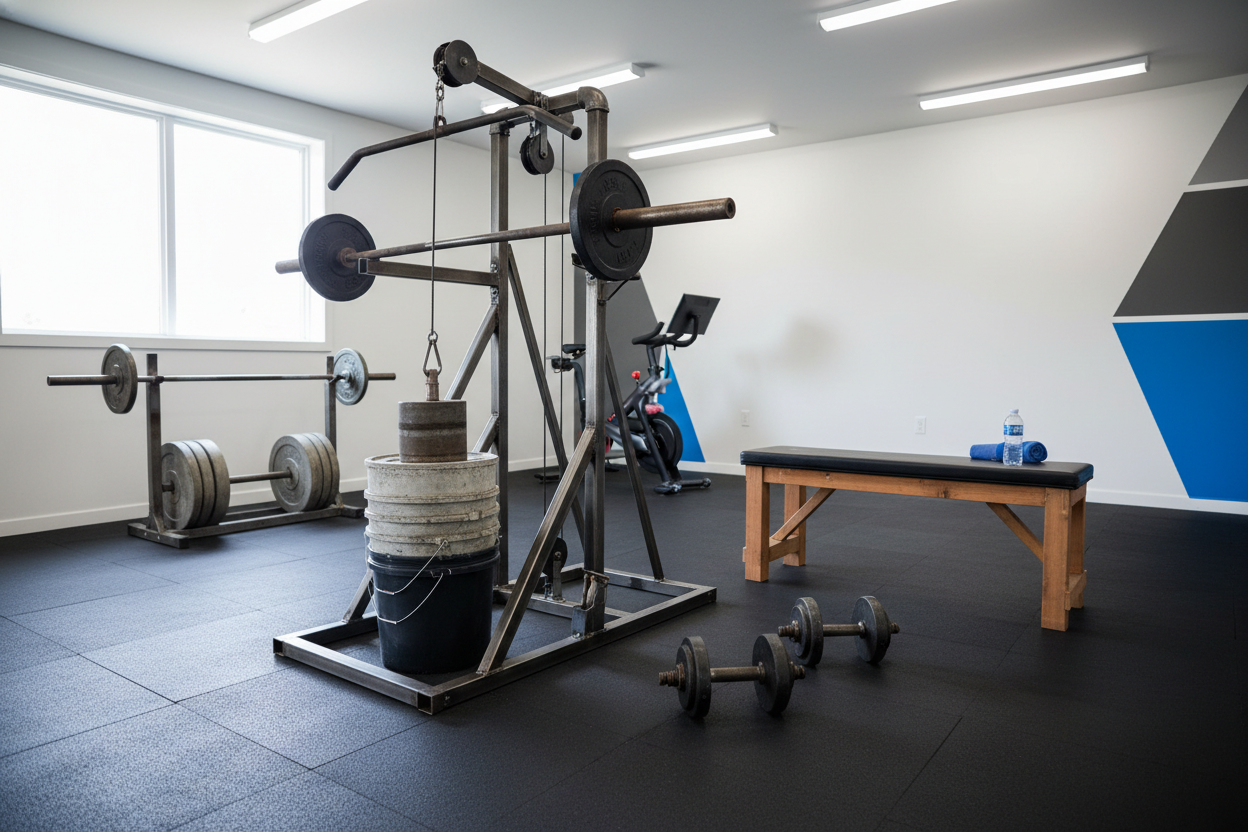
I remember the exact moment I decided to quit my commercial gym. I was staring at a monthly bill that had just climbed to $85, waiting ten minutes for a squat rack, and smelling someone’s leftover pre-workout on the upholstery. I figured I was handy enough with a circular saw to build a homemade gym and save a fortune. I spent three weeks in my garage, covered in sawdust and hubris, convinced I was outsmarting the entire fitness industry.
- Build for storage and accessories; buy for load-bearing safety.
- Lumber prices often make DIY projects more expensive than budget steel gear.
- PVC is excellent for slant boards but dangerous for pull-up bars.
- If a failure results in a hospital visit, don’t build it yourself.
The Intoxicating Trap of the DIY Fitness Setup
The allure of a diy home gym is hard to resist. You see a photo on Reddit of a guy who built a functional trainer out of 2x4s and pulleys, and you think, 'I could do that for fifty bucks.' It starts with a simple trip to the hardware store for some 'makeshift gym' essentials. You buy the pressure-treated lumber, the galvanized bolts, and the heavy-duty rope.
My early days of crafting homemade fitness equipment were fueled by a mix of cheapness and a genuine love for tinkering. I felt like a pioneer. But the reality of home built gym equipment is often less 'industrial chic' and more 'structural hazard.' I spent $200 on materials for a rack that ended up being less stable than a folding chair. The psychological high of the build wears off the second you hear a piece of wood groan under a 225-pound load.
3 DIY Gym Projects Actually Worth Your Weekend
Not every diy gym project is a disaster. Some homemade workout equipment is actually superior to the cheap plastic stuff you find on Amazon. If you want to augment your home gym without blowing your budget, start with these three winners.
First, the wooden plyo box. A sheet of 3/4-inch ACX plywood and some wood glue will get you a rock-solid 20x24x30 inch box that rivals anything from a name brand. Second, a PVC pipe slant board. For about $15 in PVC and some grip tape, you have a perfect tool for VMO squats. Finally, a DIY cable pulley system using a high-quality swivel pulley and aircraft cable is a legitimate way to add lat pulldowns to your setup for under $40.
Please Stop Building Wooden Squat Racks
I’m going to be the buzzkill here: stop looking for homemade gym equipment plans for squat racks. Wood is an incredible building material for houses, but it is not meant to handle the dynamic, concentrated loads of a falling barbell. Over time, wood dries out, splits, and the joints loosen. A single hairline crack in a vertical support can lead to a catastrophic failure mid-set.
If you are training alone in your garage, your life depends on your equipment. Instead of risking a DIY collapse, look at a professional Smith machine home gym station. These units provide the structural integrity and safety catches that a homemade timber frame simply cannot match. Saving $300 on a rack isn't worth a crushed ribcage or a destroyed garage floor.
The Hidden Costs of Building Your Own Gear
The math of a do it yourself home gym rarely works out in your favor anymore. Between the rising cost of lumber and the price of high-tensile hardware, you often end up spending 80% of the cost of commercial gear for 20% of the quality. I once tried to engineer a wooden version of a hip thrust machine. By the time I bought the heavy-duty hinges, the upholstery foam, the vinyl covering, and the wood, I had spent $140 and ten hours of my life.
The result? It squeaked, the padding was uneven, and it took up twice the floor space of a steel unit. Your time has a dollar value. If a project takes you two weekends to complete, you haven't saved money—you've just taken on a second job as a mediocre equipment manufacturer.
The 'Hybrid' Approach: When to Buy vs. When to Build
The smartest way to build a diy workout space is the hybrid approach. Use your budget for the 'Big Three': the rack, the barbell, and the plates. These are the load-bearing essentials that need to be over-engineered and safety-rated. Once you have those, you can fill the gaps with handmade diy exercise equipment like weight storage trees, deadlift jacks, and jerk blocks.
By pairing your custom storage solutions with basic bodybuilding home gym equipment, you create a space that feels professional but retains that gritty, personalized garage vibe. I kept my DIY plyo box and my homemade sled, but I threw my wooden bench in the scrap heap years ago. Trust me, your spine will thank you for knowing the difference.
FAQ
Is homemade gym equipment safe?
It depends on the load. Non-weight-bearing items like plyo boxes or stretching blocks are perfectly safe. Anything that holds a barbell over your head or chest should be made of steel and professionally welded.
What is the easiest DIY gym project for beginners?
A medicine ball or a sandbag. You can buy a heavy-duty tactical laundry bag, fill it with play sand encased in contractor bags, and you have a 100-lb training tool for less than $30.
Does DIY equipment save money?
Usually, no. Once you factor in the cost of high-grade fasteners, specialized tools, and your own labor, buying entry-level commercial equipment is often the cheaper and more durable route.
Share:
Let's Settle This: How Much is 2 Plates on Smith Machine?
Why I Swapped My App for a Real Home Fitness Trainer