
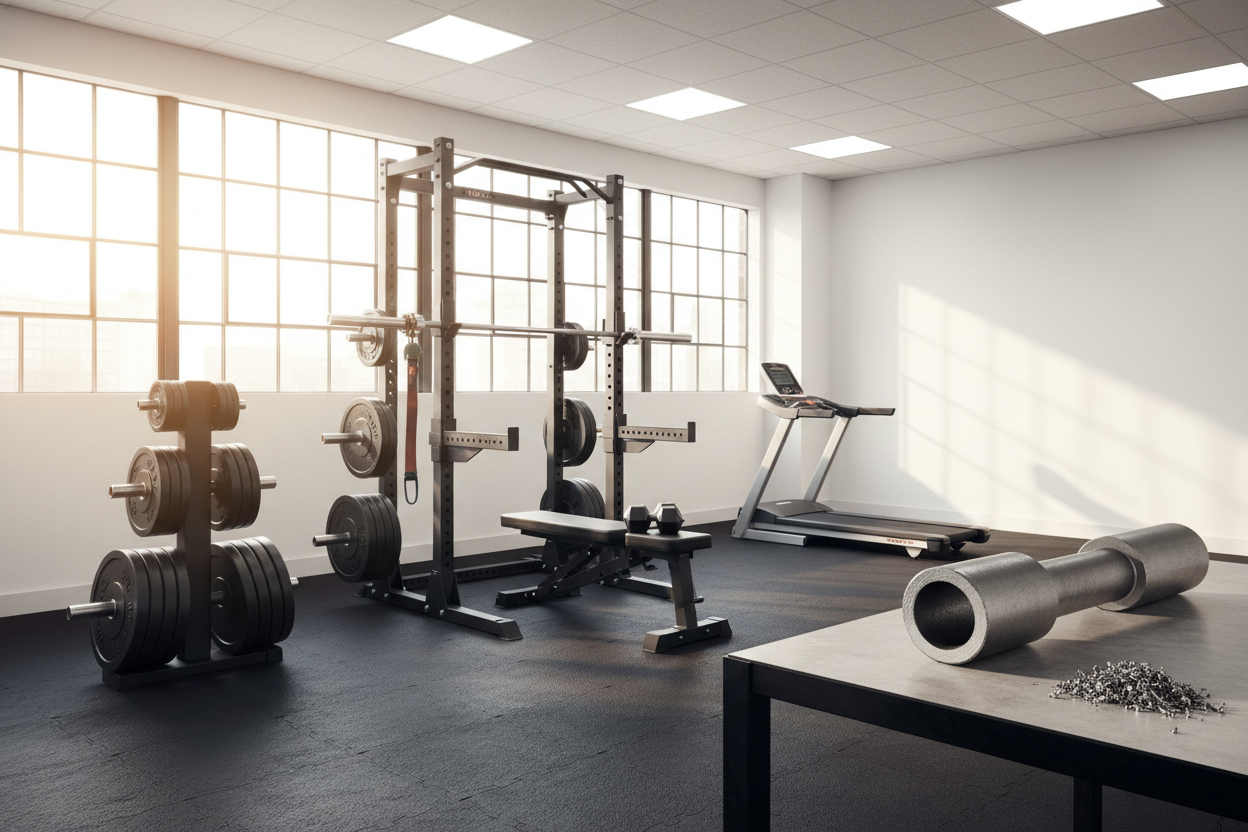
Last month, I saw a 1-inch barbell rod sitting in the clearance bin of a big-box sporting goods store. It was $25, shiny, and claimed to hold 300 pounds. I knew it was junk, but I wanted to prove exactly why. I brought it home, skipped my workout, and spent thirty minutes with a hacksaw to see what was actually supporting the weight.
What I found was terrifying. If you are currently using a cheap barbell rod for anything other than light curls, you are essentially lifting with a glorified curtain rod. Here is the reality of budget steel and why it is a disaster waiting to happen.
Quick Takeaways
- Hollow steel tubes are often disguised as solid bars with chrome plating.
- Static weight ratings mean nothing when you actually drop or move the bar.
- Cheap pins and bolts inside the sleeves are the first point of catastrophic failure.
- If the shaft diameter is under 28mm, it is likely not meant for heavy lifting.
The Hacksaw Test: What is Actually Inside a Budget Bar?
I expected the steel to be low-grade, but I didn't expect it to be hollow. As the hacksaw bit into the rod for exercise, it didn't take long to break through the outer shell. This wasn't a solid piece of milled 190,000 PSI tensile strength steel. It was a tube with a wall thickness of about 2mm. The rest of the 'weight' of the bar came from heavy sand-like filler and thick, cheap chrome plating.
The sleeve construction was even worse. On a real bar, the sleeves rotate on bushings or bearings. On this rod for gym use, the sleeves were held on by a single, brittle hex bolt hidden under a plastic cap. There was zero rotation. If you try to clean or even curl with a bar that doesn't spin, the torque goes straight into your wrists and elbows. Over time, that friction will snap that internal bolt, and your plates will go sliding across the floor mid-set.
The Warning Signs Your Bar Is About to Snap
Companies love to slap a '300-lb capacity' sticker on a cheap weight rod gym setup. That is a static rating, meaning the bar can hold that weight while sitting perfectly still on a rack. The second you start moving, physics takes over. A 200-pound squat generates significantly more force at the bottom of the hole than 200 pounds of stationary iron.
If you notice your bar has a permanent 'smile' (a slight bend) after a set, it has reached its elastic limit. It won't bend back, and the structural integrity is gone. I always tell people to buy a real gym weights barbell before they find out the hard way that 'budget' and 'safety' don't mix when there is a heavy load over your face.
Why 'Rod and Weights' Sets Belong in Cardio Class
We have all seen those rod and weights sets with the colorful, plastic-coated plates. They are great for high-rep pump classes where you never go over 50 pounds. But they have no business in a garage gym focused on progression. The 'steel' used in these rods is often recycled junk that hasn't been heat-treated. It is soft, prone to snapping, and the thin diameter makes it impossible to get a secure grip during heavy pulls.
When you move past the beginner stage, you need equipment that can handle the violence of a heavy deadlift or a missed bench press. Pairing a real bar with a sturdy weight bench with barbell rack is the only way to ensure you aren't the star of a gym fail video because your equipment buckled under a standard load.
How to Spot a Fake 'Heavy Duty' Gym Rod
Don't trust the marketing copy. Every manufacturer claims their rod for gym use is 'professional grade.' Instead, look at the specs. First, check the sleeves. If they are held on by a visible bolt on the end rather than a snap ring, walk away. Second, check the knurling. If it feels like smooth plastic or looks like it was painted on, you won't be able to hold it once your hands get sweaty.
Finally, look at the shaft diameter. A standard Olympic bar is 28mm to 29mm. Most cheap barbell rod alternatives are much thinner, around 25mm, to save on material costs. A thin bar whips uncontrollably and bites into your back during squats. If you are serious about pressing, a solid bar and a high-quality adjustable weight bench are the two most important investments you will make. Do not skimp on the things that keep the weight from crushing you.
My Personal Lesson in Cheap Steel
I learned this lesson the hard way back in 2014. I bought a '100lb weight set' that came with a chrome barbell rod. I thought I was being thrifty. During a set of floor presses, I felt a weird vibration. When I racked the bar, I saw the sleeve had actually started to slide off the shaft. The internal pin had sheared off from the minor impact of racking the weight. I was five pounds of pressure away from a 45lb plate landing directly on my neck. I cut that bar up too, and it's been a paperweight ever since.
FAQ
Is a 1-inch barbell rod okay for beginners?
Only for light isolation work like curls or tricep extensions. If you plan on squatting, deadlifting, or pressing more than 100 pounds, skip the 1-inch rod and go straight to a 2-inch Olympic bar.
What is the difference between a gym rod and a barbell?
In the industry, 'rod' usually refers to cheap, thin, or hollow bars found in retail stores. A 'barbell' typically refers to a solid steel, precision-engineered tool designed for strength training.
How much weight can a standard gym rod hold?
Most are rated for 150-300 pounds, but these are static ratings. In real-world training conditions, I wouldn't trust a hollow weight rod gym with more than 50% of its advertised limit.
Share:
I Traded My Power Rack for a Max Workout Machine (Big Mistake)
Why the Best Home Gym Ideas Start With Structural Math