
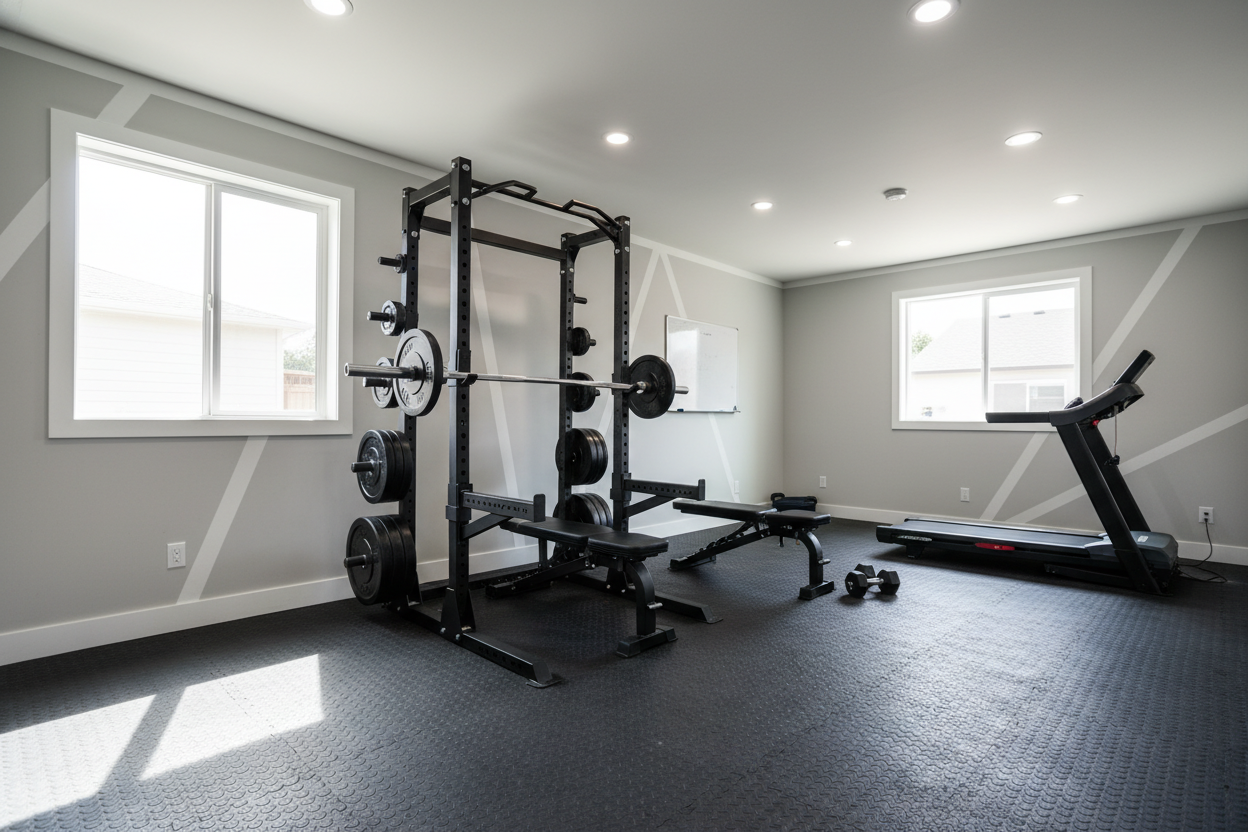
I remember staring at a 12-page PDF from a guy on Instagram who had never spent a winter training in a freezing garage. It had three types of bicep curls and a dozen different cable movements. My rack was collecting dust because I was too overwhelmed to even start. I realized the secret to barbell exercises isn't variety; it's intensity on the basics. I sold half my machines and went back to the iron.
- Focusing on four main lifts allows for faster recovery and clearer progress tracking.
- Free weights develop stabilizer muscles that machines completely ignore.
- A minimalist 3-day routine is more sustainable for people with actual lives.
- High-quality knurling and bar whip make a massive difference in heavy pulling.
Stop Doing 12 Different Movements Per Workout
The biggest lie in fitness is that you need 'muscle confusion.' Your muscles aren't confused; they're just under-stimulated because you're doing too much junk volume. When I was running a 6-day body part split, I spent more time changing weight plates and adjusting cable heights than actually lifting. A focused, minimalist barbells workout cuts the fat. You stop worrying about 'hitting the muscle from every angle' and start worrying about adding 5 pounds to the bar.
For the home gym owner, this is a lifesaver. You don't need a 2,000-square-foot facility to get elite results. You need a rack, a bench, and the discipline to stick to the same movements for months at a time. This approach drives actual progression because you aren't spread thin. If you're tired of feeling like a hamster on a wheel, it's time to embrace barbell weight lifting in its simplest form. Bar weight training is about mastery, not variety. You want to be the person who can walk up to a loaded bar and move it without thinking, not the person scrolling through their phone trying to remember how to set up the pec deck.
The Core Barbell Exercises That Actually Matter
If you have a standard Olympic barbell and some plates, you have everything you need to build a physique that actually performs. These movements provide the highest return on investment because they use the most muscle mass and allow for the most weight to be moved. Exercise using barbell setups shouldn't be complicated. We are looking for compound movements—lifts that use multiple joints and muscle groups simultaneously. This is the foundation of barbell weight training. When you lift barbell weights in this manner, you trigger a systemic hormonal response that isolation moves just can't match. These are the barbell weight exercises that have stood the test of time for a reason.
The Squat: Building Your Base
The squat is the undisputed king of barbell weight lifting. Nothing else builds lower body thickness and overall structural integrity like a heavy bar on your back. It’s not just a leg move; your upper back is tight, your core is braced, and your central nervous system is firing on all cylinders. In my garage, I’ve learned that the squat is a mental game as much as a physical one. When you’re training alone, you have to be smart. I always set my safety pins just below my depth. If I fail, I can drop the bar without destroying my floor or my spine.
Different barbell exercises like the front squat have their place, but the low-bar or high-bar back squat is your bread and butter. It forces full-body growth. If you want to get better at barbell training, you have to squat at least once or twice a week. Don't overthink the 'perfect' form to the point of paralysis. Get your feet set, hit depth, and drive. Good barbell exercises don't have to be fancy; they just have to be heavy and consistent. I've seen guys spend hundreds on leg press machines when a simple squat rack would have done more for their strength bar exercises than any machine ever could.
The Overhead Press: Real-World Shoulders
Forget the seated dumbbell press for a second. Standing barbell exercises like the overhead press (OHP) are the true test of upper body strength. When you move weight overhead while standing, your entire body becomes a stabilizer. Your glutes are squeezed, your abs are locked, and your shoulders are doing the heavy lifting. This is one of the best barbell moves for developing that 'v-taper' and real-world power. It’s a bar lift workout staple that most people skip because it’s hard and the ego-lift numbers are lower than the bench press.
Using a straight bar exercises your ability to coordinate your whole body. I’ve found that my core gets more work from a heavy set of five on the OHP than it ever did from planks or crunches. If you're looking for good bar workouts, the strict press is non-negotiable. It’s a pure barbell lift that separates the lifters from the posers. Just make sure you aren't turning it into a standing bench press by leaning back too far. Keep your ribs down and drive the bar in a straight line past your face.
The Deadlift: Pure Pulling Power
The deadlift is the most basic human movement: picking something heavy off the ground. It is the cornerstone of weight lifting with bar techniques. If you want a posterior chain that can handle anything, you deadlift. It builds the hamstrings, glutes, and the entire back. Weight training with barbells hinges entirely on this single move. It’s the ultimate measurement of raw strength. I personally use the 20Kg Olympic Barbell Pb01 because it has the right amount of whip and knurling for heavy pulls. You don't want a bar that's too stiff when you're pulling 400+ pounds, but you need that grip to be rock solid.
Barbell lift exercises like the deadlift also prevent injuries by strengthening the muscles that protect your spine. Many people are afraid of them, but done with a flat back and proper hinge, they are the best insurance policy for your body. Whether you are doing olympic bar exercises or just standard powerlifting, the deadlift is the king of barbell movements. It’s a single barbell exercise that works more muscles than a dozen machines combined. Don't neglect your grip training, either; avoid using straps until you absolutely have to.
The Bench Press: The Upper Body Standard
We can't talk about weight lifting bar exercises without the bench press. It’s the horizontal push that everyone asks about. But here’s the thing: you should avoid the fixed-path Smith machine barbell weight if you want real strength. A free, unattached bar forces you to stabilize the weight, which builds the small supporting muscles in your shoulders and chest. This is why free weight barbell exercises are superior for longevity and performance. When you're locked into a machine's path, you're asking for overuse injuries.
Setting up in a garage means you need to be mindful of your 'touch point' and your arch. You don't need a crazy powerlifting arch, but a slight one protects your shoulders. This is one of those barbell bar exercises where people get lazy with form and end up with 'bench shoulder.' Keep your shoulder blades tucked and drive your feet into the floor. Weight training with barbell equipment is about using your whole body to move the load, even on 'chest day.' This is the standard for barbell weight training exercises for a reason—it works.
How to Structure a Bare-Bones Garage Routine
You don't need a complex spreadsheet. For a solid barbell strength training plan, I recommend a simple A/B split performed three days a week (Monday, Wednesday, Friday). Workout A could be Squats, Bench Press, and Rows. Workout B could be Squats, Overhead Press, and Deadlifts. This ensures you are hitting different barbell workouts while keeping the volume manageable. You alternate the workouts each session. It’s the most effective way to handle weight training with barbells without burning out.
The goal is progressive overload. If you did 135 pounds for 5 reps last time, try for 140 this time. This is how you actually get results with barbells training. Don't worry about 'toning' or 'shredding' yet; just focus on the weight on the rod. Standing barbell workouts are taxing, so make sure you're eating enough to recover. I’ve made the mistake of trying to run a minimalist program on a calorie deficit, and it’s a fast track to a plateau. Training with barbell equipment is a marathon, not a sprint. Stick to these types of barbell exercises, keep a logbook, and the results will follow.
My Garage Gym Mistakes
I once spent $600 on a specialized leg extension machine that took up 20% of my floor space. I used it for three weeks before realizing I could get better results just by doing more lunges or front squats with my barbell. I also once tried to max out my bench press without safety bars and ended up having to 'roll of shame' the bar down my stomach. It bruised my ego and my ribs. Now, I prioritize safety and versatility. Every piece of gear I own has to earn its keep, and nothing earns it more than a high-quality bar and a solid rack.
FAQ
Do I need a spotter for these barbell exercises?
If you have a power rack with safety pins or spotter arms, you don't need a human spotter. Just test the height of the pins before you start your heavy sets so you know they'll catch the bar if you fail.
Can I really build a full physique with just four lifts?
Yes. These four movements hit every major muscle group. You can add 'accessories' like pull-ups or dips if you want, but the bulk of your gains will come from the big four. Most people do too many different barbell exercises and master none of them.
Is an Olympic bar necessary?
For any serious strength training barbell work, yes. A standard 1-inch bar will bend under heavy loads and doesn't have the standard 2-inch sleeves for Olympic plates. It’s worth the investment for the safety and the better bearings.
How long should I rest between sets?
For heavy barbell lifts, 3 to 5 minutes is standard. You want your central nervous system to recover so you can give 100% effort on the next set. This isn't cardio; it's strength building.
Share:
Why I Replaced 5 Pieces of Gear With an All In One Smith Machine
I Tested Every Smith Machine Accessory. Only 4 Are Worth It.