
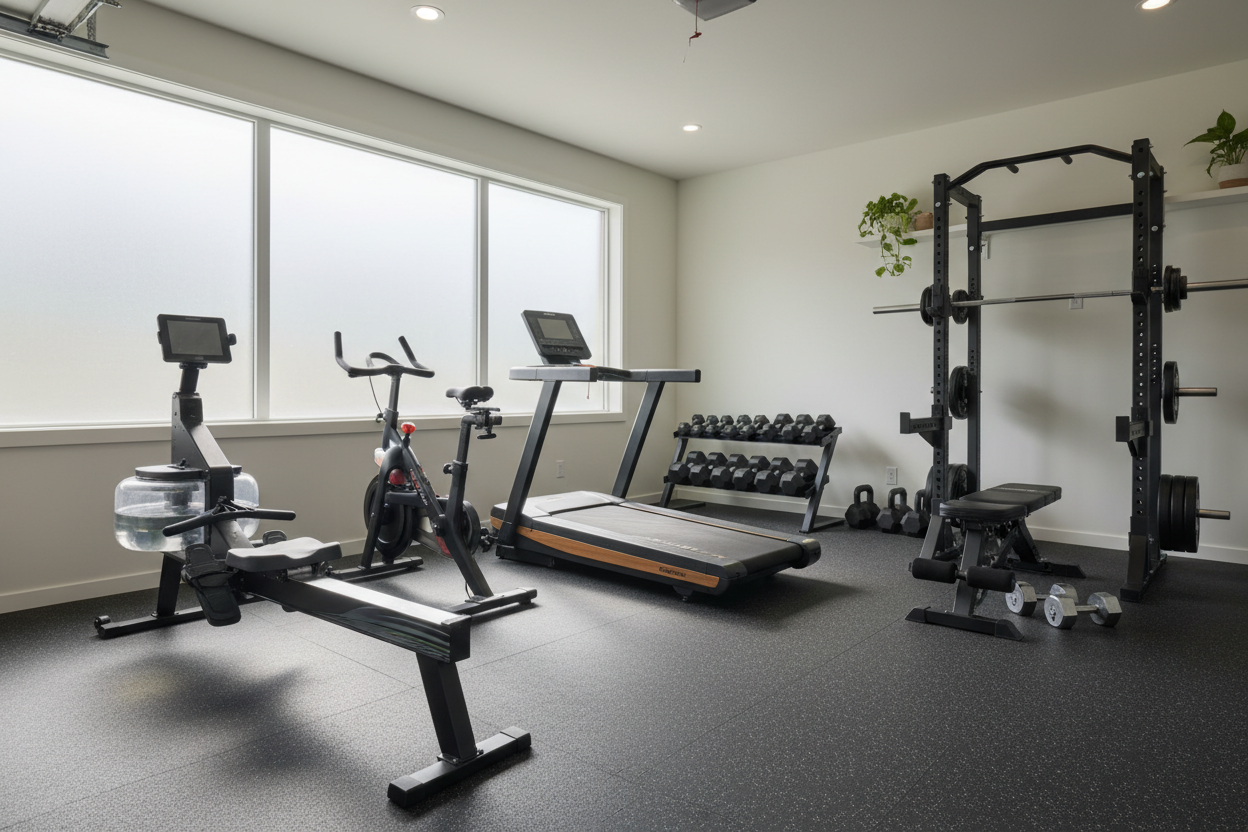
I used to be the guy who told everyone that 'lifting faster' was my cardio. Then I tried to chase my dog up a hill and realized my lungs were about as functional as a screen door on a submarine. I needed cardio equipment at home, but I refused to buy the plastic junk they sell at big-box retailers that ends up as a glorified clothes hanger within three months.
Quick Takeaways
- Skip the cheap folding treadmills; the motors can't handle real training.
- Air bikes are the best value for high-intensity work in small footprints.
- Chain-driven rowers are the gold standard for full-body conditioning.
- Prioritize 'commercial-grade' specs like sealed bearings and steel frames.
- Measure your ceiling height before buying any elliptical or climber.
The Dark Secret of the Residential Cardio Market
The home fitness industry is built on the hope that you'll buy a machine and never use it. Most cardio home machines are designed to look sleek in a catalog but fail the moment a 220-lb lifter tries to do actual intervals on them. They push high-definition touchscreens and $40-a-month subscriptions because the hardware itself is a race to the bottom. If you want a cardio machine at home that survives a garage environment, you have to look for overbuilt steel and simple mechanics.
When you browse for fitness cardio machines, you'll see a lot of 'peak horsepower' ratings that are essentially lies. A residential home cardio machine often uses thin plastic shrouds and bushings instead of bearings. These parts generate heat, and heat kills electronics. I treat buying conditioning gear the same way I treat buying a power rack: if it doesn't weigh at least 150 lbs and isn't made of 11-gauge or 12-gauge steel, it has no business being in my house. You want at home cardio equipment that feels like it was stolen from a high-end CrossFit box, not a hotel basement.
Why You Should Probably Skip the Folding Treadmill
Treadmills are the most returned items in the fitness world for a reason. They are mechanically complex. When you buy budget home cardio equipment like a folding treadmill, you're getting a weak motor controller and a deck that's likely too thin to absorb repeated impacts. I've spent more hours than I care to admit troubleshooting cardio machine manuals after a $600 treadmill's motor controller fried because I dared to walk on it for forty minutes at a 5% incline.
Unless you're dropping $3,500 on a unit with a 3.0 CHP (Continuous Horsepower) motor and a non-folding frame, you're buying a headache. The 'at home cardio machine' market is flooded with 'walking pads' that are fine for a desk, but if you want to run, you need mass. A real indoor cardio machine shouldn't shake when you're at an 8-mph pace. If space is an issue, look elsewhere. A treadmill is a stationary workout equipment piece that demands its own zip code and a dedicated 20-amp circuit.
Air Bikes vs. Rowers: The Heavy-Duty Showdown
For serious cardio equipment for home gym owners, the battle usually comes down to the air bike and the rower. These are the kings of home gym cardio equipment because they don't require electricity, they have almost zero 'tech' to break, and they scale with your effort. If you go harder, the resistance increases. It's physics, not a software algorithm.
I've owned both, and they serve different masters. The air bike is a multi purpose cardio machine that excels at making you want to quit life in under ten minutes. The rower is a cardiovascular workout equipment staple that builds an engine for long-duration grinds. Both are indoor cardio equipment essentials, but they require different levels of maintenance. A rower needs a chain oiled; an air bike needs bolts tightened after a heavy sprint session.
The Air Bike: Pure Agony in a Compact Footprint
The air bike is a cardio device that uses a massive fan for resistance. It’s the ultimate choice for high-intensity intervals. Because it uses both your arms and legs, your heart rate spikes faster than on almost any other home exercise cardio equipment. It fits in a 4x2 foot footprint, making it the best cardio workout machines for home gyms with limited square footage. There are no motors to burn out, just a belt or chain drive and a massive fan that moves enough air to keep your garage cool while you suffer.
The Rower: The Gold Standard for Engine Building
A Concept2 or similar chain-driven rower is arguably the best home aerobic exercise equipment ever made. It’s a full-body indoor cardio machine that hits your legs, back, and arms. It's also the most durable piece of home fitness equipment cardio enthusiasts can buy. I’ve seen rowers with 10 million meters on the monitor that still pull like they’re brand new. The only downside? It’s long. You need about 8 feet of floor length to use it properly, so it’s not always the best fit for a cramped cardio home gym.
What About Trying to Combine Cardio and Strength?
The temptation to buy all-in-one exercise equipment for home is real. You see the ads for machines that claim to be a cable machine, a rower, and a squat rack all in one. In my experience, these are almost always a compromise. A home workout equipment cardio piece should be focused on one thing: getting your heart rate up.
When you try to use a multi-purpose machine for both heavy strength and aerobic machines for home use, you usually end up with a cardio workout machine home unit that feels flimsy under a barbell and a rower that has a weird, jerky stroke. Separate your conditioning. Buy a dedicated home gym cardio machine and keep your lifting gear separate. Your training—and your sanity—will thank you.
How to Pick Your Machine (And Actually Stick to It)
Before you pull the trigger on any home cardio exercise equipment, check your ceiling height. If you’re 6 feet tall and put an elliptical or a climber on a 10-inch base in a basement with 7-foot ceilings, you’re going to scalp yourself. Noise is the other factor. An air bike sounds like a jet engine; a magnetic rower is silent. If you train at 5 AM while the family is sleeping, the 'best' machine is the one that doesn't get you evicted.
When building a complete home gym setup, prioritize gear that you actually enjoy (or at least respect). I personally went with a heavy-duty air bike because I can finish a soul-crushing workout in 15 minutes and get back to my day. Whatever you choose, make sure it’s built to last. I once bought a $200 'magnetic rower' that snapped a cord within three months. Now, I only buy in home cardio equipment that I know I can't break.
FAQ
Is an air bike too loud for an apartment?
Yes. Unless your neighbors are deaf or you're trying to start a war, an air bike is too loud for apartment living. Go with a magnetic rower or a high-end stationary bike instead.
Do I need a special floor mat for my cardio machine?
Absolutely. Not only does it protect your floor from sweat (which is corrosive), but it also levels out the machine and reduces vibration. A 3/4-inch rubber stall mat is the gold standard.
How often should I maintain my home cardio gym equipment?
Check the bolts every month. If it has a chain, oil it every few months. If it has a belt, check the tension once a year. Simple maintenance prevents 90% of the issues people have with at home cardio machine units.
Share:
Trying to Buy Used Gear Forced Me to Learn Workout Machines Names
I Traded Free Weights for the Machine Exercise (Here is What Happened)