
I remember the day my left knee decided it was done with pavement. I was three miles into a 'recovery' jog, heard a pop like a dry twig snapping, and limped the last mile home. That was the end of my running career and the beginning of my obsession with finding gym equipment for walking that actually delivers a sweat without the orthopedic bill.
Quick Takeaways
- Incline is the great equalizer—15 percent grade turns a stroll into a lung-burner.
- Manual curved treadmills are the gold standard for posture and calorie burn.
- Sleds are the secret weapon for building 'bulletproof' knees while walking.
- Avoid cheap under-desk pads if you weigh over 180 lbs; they won't last six months.
Why I Ditched Jogging for Heavy Walking
Running is great for some people, but for those of us carrying extra muscle mass or a history of sports injuries, it’s a high-tax activity. Every stride sends three to four times your body weight through your joints. When I hit 220 lbs, the math just didn't work anymore.
I shifted my focus to high-intensity walking. By adding steep inclines or external resistance, I found I could keep my heart rate in Zone 2 or Zone 3 for an hour without the week-long inflammatory hangover. It’s about longevity. I want to be able to squat when I’m 70, and pounding asphalt at 6:00 AM wasn't helping that cause.
The Incline Treadmill: A Necessary Evil?
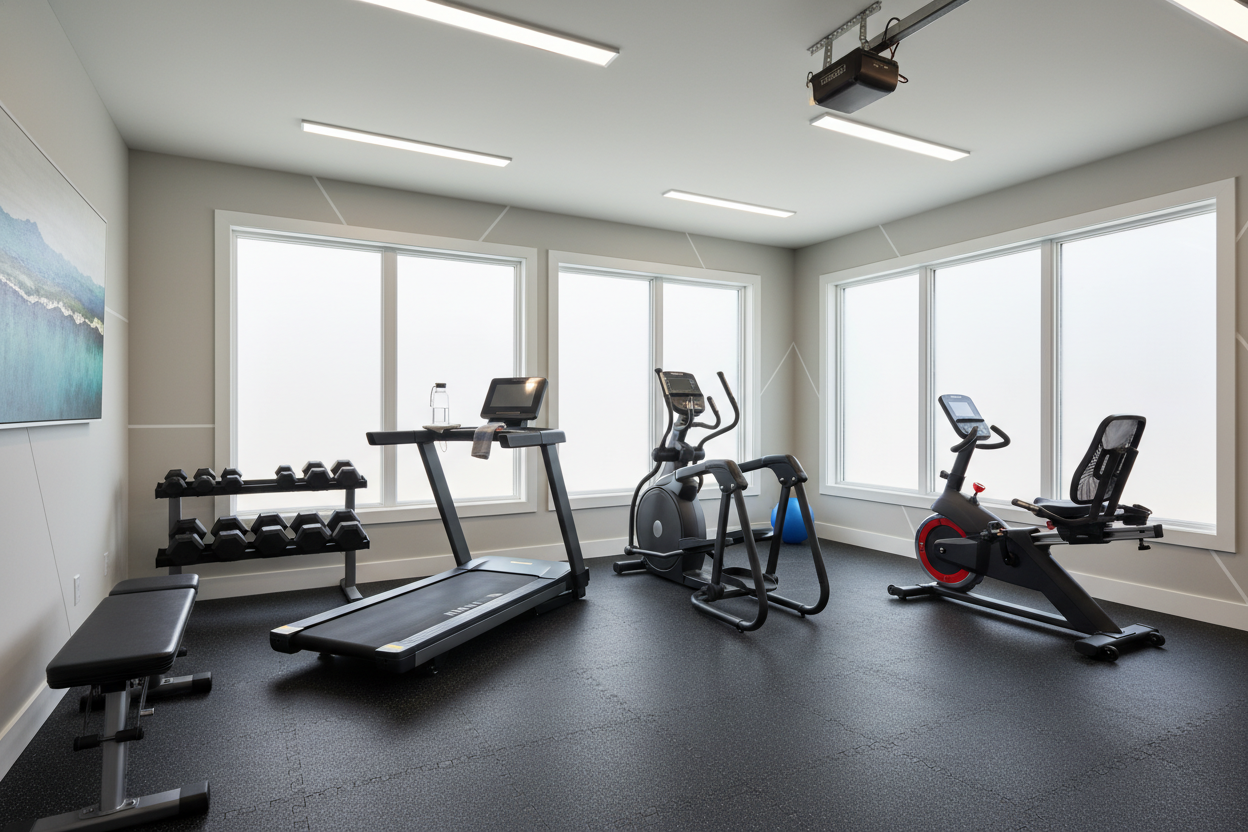
The standard motorized treadmill is the most common piece of walking gym equipment, but most people use it wrong. Walking flat at 3.0 MPH is basically just moving. To make it a workout, you need a deck that hits at least a 12 to 15 percent incline.
I’ve spent hours on commercial-grade NordicTrack and Matrix units. The motorized assist is actually a downside if you're looking for maximum effort, but the ability to lock in a specific grade is huge for posterior chain development. If you can find a unit with a 3.0 HP motor or higher, it’ll handle the slow, high-torque grind of incline walking without burning out the board.
Manual Curved Treadmills (My Absolute Favorite)
If you have the budget, a non-motorized slatted treadmill is the superior choice. Unlike a motorized belt that pulls your feet back, you have to physically push the slats to make the machine move. It forces a mid-foot strike and engages your hamstrings and glutes far more than a flat belt ever could.
I’ve found that equipment for home gym gains usually works better when it doesn't rely on a wall outlet. These machines are built like tanks—think thick rubber slats and heavy-duty bearings. They are louder than motorized versions, but the response is instant. You want to sprint? It moves with you. You want to slow to a crawl? It stops when you do.
The Sled: The Ultimate Walking Hack
We need to stop thinking of 'walking' as just a treadmill activity. A weight sled is quite literally the best piece of walking gear I own. Loading up a Rogue Echo or a S-25 with a few 45-lb plates and taking it for a walk across the turf is a brutal conditioning tool.
It’s effectively the bare minimum equipment for a home gym if you want to fix your knees. Backward sled walking pumps blood into the patellar tendon and strengthens the VMO. It’s a zero-impact way to get a massive pump while technically just 'going for a walk.' Plus, it won't break like a treadmill with a faulty console.
What About Ellipticals and Stair Steppers?
I’ll be honest: I find ellipticals soul-crushing. The fixed path of motion feels unnatural for most lifters, and they take up a massive footprint for the amount of work they provide. If you have hip issues, the 'no-impact' nature is a plus, but I’d rather walk on a hill any day.
Stair steppers (the ones with actual revolving stairs) are incredible for conditioning, but they are the divas of the gym world. They require massive vertical clearance—usually a 9-foot ceiling minimum—and they are notoriously finicky to repair. If you have the height, a StepMill is a leg-building powerhouse, but for most garage gyms, it’s a logistical nightmare.
How to Pick What Fits Your Garage
Before you drop two grand, measure your space. A curved treadmill is usually about 6 feet long and 3 feet wide, but it weighs 300 lbs. You aren't moving it easily. If you’re tight on space, a high-quality folding motorized treadmill might be the move, provided it has a steel frame and a decent warranty.
When building out a home gym, I always suggest starting with the most versatile tool. If you have a driveway, get a sled first. If you need indoor cardio for the winter, look for a treadmill that offers at least a 15% incline. Skip the cheap $300 'walking pads' you see on TikTok; they are designed for 120-lb influencers, not someone looking to put in real work.
FAQ
Is walking at an incline as good as running?
For fat loss and cardiovascular health, yes. A 3.5 MPH walk at a 15% incline often results in a higher heart rate and more caloric expenditure than a 6.0 MPH jog on a flat surface, with significantly less joint impact.
Are manual treadmills harder than motorized ones?
Significantly. Expect your heart rate to be 15-20 beats per minute higher on a manual curved treadmill compared to a motorized one at the same speed. You are the motor.
Can I use a walking pad for serious training?
Not really. Most walking pads have a weight limit that is 'optimistic' at best and motors that overheat if used for more than 30 minutes at a time. They are fine for getting steps in at a desk, but they aren't training tools.
Share:
I Tested Every Smith Machine Accessory. Only 4 Are Worth It.
Is There a True 'Best Exercise Equipment for Whole Body' Setup?