
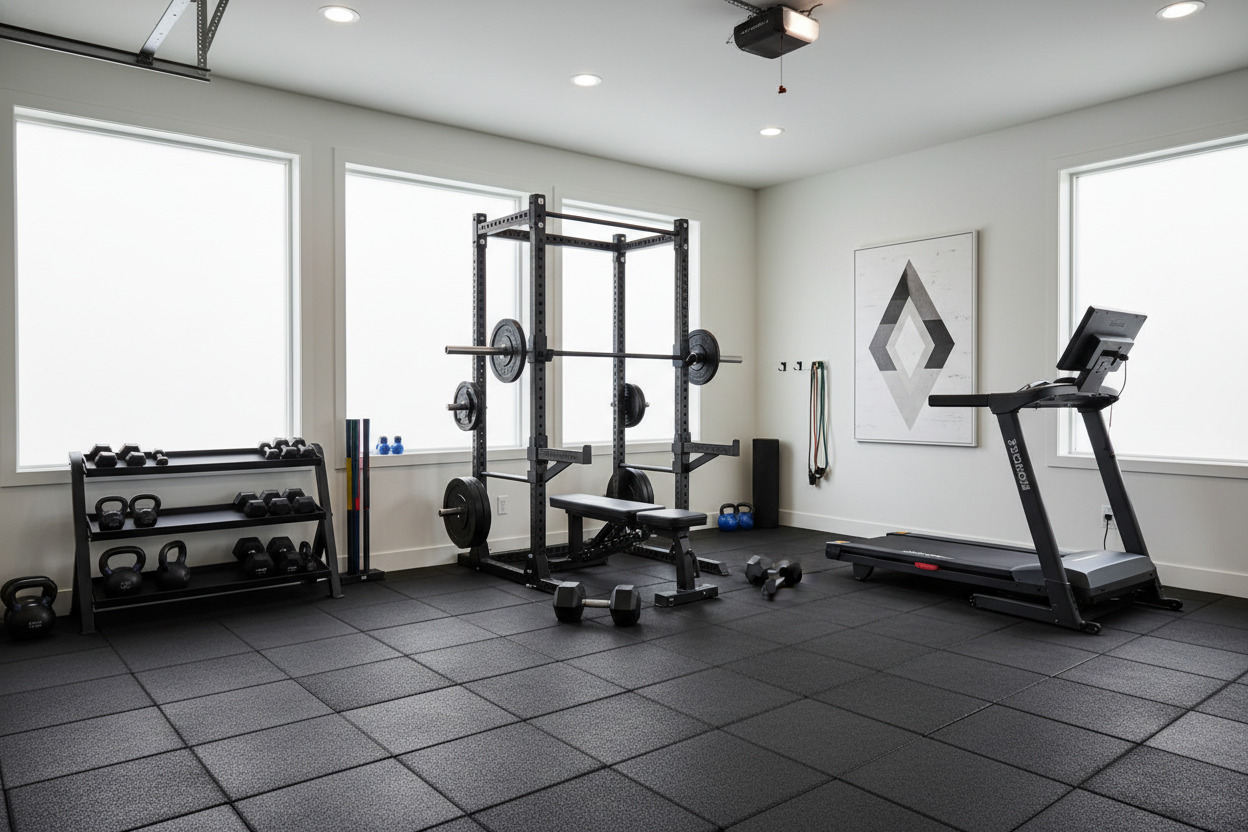
I sat in my garage at 2 AM last Tuesday, credit card in hand, staring at a 'smart' squat rack that promised to track my reps via AI. I almost hit the buy button before I looked at the $600 cable machine I bought last year that now gathers dust because the pulleys feel like they are filled with wet sand. Finding the top exercise equipment isn't about following a list; it's about learning to ignore the marketing noise and focusing on what survives a heavy session.
Quick Takeaways
- Most 'must-have' lists are driven by affiliate commissions, not gear durability.
- Flashy screens and subscriptions often hide mediocre build quality.
- Foundational iron like 11-gauge steel racks and barbells always offer the best ROI.
- Simplicity in cardio equipment usually leads to better consistency and fewer repairs.
The Problem With Trusting 'Must-Have' Gear Lists
Every time a new year rolls around, the internet is flooded with lists of the latest fitness equipment. You've seen them: the 'Top 10 Gadgets to Shred Fat' or 'The Only Machine You Need.' Most of these lists are written by people who have never actually dropped a loaded barbell or felt the frame flex on a cheap press. They are looking at spreadsheets of commission rates, not the thickness of the steel or the quality of the welds.
The reality is that high-end marketing often compensates for low-end engineering. When a company spends millions on celebrity endorsements and Instagram ads, that money isn't going into the bushings of your barbell or the motor of your treadmill. You end up paying a premium for a brand name attached to a piece of equipment that might not even survive a year of serious training.
I've seen it firsthand. I once tested a 'top-rated' adjustable dumbbell set that felt great for three weeks. On the fourth week, the plastic locking mechanism sheared off after a standard set of overhead presses. If I had listened to the hype instead of looking at the materials, I would have been out $400 with a dangerous paperweight.
Why I Stopped Chasing the Flashy Stuff
There was a phase where I thought my gym needed to look like a sci-fi movie set. I bought a machine that promised 'targeted sculpting' for my upper body. It had a sleek white finish and a touchscreen that told me I was doing great. Within a month, I realized the range of motion was so restrictive it actually hurt my shoulders. I learned the hard way that gear targeting flabby arms usually fails because it prioritizes a 'burn' over actual biomechanical efficiency.
That machine took up a 4x4 foot footprint that could have been used for a second rack or a dedicated deadlift platform. Trendy gear often tries to solve problems that don't exist. You don't need a specialized machine for every single muscle group. You need gear that allows you to move heavy weight through a full range of motion without the frame wobbling like a Jenga tower.
My biggest mistake was valuing 'new' over 'proven.' I spent thousands on machines that had zero resale value because they were replaced by 'Version 2.0' six months later. Now, I look for gear that is built to last a decade, not a fiscal quarter.
The Unsexy Iron That Actually Survives Daily Abuse
If you want a gym that actually builds strength, you need to look at the unsexy stuff. We are talking about 11-gauge steel, 3x3 uprights, and barbells with a high tensile strength. This is the popular exercise equipment among people who actually train, even if it doesn't look as pretty in a lifestyle photoshoot. A solid power rack is the heart of any real home gym.
When I switched to a heavy-duty rack with 5/8-inch hardware, my training changed. I wasn't worried about the rack tipping during a heavy re-rack. I wasn't dealing with chipped paint after two weeks. If you are on a budget, hunting for used commercial exercise equipment is often a better move than buying a brand-new, flimsy 'pro' model from a big-box store. Commercial gear is built to be abused 12 hours a day by people who don't own it.
Look at the specs. Does the barbell have a 190,000 PSI rating? Are the plates made of virgin rubber or recycled crumb that smells like a tire fire? These details matter more than whether the gear syncs with your phone. Real iron doesn't need a firmware update to help you hit a PR.
What About Cardio? (Hint: You Don't Need a $2,500 Screen)
Cardio is where the latest exercise equipment hype hits its peak. The industry wants you to believe that you can't get a good sweat without a 22-inch 4K screen and a monthly subscription that costs as much as a gym membership. It is a lie. A screen doesn't make the pedals turn; your legs do. I've found that the more tech a cardio machine has, the more things there are to break.
If you want to burn calories and improve your heart health, a standard exercise bike with manual resistance is often more reliable and much quieter. You can put a tablet on a $15 mount and watch whatever you want without being locked into a proprietary ecosystem. I prefer magnetic resistance because it stays consistent and doesn't require the maintenance of felt pads.
For those of us working with limited square footage, a foldable upright exercise bike is a massive win. It gives you 16 levels of resistance and then tucks away into a corner when you are done. You don't need a dedicated room for cardio when the gear is designed to be practical. I’ve used these for fasted cardio sessions while watching the news, and the lack of a 'connected' trainer didn't make me sweat any less.
How to Filter Out the Noise on Your Next Purchase
Before you buy the next big thing, ask yourself: 'What problem does this solve?' If the answer is just 'it looks cool,' keep your money. Look for versatility. A piece of gear should allow you to perform at least three different movements. A barbell can do hundreds; a specialized 'ab-blaster' can do one.
Check the warranty. If a company only guarantees their frame for 90 days, they don't trust their own product. Real equipment manufacturers offer multi-year or lifetime warranties because they know their steel isn't going to snap. Stop chasing the 'top' lists and start building a gym that works as hard as you do.
FAQ
Do I really need a power rack?
If you plan on lifting heavy alone, yes. The safety pins or spotter arms are literally lifesavers. You can skip the fancy attachments, but don't skip the structural integrity of the rack itself.
Is magnetic resistance better than friction resistance?
Usually, yes. Magnetic resistance is silent and doesn't wear down over time. Friction pads can smell, make noise, and eventually need replacement. For a home setup, magnets are the way to go.
How much should I spend on a barbell?
Expect to spend between $200 and $350 for a quality multi-purpose bar. Anything cheaper usually has poor knurling and sleeves that don't spin well, which can lead to wrist pain during cleans or presses.
Share:
I Finally Found the Best Exercise Machine for Home (And It's Heavy)
I Tried Buying a Life Fitness Functional Trainer for My Garage