
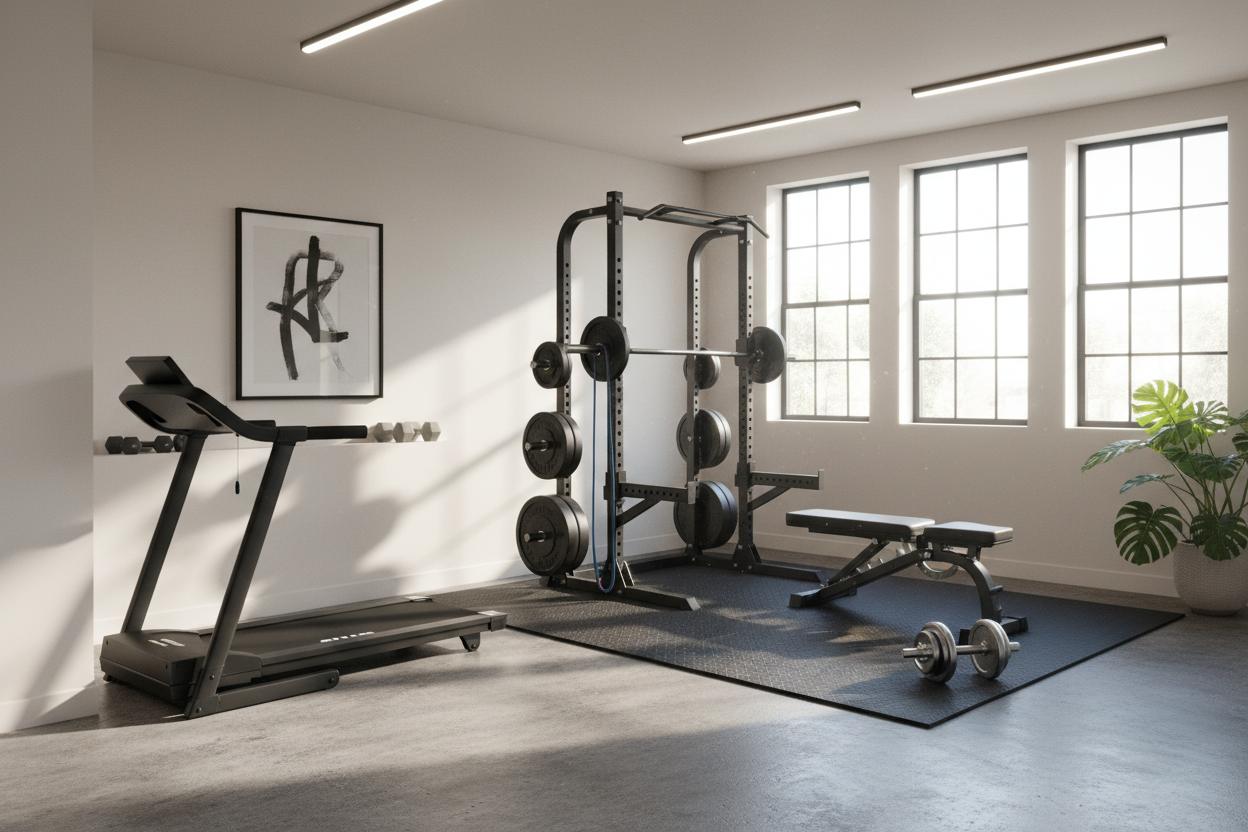
I have spent the last decade turning my garage into a graveyard for 'innovative' fitness tech. I have owned the vibrating platforms, the plastic-heavy cable machines, and the 'as-seen-on-TV' contraptions that promised a six-pack in six minutes. Most of it ended up on Craigslist within three months.
Finding the best at home exercise equipment isn't about filling a room with shiny gadgets. It is about identifying the gear that won't snap when you actually start moving heavy weight. After testing hundreds of units, I have stripped my setup down to just three essential pieces that can handle a 500-pound squat and a high-intensity cardio session without flinching.
Quick Takeaways
- Ignore Amazon 'Best Seller' badges; they usually prioritize price over structural integrity.
- A single multi-functional station is always superior to four single-use machines.
- If the equipment uses 14-gauge steel or thinner, do not buy it for serious lifting.
- Adjustable weights are the only way to maintain floor space without sacrificing progress.
The Problem With 'Highly Rated' Internet Fitness Gear
The current market is flooded with flimsy junk. Influencers get paid thousands to smile next to a rack that wobbles the second you rack a 45-pound plate. These companies spend more on their marketing than their welding. This is exactly why the best home exercise equipment UK and US markets have to offer is rarely found on the front page of massive online marketplaces.
You need to look for equipment that lists its steel gauge and bolt size. If a manufacturer is hiding the specs, it is because they are using thin-walled tubing that will bend under stress. I have seen 'highly rated' benches collapse under 300 pounds. That is not just a bad purchase; it is a trip to the ER.
Piece #1: The Heavy-Duty Anchor (That Actually Fits)
If you want a real workout, you need a centerpiece that allows for heavy compound movements. For me, that is a Smith machine home gym station. It replaces a squat rack, a bench press station, and a cable crossover in one footprint.
I chose a unit with a 1,000-pound static weight capacity. Why? Because when you are training alone in a garage at 6:00 AM, you need to know the safeties will actually catch the bar if you hit failure. A solid station allows you to push your limits without needing a spotter standing over you.
Why Weight Capacity Tells You Everything
Marketing teams love to throw around big numbers, but you need to distinguish between static and dynamic load. A rack might hold 600 pounds if you place it gently, but if you drop 200 pounds from a height of six inches, will it buckle? Look for 11-gauge or 12-gauge steel. Anything thinner is basically a glorified clothes hanger.
Piece #2: Cardio That Doesn't Double as a Coat Rack
Most home treadmills are overpriced garbage. They are loud, they require constant belt maintenance, and they take up half a room. I realized I was spending more time fixing my treadmill than running on it. I eventually swapped it for a foldable upright exercise bike.
The footprint is tiny, and the 16-level magnetic resistance is whisper-quiet. I can get a high-intensity interval session in while my kids are sleeping in the next room. When I am done, I fold it up and tuck it into the corner. It is the only cardio tool I have tested that didn't eventually become a place to hang my damp towels.
Piece #3: The Unsung Hero of Free Weights
You cannot have a functional space without a heavy set of adjustable dumbbells and a rock-solid bench. I used to have a full rack of hex dumbbells, but they ate up 12 feet of wall space. It was a nightmare to keep organized.
When building a home gym, your primary constraint is always square footage. A high-quality set of adjustables that goes up to at least 50 or 70 pounds per hand is non-negotiable. Pair that with a bench that doesn't have a massive gap between the seat and the backrest, and you can perform 90% of all known hypertrophy exercises in a 6x6 foot area.
How to Audit Your Own Space Before Buying Anything
Before you hit 'buy' on any best indoor exercise equipment, get a tape measure. You need to check three things: ceiling height, barbell clearance, and 'the burpee test.' If you can't jump with your hands up without hitting a light fixture, or if a 7-foot Olympic bar hits your storage shelves on the side, that gear is useless to you.
I once bought a power tower that was 84 inches tall, only to realize my basement ceiling was 82 inches. I had to sell it for a loss before I even put a bolt in it. Don't be that guy. Measure your reach and your floor plan twice.
FAQ
Do I really need a Smith machine for a home gym?
You don't 'need' it, but if you train solo, the built-in safety catches are a lifesaver. It allows for high-intensity training without the risk of getting pinned under a heavy bar.
What is the most durable floor for home workouts?
Skip the colorful foam tiles. Go to a farm supply store and buy 3/4-inch thick rubber horse stall mats. They are indestructible, dampen noise, and cost a fraction of 'fitness' flooring.
Is magnetic resistance better than air resistance for bikes?
For home use, yes. Magnetic resistance is nearly silent and requires zero maintenance. Air bikes are great for calorie burning, but they sound like a jet engine taking off in your living room.
Share:
How to Spot a Sketchy Fitness Equipment Retailer Online
Your Wobbly Bench Press Weight Holder Will Get You Pinned