
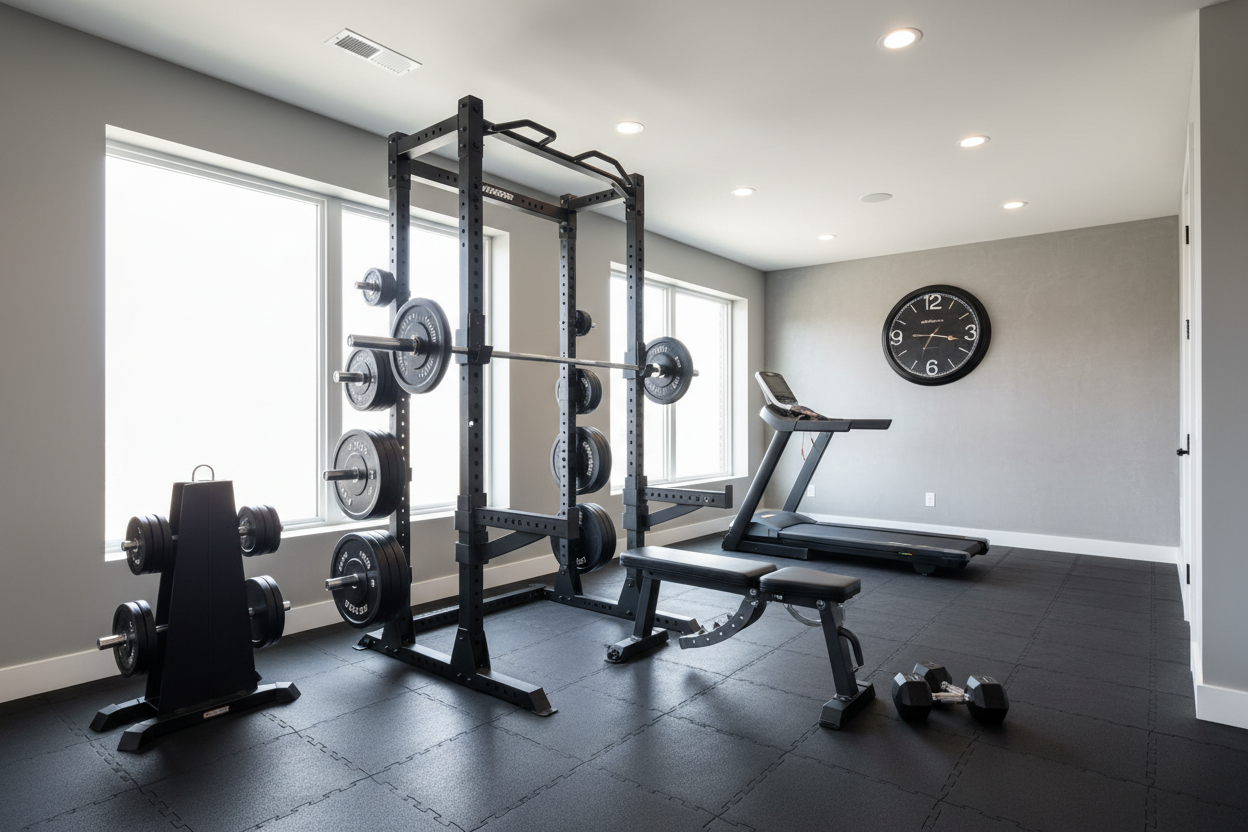
I remember staring at a power rack in my cart last October. One morning it was $650; three days later, it was $780. No upgrades, no added features—just a sudden spike. It made me realize that the average gym item price isn't a fixed number; it's a moving target influenced by steel costs, fuel surcharges, and retail psychology. If you aren't watching the data, you're essentially handing over a 'convenience tax' to big-box retailers.
- Shipping is the silent killer; always calculate the 'landed cost' before hitting buy.
- Iron is iron—buy plates used whenever possible to save 50% or more.
- November isn't always the cheapest month; watch out for pre-sale price hikes.
- Invest in moving parts like barbells and pulleys; save on static steel like racks.
Why I Started Tracking Equipment Costs
I got tired of feeling like I was getting fleeced. Every time I thought I had a budget dialed in, I'd refresh a page and see a price jump that made no sense. Why did a pair of 50-lb dumbbells cost $120 on Tuesday and $155 on Friday? To find out, I started a spreadsheet tracking the prices of gym equipments across five major brands. I didn't just look at the front page; I tracked the cost gym equipment across multiple categories: strength, cardio, and storage.
What I found was a mess of market fluctuations. Gym equipment pricing is notoriously opaque because most of us only buy a power rack once every decade. We don't have the same price memory for a lat pulldown as we do for a gallon of milk. Retailers know this. They use dynamic pricing models that respond to inventory levels and even your own browsing history. My deep dive revealed that the gym product price you see today is often a reflection of how many units are currently sitting in a shipping container off the coast of California, not the actual value of the steel.
Over six months, I saw 15% swings based on nothing but the day of the week. I saw 'clearance' items that were actually more expensive than their standard retail price from two months prior. It became clear that if you want to build a serious space without going broke, you have to treat it like a commodity trader treats gold. You have to know the floor price so you can spot a real deal when it actually happens.
The Base Price vs. The Freight Shipping Trap
That $400 barbell looks like a steal until you hit the checkout button and see an $80 shipping fee. When you're building a full Home Gym, the cost of fitness equipment isn't just the sticker price; it's the landed cost. Landed cost is the total price of the item plus shipping, taxes, and any 'handling' fees. I've seen companies drop the price of fitness equipment by $100, only to raise their shipping rates by $110. It's a shell game designed to make you feel like you're winning while the retailer protects their margin.
Heavy items like racks and plates often ship via freight on a pallet. This is where the pricing gets wild. If a company offers 'free shipping,' they haven't found a secret way to ship 800 lbs of steel for free; they've already baked that $200 cost into the gym product price. This actually works against you if you're buying multiple items. If you buy a rack and a bench separately from a 'free shipping' site, you're essentially paying the hidden shipping cost twice. If you buy from a brand that charges flat-rate freight, you often save money by bundling your order.
I always recommend checking the total weight of your cart. Most freight carriers have a minimum charge for anything on a pallet. If you're buying a 300-lb rack, adding a 50-lb bench might not increase your shipping cost at all. That's how you lower the effective prices for gym equipment—by maximizing the weight-to-dollar ratio of every delivery. Don't be the person who pays $60 to ship a single pair of change plates. Wait, bundle, and buy the heavy stuff all at once.
Spotting Fake Sales and Inflated Markups
Retailers love the 'was $1,200, now $800' trick. Half the time, that cost of exercise equipment was never $1,200 to begin with. I tracked a popular adjustable dumbbell set that 'went on sale' for Black Friday. The prices for gym equipment actually rose in October, stayed high for two weeks, and then dropped back to their September levels for the 'big sale.' It’s a classic psychological anchor. They want you to compare the sale price to an imaginary high number so you feel a sense of urgency.
If you want the lowest prices of gym equipments, you have to ignore the red 'Sale' tags and look at the historical data. The real low points usually happen in the 'dead zones'—late June or early July. This is when warehouse managers are sweating because they need to clear space for the new models arriving in the fall. It's also when people are outside running instead of buying indoor gear. I’ve found that how much does exercise equipment cost in July is often 10-15% lower than the 'deals' you see during the New Year’s rush.
Another red flag is the 'limited time offer' that never actually ends. If you see a countdown timer on a website, open that same page in an incognito window. Often, the timer resets. They are trying to force a decision because they know if you leave and compare how much does fitness equipment cost elsewhere, you’ll realize their price is average at best. Real sales on quality gear are rare and usually sell out in hours, not weeks. If a sale lasts for a month, it's not a sale; it's just the new MSRP.
The Gear You Should Never Buy Brand New
Why pay $2.50 per pound for brand-new cast iron? It’s a literal hunk of metal. If you’re looking at how much does workout equipment cost, you can cut your budget in half by hitting the used market for plates and basic flat benches. A 45-lb plate from 1985 weighs the same as one from 2024. It might have a little surface rust, but a $5 can of spray paint fixes that in ten minutes. I tell everyone to ignore the retail prices of gym equipments for anything that doesn't have a moving part.
Standard cast iron plates, kettlebells, and basic storage trees are the 'used cars' of the fitness world. They lose 40% of their value the moment they leave the store, but their utility never drops. I once saw a guy pay $800 for a set of brand-name dumbbells that I found on Marketplace for $350 two weeks later. He paid $450 for the privilege of being the first person to sweat on them. That's bad math.
However, you have to be careful with things like adjustable benches or cheap racks on the used market. If the previous owner stripped a bolt or bent a frame, you're buying a safety hazard. Stick to the 'dumb' iron when buying used. If it's solid steel and doesn't have a hinge, it's a safe bet. This approach allows you to reallocate those savings into the pieces where quality actually matters, like your barbell or your primary squat rack.
When Paying Top Dollar is Actually Cheaper
Don't cheap out on anything with a cable, a pulley, or a bearing. I once bought a bargain-bin functional trainer because the gym item price was too good to pass up. It felt like pulling a sled through gravel. The pulleys were plastic, the cables frayed within six months, and the weight stacks were inconsistent. I ended up selling it for a loss and buying a high-end unit anyway. I paid twice because I tried to save once.
If you're looking at a Smith Machine Home Gym Station, you want smooth guide rods and commercial-grade bushings. This is where you pay the premium. A cheap machine with poor tolerances will frustrate you every single workout. It might even cause injury if the safety catches are made of thin-gauge steel that shears under load. When you buy quality moving parts, you aren't just buying the brand; you're buying the machining tolerances that keep the movement fluid and the frame stable.
Think about the cost per use. If you buy a $1,000 piece of equipment and use it for 10 years, it cost you $100 a year. If you buy a $400 piece that breaks in two years and ruins your motivation because it feels like junk, it cost you $200 a year. In the long run, the 'expensive' gear is often the most economical choice. Buy once, cry once. It’s a cliché because it’s true. If it moves, buy the best you can afford.
My Blueprint for Budgeting a Full Setup
To figure out how much for gym equipment you really need to spend, I use the 60/40 rule. Spend 60% of your budget on the 'Big Three': the rack, the bar, and the bench. These are your touchpoints and your safety net. If your bar has bad knurling, you won't want to lift. If your rack is wobbly, you won't feel safe going for a PR. The remaining 40% goes to plates, flooring, and accessories. This prevents you from having a $2,000 treadmill and a $50 barbell that bends under 225 lbs.
I also recommend a staggered buying approach. You don't need a full set of dumbbells from 5 to 100 lbs on day one. Buy what you need for your current program. If you're still wondering how much gym equipment is necessary to start, the answer is usually less than you think. A solid rack and a good set of plates can take you through years of progress. If you need help narrowing it down, read this guide on How to Pick Equipment for a Gym Without Wasting Thousands. It'll keep you focused on the essentials.
Lastly, keep an eye on how much is fitness equipment worth on the secondary market. Brands like Rogue or Rep Fitness hold their value incredibly well. If you buy a high-end rack and decide to move in two years, you can often sell it for 80% of what you paid. If you buy a generic 'no-name' rack from a big-box store, you'll be lucky to get 20%. Buying quality isn't just about the workout; it's about protecting your investment.
How much is fitness equipment usually marked up?
Standard retail markup is usually 30% to 50%. However, because steel is heavy and expensive to move, a lot of that 'markup' actually goes toward logistics and warehousing rather than pure profit for the brand.
How much gym equipment do I need to start?
Start with a power rack, a multi-purpose barbell, and about 300 lbs of plates. That combination allows you to perform every major compound lift safely. Everything else—cables, dumbbells, machines—is an add-on you can buy later.
What is the best month to buy fitness gear?
Late February and early March are the sweet spots. The 'New Year, New Me' rush has died down, retailers are looking to move inventory that didn't sell in January, and the used market is flooded with 'barely used' gear from people who gave up on their resolutions.
Share:
Skip the Barbell: A Machine Only Workout Program for Beginners
The Exact Order You Should Buy Gym Equipment for Your Home