
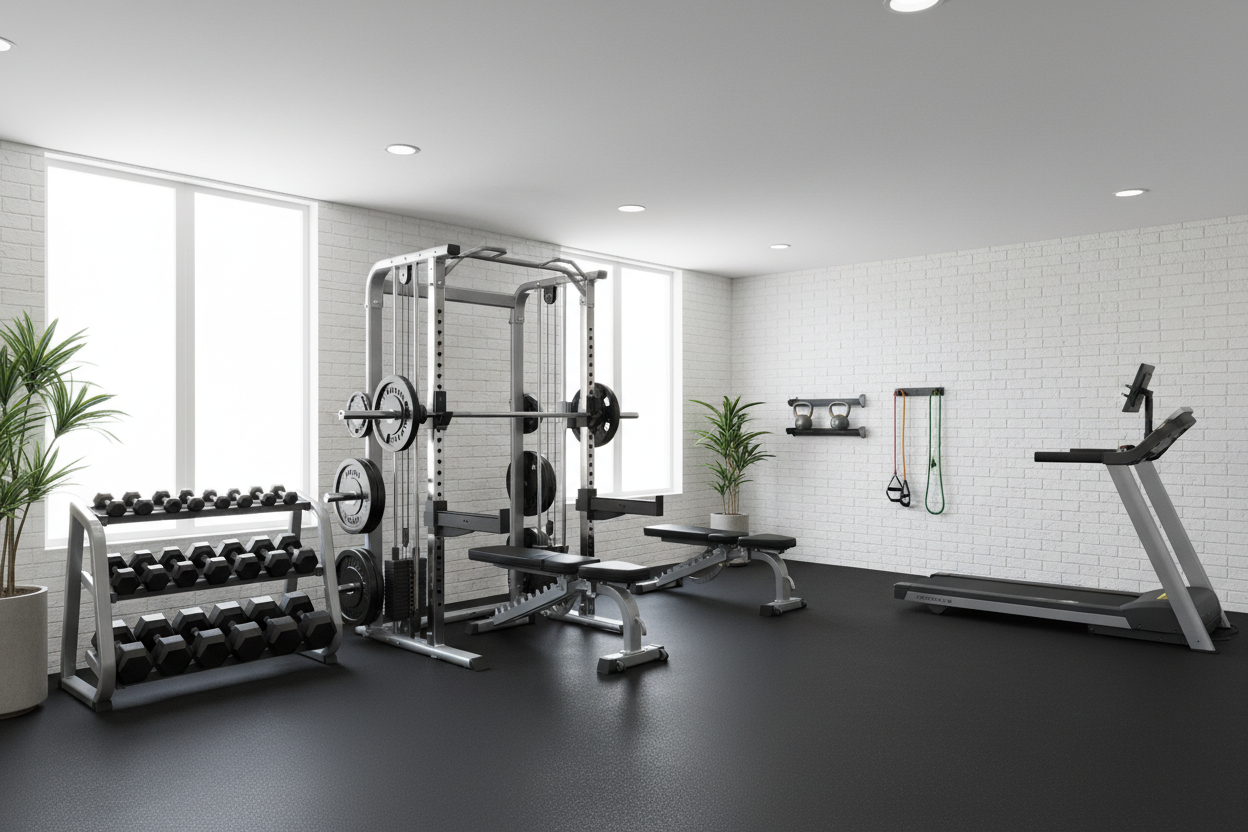
I spent a decade looking down my nose at anyone using a fixed track. To me, the Smith machine was the 'training wheels' of the gym—a place for people who couldn't handle the raw instability of a 45-pound Texas Power Bar. I was a purist, convinced that if you weren't shaking under a heavy squat, you weren't really working.
Then I hit a plateau that lasted eighteen months. My bench stalled, my quads stopped growing, and my lower back started feeling like a bag of dry twigs every time I pulled from the floor. I realized that the IFBB pros I followed weren't using the track because they were lazy; they were using it because smith machine bodybuilding is a surgical tool for muscle growth.
- Stability is the foundation of force production; the less you balance, the more you load.
- Fixed tracks allow for unique foot placements that are physically impossible (and dangerous) with a barbell.
- You can safely train to absolute mechanical failure without a spotter.
- Reduced CNS fatigue means you can recover faster between high-volume sessions.
Confessions of a Recovering Free-Weight Elitist
For years, I believed the lie that 'functional' training was the only way to build a respectable physique. I thought that if my stabilizer muscles weren't screaming, the lift didn't count. But here is the cold truth: your pecs don't know if you're balancing a bar or pushing against a fixed rail. They only know tension and load.
I finally swallowed my pride when I saw a guy with legs the size of tree trunks doing feet-forward squats on a Smith machine. He wasn't worried about his core collapsing or his ankles rolling. He was just burying his quads in a way I hadn't felt in years. That was the day I stopped being a snob and started being a bodybuilder.
The Science of Why Hypertrophy Hates Balance
When you squat a heavy barbell, your brain is doing a million calculations a second to keep you from falling over. This is called stabilizer fatigue. Your central nervous system (CNS) often taps out before your actual target muscles reach their limit. You rack the bar because your balance is gone, not because your quads are finished.
By removing the need for balance, you isolate the muscle. In the context of hypertrophy, balance is a distraction. The Smith machine provides an external 'skeleton,' allowing you to dump 100 percent of your effort into the eccentric and concentric phases of the lift. It turns a compound movement into a high-output isolation play.
My Go-To Fixed Track Mass Builders
Not every exercise belongs on a rail, but for these two, the Smith machine is actually superior to the barbell for pure muscle thickness.
The Poor Man's Hack Squat (Feet-Forward Squats)
Try putting your feet 12 inches in front of the bar on a traditional squat. You'll fall flat on your back. On a Smith machine, however, this placement allows you to keep your torso perfectly upright. This shifts the entire load onto the quads and off the lower back. It mimics a $3,000 hack squat machine for the price of a standard gym membership.
True Chest Isolation Presses
I love a heavy bench press, but my shoulders often take over when the weight gets north of 275. By using a slight incline on the Smith machine, I can tuck my elbows and drive through the palms without worrying about the bar drifting toward my neck. If you want a deeper dive into programming these, check out this smith machine workout guide for a full breakdown of sets and reps.
How to Actually Program Fixed-Track Lifts
Don't just replace your entire routine with machines. I typically use the Smith machine as my second or third movement. I'll start with a heavy, 'unstable' compound lift while my CNS is fresh, then move to the track to finish the muscle off. For example, do your heavy RDLs first, then move to the Smith machine for high-rep, feet-forward squats where you don't have to worry about your grip or your back giving out.
Another strategy is the 'rest-pause' method. Since you can re-rack the bar with a flick of the wrist, you can push a set to failure, rest 15 seconds, and squeeze out three more reps. You can't safely do that with a 315-pound barbell over your throat.
Getting the Right Rig for Your Garage
If you're looking to bring this style of training to your home gym, don't buy the cheapest unit at the big-box store. You need a smith machine home gym station that uses linear bearings, not plastic bushings. If the movement isn't buttery smooth, it will catch and ruin your mind-muscle connection.
I personally prefer a unit like the Full Body Multi Training Station because it combines the fixed track with a functional trainer. In a garage gym, space is the ultimate currency. You want a rig that lets you do your heavy quad work but also has the pulley system for cable flyes and lat pulldowns without needing a 2,000-square-foot facility.
FAQ
Is the Smith machine bad for your joints?
Only if you force your body into an unnatural path. Because the bar moves vertically (or at a slight angle), you must position your body so your joints move through their natural range. Don't fight the machine; adjust your bench or feet to match the track.
Can I build as much muscle as I can with free weights?
In many cases, you can build more. The increased stability allows for higher mechanical tension on the specific muscle you're trying to grow. Just look at the leg development of 90s-era bodybuilders who lived on the Smith machine.
Does the bar weigh 45 pounds?
Usually, no. Most Smith machine bars are counterbalanced to weigh between 15 and 25 pounds. Always check the manufacturer's specs before you start calculating your PRs, or you might be in for a rude awakening when you go back to a standard barbell.
Share:
Stop Curling Dumbbells: Try Training Arms on Smith Machine Racks
Why the Best Equipment for Exercise Isn't Made for Instagram