
I used to be that guy. The one sneering at the leg press while I grinded out low-bar squats that felt like a slow-motion car crash. I bought into the internet dogma that if it wasn't a barbell or a heavy dumbbell, it was a waste of time. My ego was huge, but my joints were screaming for help. After a decade of chasing PRs, my left shoulder sounded like a bowl of Rice Krispies every time I reached for the salt shaker.
Then I actually tried machine weight training. I didn't do it because I wanted to; I did it because I was too broken to hold a bar. What I found wasn't a 'soft' workout. It was a level of muscular failure I could never reach with free weights because my stabilizers always gave out first. If you are over 30 and still think machines are for beginners, your ego is holding back your gains.
Quick Takeaways
- Machines provide stability that allows for higher force output from the target muscle.
- Fixed-path movements reduce the risk of joint shear and technical breakdown.
- Weight training on machines allows you to train to absolute failure safely.
- Hybrid routines (barbells + machines) are the gold standard for longevity.
The Free-Weight Dogma That Destroyed My Shoulders
For years, I followed the 'functional' crowd. I believed that if I wasn't balancing a heavy load in space, I wasn't really training. This lead to a cycle of heavy benching that eventually left my rotator cuffs feeling like frayed rope. The problem with the anti-machine bias is that it ignores how the human body actually builds tissue. Your pecs don't know if you're holding a piece of iron or pushing a lever; they only know tension and load.
Avoiding strength training on machines because it is 'unnatural' is a fast track to chronic inflammation. When you are 45, nobody cares if you never used a Smith machine; they care if you can still pick up your kids without your lower back seizing. I had to swallow my pride and realize that weight training using machines wasn't a sign of weakness—it was a sign of intelligence. By offloading the stabilization to a steel frame, I finally allowed my prime movers to do the work they were meant to do without my joints paying the tax.
Why Machine Weight Training Actually Builds More Muscle
Here is the cold, hard science: stability equals strength. When you are doing a heavy barbell bench press, a massive amount of neural energy is spent just keeping the bar from crushing your windpipe. Your brain literally throttles your power output to protect you. When you move to an independent arm chest press machine, that stability is built-in. Suddenly, your brain gives you the 'green light' to recruit every motor unit in your chest.
Strength training with weight machines allows for a level of intensity that free weights can't match. You can do drop sets, rest-pause sets, and forced reps until the muscle is completely drained, all without needing a spotter who is probably looking at his phone anyway. This deep fatigue is the primary driver of hypertrophy. If your goal is to look like you lift, you need the high-volume, high-tension environment that only machine strength training provides.
Debunking the 'Functional' Argument Against Gym Machines
The most common knock against resistance training machines at the gym is that they don't translate to 'real world' strength. This is nonsense. If you have bigger, stronger quads from a hack squat, those quads are going to help you move a couch or hike a mountain. Isolation isn't a dirty word; it's a tool to fix the weak links that hold back your big lifts. If your triceps are the reason your bench is stalled, a machine overhead extension is the fastest way to fix it.
I used to laugh at the Hammer Strength Smith machine, thinking it was a cheat code. Now I see it for what it is: a way to apply massive mechanical tension without the technical breakdown that happens at the end of a heavy set. Strength training using machines isn't about being unathletic; it's about being surgical with your stimulus. You use the machine to build the engine, then use the free weights to learn how to drive it.
How to Structure a Real Weight Machine Workout
I don't recommend ditching your barbell entirely. The best gym machines strength training programs are hybrids. Start your session with a big, compound free-weight move while you're fresh. Then, spend the rest of the hour hammering the target muscles with machines. This allows you to get the 'functional' benefits of the big lifts without the systemic CNS burnout that comes from doing five different barbell exercises in one go.
For example, hit your heavy squats first, then move to a dedicated glute bench or a leg extension to finish the job. This protects your spine while ensuring your legs actually get the stimulus they need to grow. This approach to strength training at the gym with machines lets you push to the edge of your capabilities every single session without feeling like you got hit by a truck the next morning.
Making Space: Adding Fixed-Path Gear to a Garage Setup
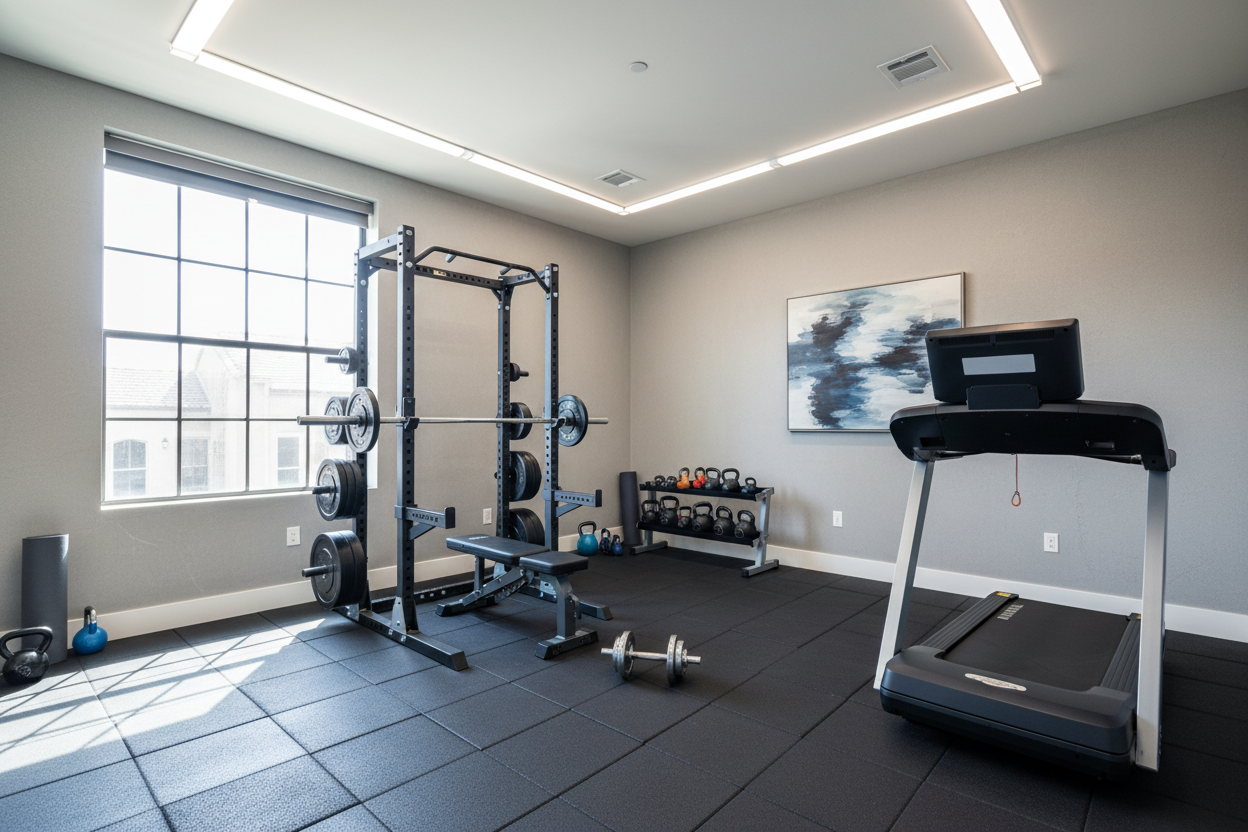
The biggest hurdle for home lifters is space. You can't fit a full line of commercial machines in a 20x20 garage. However, you don't need to. You can get 90% of the benefit by investing in a few key pieces of versatile equipment. Lever arms that attach to your rack are a massive space-saver that can mimic almost any commercial machine. They give you that fixed-path feel without the 500-pound footprint.
Even if you don't have room for a dedicated leg press, a sturdy weight bench and a cable pulley system can replicate a huge range of machine movements. The key is to look for gear that offers adjustability. I've found that a high-quality adjustable bench is the foundation of any 'machine' setup at home—it allows you to set the exact angles needed to isolate specific muscle groups. Don't let a small footprint stop you from saving your joints.
FAQ
Will machines make me lose my balance?
No. Unless you spend 100% of your life sitting in a machine, your stabilizers won't just disappear. As long as you keep some free-weight or bodyweight movements in your life, you'll stay plenty coordinated.
Are machines safer than free weights?
Generally, yes. You can't 'drop' a machine on yourself, and the fixed path prevents you from moving into awkward, injury-prone positions when you get tired. However, you can still get hurt if you use poor form or ego-lift weights you can't control.
Can I get as strong on machines as with barbells?
You can get the muscles just as strong, if not stronger. However, 'strength' is often a skill. If you want to be good at the barbell bench press, you have to bench press. But if you want a big chest, the machine is often the superior tool.
Share:
The Best Weight Machine Isn't That Massive Corner Multi-Gym
How to Do Smith Machine Squats: Which Way to Face and Why