
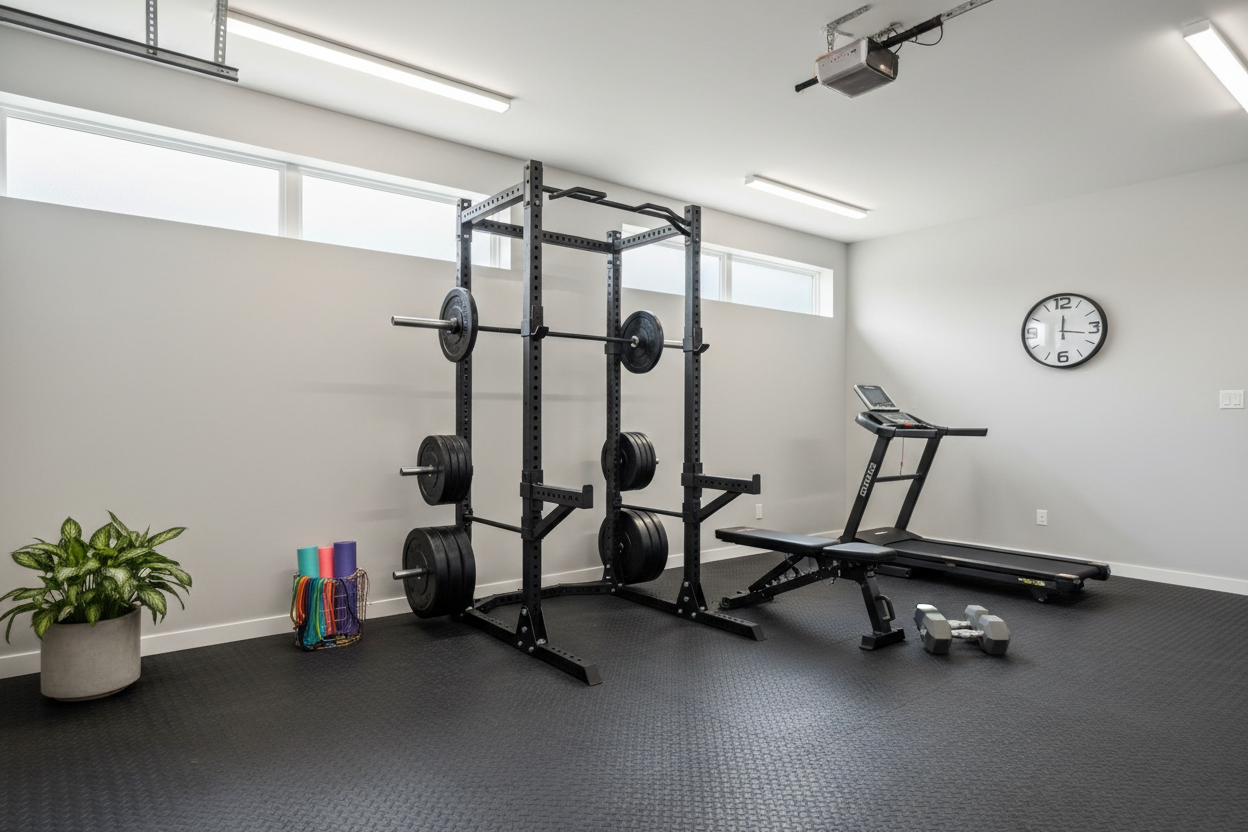
I remember sitting in my garage at midnight, surrounded by cardboard boxes and feeling like a total failure. I’d just spent a grand on what I thought was the ultimate home gym equipment for beginners, but half of it was plastic junk that creaked the second I tried to lift a weight. I fell for the 'all-in-one' marketing traps and bought three different 'ab-blasting' gadgets that ended up as expensive coat racks.
Building a gym is an investment, but beginners usually invest in the wrong things. You don't need a 12-piece cable machine or a treadmill that costs as much as a used Honda. You need gear that survives a drop, fits in your space, and actually makes you stronger.
Quick Takeaways
- Prioritize a solid bench and adjustable weights over specialized machines.
- Avoid 'as-seen-on-TV' gadgets; they lack the versatility for long-term progress.
- Compact cardio gear is better than a massive treadmill for most garage setups.
- Buy gear that grows with you, not stuff you'll outgrow in three months.
How I Blew My Budget on Day One (And Why You Shouldn't)
When I started, I thought more was better. I bought a cheap door-frame pull-up bar (which ruined my trim), a set of plastic-coated sand weights that leaked after two weeks, and a 'multi-gym' that took six hours to assemble only to feel like it was held together by hope and dental floss. I was drowning in beginner gym equipment that didn't actually help me lift.
The marketing for basic home fitness equipment often targets your desire for 'easy' results. But the truth is, the best home gym equipment for beginners is usually the simplest. I wasted $1,000 on fluff because I didn't understand that three high-quality items beat ten pieces of junk every single day. If it has a lot of plastic moving parts, stay away.
The Real 'Must-Haves' for a Starter Setup
If I could go back, I’d tell myself to focus on the basics for home gym success. You need tools that allow for a full-body workout without requiring a dedicated 500-square-foot room. Before you buy anything, measure your floor space. A standard 4x6 foot rubber stall mat is your best friend—it defines your 'work zone' and protects your floor.
When you're looking for the bare minimum equipment for a home gym, think about movement patterns: push, pull, squat, and hinge. If a piece of gear doesn't help you do at least three of those, it's probably not worth the money. Versatility is the name of the game when you're working with basic home gym needs.
Stop Buying Flimsy Weight Benches
The bench is the literal foundation of your simple at home exercise equipment setup. I once bought a $50 bench that wobbled every time I tried to chest press 30-pound dumbbells. It was terrifying. You want a bench with a weight capacity of at least 600 lbs—that includes your body weight plus whatever you're lifting.
Look for a bench with a 2-inch steel frame and a pad that doesn't feel like a pool noodle. A good 'FID' (Flat, Incline, Decline) bench is the best exercise equipment for beginners because it unlocks dozens of angles for your presses and rows. If it doesn't have a wide footprint, it’s going to tip. Don't compromise here.
Why Adjustable Dumbbells Are Your Best Friend
A full rack of dumbbells is glorious, but it’s a space and budget killer. For most people, a high-quality beginner workout equipment set should start with adjustable dumbbells. These replace 15 pairs of weights and take up the space of a shoebox. I personally use a pair that goes from 5 to 52.5 lbs—that's plenty for a year of solid progress.
Weight training equipment for beginners doesn't have to be complicated. With one pair of adjustables, you can do goblet squats, overhead presses, and lunges. They are the ultimate home workout equipment for beginners because they remove the friction of having a messy, cluttered room. Just turn the dial and lift.
Don't Let Cardio Machines Eat Your Floor Space
We’ve all seen it: the massive treadmill in the corner used to hang laundry. Unless you are a dedicated marathon runner, a 300-lb treadmill is a bad investment for a starter gym. It’s a simple workout machine that does one thing and takes up 20 square feet. For a beginner, that space is better used for strength training.
If you need a sweat, look for simple fitness equipment that can be tucked away. A foldable upright exercise bike is a much smarter move. It gives you the heart rate boost you need without permanently claiming half your garage. Plus, it's significantly quieter than a treadmill, which your family will appreciate at 6:00 AM.
Gear That Looks Cool But Collects Dust
Beware the 'smart' gym trap. Many companies sell easy home gym equipment that looks like a giant iPad on your wall. They look sleek, but they often require a $40/month subscription just to function. The second you stop paying, your expensive machine becomes a mirror. That's not how you build a sustainable habit.
The best equipment for home gym gains usually doesn't need to be plugged into a wall. Ab-rollers, thigh-masters, and 'vibration plates' are starter gym equipment mistakes. They are gimmicks. Real strength comes from moving heavy things through a full range of motion. If a piece of gear promises 'effortless' results, it’s lying to you.
When Is It Actually Time to Upgrade?
You don't need a power rack on day one. Start with your dumbbells and bench. Once you can comfortably squat your heaviest dumbbells for 15 reps, that's when you know you've outgrown the basics. That is the moment to start upgrading your home gym with a barbell and plates.
Transitioning to weightlifting equipment for beginners usually happens around the six-month mark of consistent training. By then, you’ll have the discipline to justify the cost of a squat rack. Until then, keep it simple, keep it heavy, and stop buying stuff just because it’s on sale. Your future self (and your bank account) will thank you.
FAQ
What is the absolute first thing I should buy?
A set of adjustable dumbbells. They are the most versatile tool for any beginner. You can train every single muscle group with them, and they won't clutter your floor.
How much space do I really need?
You can get a world-class workout in a 6x8 foot space. That’s enough for a bench, a set of weights, and enough room to move around without hitting a wall.
Are cheap resistance bands worth it?
Yes, but buy the 'loop' style, not the ones with handles and plastic clips. High-quality latex loops are great for warming up and adding extra tension to your lifts without taking up any space.
Share:
Is Used Commercial Exercise Equipment Worth the Garage Space?
My Weight Bench DIY Project Taught Me a Brutal Lesson