
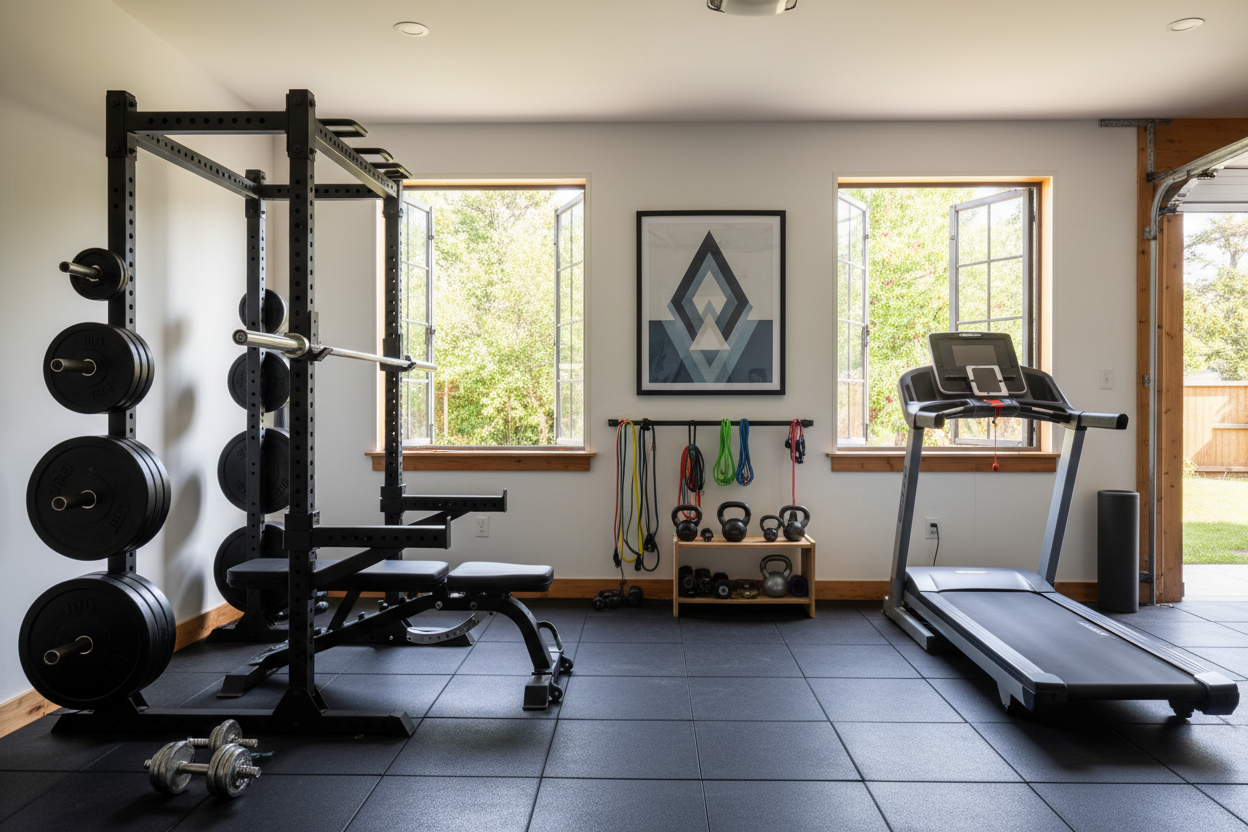
I spent three years training in a garage that felt more like a graveyard for cheap plastic equipment than a place to get strong. It started with a late-night Amazon binge after my local commercial gym hiked their rates for the third time in a year. I bought the first 'all-in-one' bench I saw, thinking I was being smart. Two weeks later, the vinyl was cracking, and the frame wobbled every time I tried to bench anything over 135 pounds.
Finding the best equipment for working out at home isn't about how many attachments you can cram into a spare bedroom. It is about buying gear that won't fail when you’re mid-set on a heavy squat. I’ve personally broken pulley cables, bent cheap barbells, and ripped through 'heavy-duty' upholstery. After a lot of wasted cash, I finally narrowed down what actually survives a real workout.
Quick Takeaways
- Prioritize 11-gauge steel for any rack or bench; anything thinner is a safety hazard for heavy lifting.
- A power rack is the most versatile footprint in your gym, replacing almost every single-use machine.
- Don't skimp on the barbell; a bar with decent knurling and a high tensile strength (190k PSI+) is the best investment you'll make.
- Floor space is your most valuable asset—if a piece of gear only does one thing, it probably shouldn't be in your house.
The 'More is Better' Trap I Fell Into
When I first started outfitting my space, I fell for the gadget trap. I bought resistance bands with plastic handles that snapped within months, a door-frame pull-up bar that eventually took the trim off my guest room door, and a set of dumbbells that felt like they were filled with sand. I thought that having twenty different tools would give me a better workout. In reality, I spent more time switching attachments than I did actually lifting.
The problem with most entry-level gear is that it's designed for someone who only plans to work out for three weeks. If you’re serious about making progress, that 'budget' gear becomes a liability. I remember trying to do heavy rows with a bar that had so much flex I thought it would snap. That was the moment I realized I was spending more money replacing cheap junk than it would have cost to buy the professional-grade stuff once. My garage was cluttered with things I never used because they simply didn't feel safe under load.
The Core Setup That Actually Gets Used
Everything changed when I stopped looking for 'fitness gadgets' and started building a reliable home gym focused on the big lifts. A real home setup doesn't need to look like a commercial facility with thirty different machines. You need a solid foundation: a rack, a bar, some plates, and an adjustable bench. That’s it. Once I cleared out the clutter, my workouts actually became more intense because I wasn't constantly adjusting flimsy equipment.
The building a reliable home gym mindset is about longevity. I switched to a 3x3-inch steel upright rack and never looked back. The shift from random dumbbells to a structured, heavy-duty setup meant I could finally focus on progressive overload. The best home workout system isn't the one with the most cables; it's the one that allows you to squat, press, and pull with zero fear of the equipment collapsing. When you have gear you trust, you lift heavier. It's that simple.
Why a Good Rack Replaces Six Single-Use Machines
If you have limited space, the rack is your best friend. A lot of people think they need a separate leg press, a lat pulldown station, and a functional trainer. You don't. A high-quality power rack with a built-in cable system handles about 90% of what you'd do in a commercial gym within a 4x4 foot footprint. I use mine for everything from heavy triples on squats to high-rep face pulls.
The versatility of a rack with a pulley system is unmatched. You get the stability of 11-gauge steel for your compound movements, but you can also hit your isolation work without needing another five hundred pounds of iron taking up floor space. When I'm testing a rack, I look for things like UHMW liners on the J-cups to protect my bar and 1-inch hole spacing through the bench zone. These small specs make a massive difference when you're training solo. A rack with a 1,000-lb weight capacity might seem like overkill if you're only benching 225, but that extra mass keeps the rack from sliding across your floor when you re-rack a heavy set.
Dealing With Floor Space (Without Sacrificing Heavy Lifts)
The biggest hurdle for most of us is the floor plan. My first gym was a 10x10 spare room. I quickly learned that the best indoor workout equipment has to maximize vertical space. If you're worried about safety while training alone in a tight spot, a smith machine home gym station can be a massive win. It provides the fixed path of a machine, which is great for hypertrophy and safe self-spotting, while still allowing for a huge variety of movements like lunges, presses, and rows.
People love to hate on Smith machines, but when you're in a garage with a low ceiling or a cramped apartment, they are incredibly efficient. They allow you to push to failure without needing a spotter, which is a major concern for home lifters. I've found that integrating a multi-functional station is often better than trying to squeeze a standalone rack and a standalone bench into a room where you can barely move. You want enough space to actually drop a barbell if you're doing cleans, or at least enough room to walk around the bar without bruising your shins.
My Final Advice: Keep It Simple
If I could go back and talk to my younger self, I’d tell him to stop reading 'top 10' lists written by people who have never held a barbell. Buy the heaviest, most overbuilt rack you can afford and a bar that feels like it could survive a nuclear blast. You don't need the latest Bluetooth-connected vibrating platform or a mirror that talks to you. You need iron and steel.
Don't get paralyzed by the options. It's better to have two high-quality pieces of gear than ten pieces of junk. If you're still on the fence about what to get, don't overthink the best equipment for your goals. Start with the essentials—a way to squat, a way to press, and a way to pull. You can always add the fancy stuff later, but you can't build a strong house on a weak foundation. Get the basics right first, and the results will follow.
Frequently Asked Questions
Do I need a special floor for my home gym?
You don't need a professional platform, but you do need protection. 3/4-inch horse stall mats from a local farm supply store are the gold standard. They are cheaper and more durable than the interlocking foam tiles you see in big-box stores, which tend to compress and slip under heavy loads.
Are adjustable dumbbells worth the high price?
Yes, but only if you buy the ones with metal internal components. If you're tight on space, they replace an entire rack of fixed weights. However, be careful with the handle length; some adjustable sets are very long even at light weights, which can make movements like overhead presses or curls feel awkward.
How much ceiling height do I need for a power rack?
Most standard racks are about 82 to 90 inches tall. If you have low ceilings (like in a basement), look for 'short' versions that sit around 72 inches. Just remember that if you're tall, you won't be able to do standing overhead presses inside a short rack.
Share:
Classic vs Modern: Does a Powerhouse Smith Machine Still Hold Up?
Smith Machine Versus Free Weights: Why Barbell Purists Are Half Right