
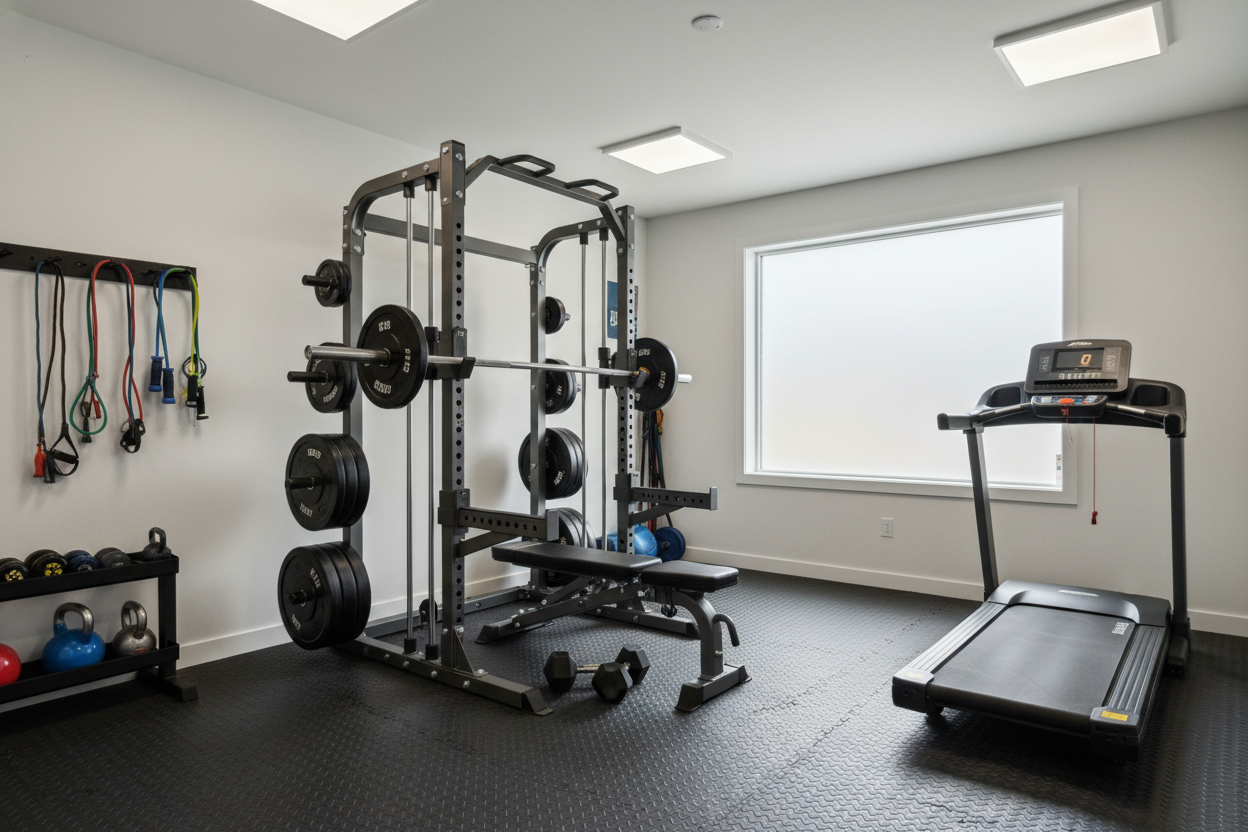
I remember the exact moment I realized my home gym was a mess. I was trying to squeeze a lateral raise between a power rack and a dusty treadmill, nearly knocking over a stack of plates. I had all this gear, but I was still heading to the local big-box gym twice a week just to use their cables and machines. If you are chasing hypertrophy, you need a muscle building machine that actually fits your life and your floor plan.
Quick Takeaways
- Combines a Smith bar, power rack, and functional trainer into one footprint.
- Fixed-path training allows you to hit absolute failure safely without a spotter.
- Dual cable systems provide the constant tension needed for high-volume isolation work.
- Perfect for small garages or spare rooms where space is at a premium.
The Problem with Commercial Hypertrophy Gear in a Garage
Most of us start our home gym journey with a basic rack and a barbell. It is the classic setup, but if your goal is strictly building mass, raw free weights can be a double-edged sword. When you are training solo, you often leave reps in the tank because you are terrified of getting pinned under a heavy bar. You end up playing it safe, which is the literal opposite of what you need for growth.
Commercial gyms solve this with rows of specialized isolation machines. But unless you are living in a converted airplane hangar, you cannot fit a seated row, a pec deck, and a hack squat in your garage. Home gym owners often mistakenly default to basic setups when they actually want the precision of a build muscle machine. You need a rig that handles the heavy compounds while allowing you to transition into high-rep isolation work without moving an inch.
Why a Smith Rack Operates as a Complete Muscle Building Machine
A combo unit is essentially a heavy-duty Smith machine integrated with a dual-pulley functional trainer. This is the ultimate efficiency play. I have found that having 2:1 ratio cables allows for smooth, constant tension on lateral raises and cable crossovers—movements that often feel clunky or jerky with cheap dumbbells. It is about more than just moving weight; it is about the quality of the contraction.
The Smith bar acts as your built-in spotter. You can load it up for heavy shrugs or lunges, and with a quick flick of the wrist, the bar is locked. This allows you to push through that 'sticky point' in your set where the muscle actually grows. When you combine that stability with the versatility of cables, you have a rig that can hit every single muscle group from every conceivable angle.
Yes, You Can Actually Build a Bigger Chest on It
The 'Smith machines are for ego lifters' crowd is usually the loudest, and usually the most wrong. When I perform a bench press on a Smith machine, I am not wasting energy stabilizing the bar against gravity's wobbles. I can tuck my elbows exactly where they need to be and drive through the chest with 100% focus.
Because the path is fixed, you can reach true mechanical failure without the bar drifting toward your throat. For hypertrophy, that stability is a massive advantage. You are removing the limiting factor of your stabilizer muscles and putting the entire load on the pecs. If you want to see actual growth, you need to stop worrying about 'functional' balance for a second and focus on the pump.
Hacking the Lower Body Setup
Leg day is where these racks usually get the most heat, but you can get incredibly creative. By moving your foot placement forward or backward under the Smith bar, you can shift the load from your glutes to your quads with millimeter precision. You can mimic a hack squat by leaning your back into the bar or perform Bulgarian split squats with zero balance issues.
That said, if you have the budget and an extra 20 square feet, a dedicated leg press and hack squat is the only thing that really beats a Smith rack for pure leg volume. The Smith bar is great, but nothing compares to the deep, soul-crushing stretch of a 30-degree leg press. However, for most home lifters, the Smith rack gets you 90% of the way there without requiring a second mortgage.
The Verdict: Is It the Only Build Muscle Machine You Need?
If you are a competitive powerlifter, buy a competition-spec power rack and bolt it to the floor. But if you want to look like you actually lift, a combo Smith rack is the smartest investment you can make. You are getting a pull-up station, a cable crossover, and a heavy pressing rig in a 4x5 foot footprint. It saves you from buying five separate pieces of equipment that you would probably end up selling on Marketplace in six months anyway.
Personal Experience: My One Big Mistake
I once spent nearly a thousand dollars on a standalone functional trainer that took up half my wall. It was a beautiful piece of gear, but I still had to walk across the room to my rack for squats and presses. When I finally switched to a combo unit, my workouts got 20 minutes shorter simply because I was not playing musical chairs with my equipment. My one regret? Not checking my ceiling height first. My first rack was 84 inches tall and I had 83 inches of clearance. Measure your space twice, buy your gear once.
Frequently Asked Questions
Is a Smith machine rack hard to assemble?
It is a weekend project. Expect it to take 4-6 hours. Use your own socket wrench instead of the cheap ones provided in the box; your hands will thank you.
Do I need special weights for a Smith rack?
Most high-quality racks use standard 2-inch Olympic plates. Just make sure the weight capacity of the bar matches your lifting goals—look for at least a 600-lb limit.
Can I do pull-ups on these rigs?
Almost every combo rack includes a multi-grip pull-up bar. Just ensure the unit is either bolted down or has enough weight on the storage pegs to stay stable while you hang.
Share:
The Best Equipment for Home Gym Gains Doesn't Plug Into a Wall
The Complete Smith Machine Workout Guide: Best Exercises, Routines & Programs