
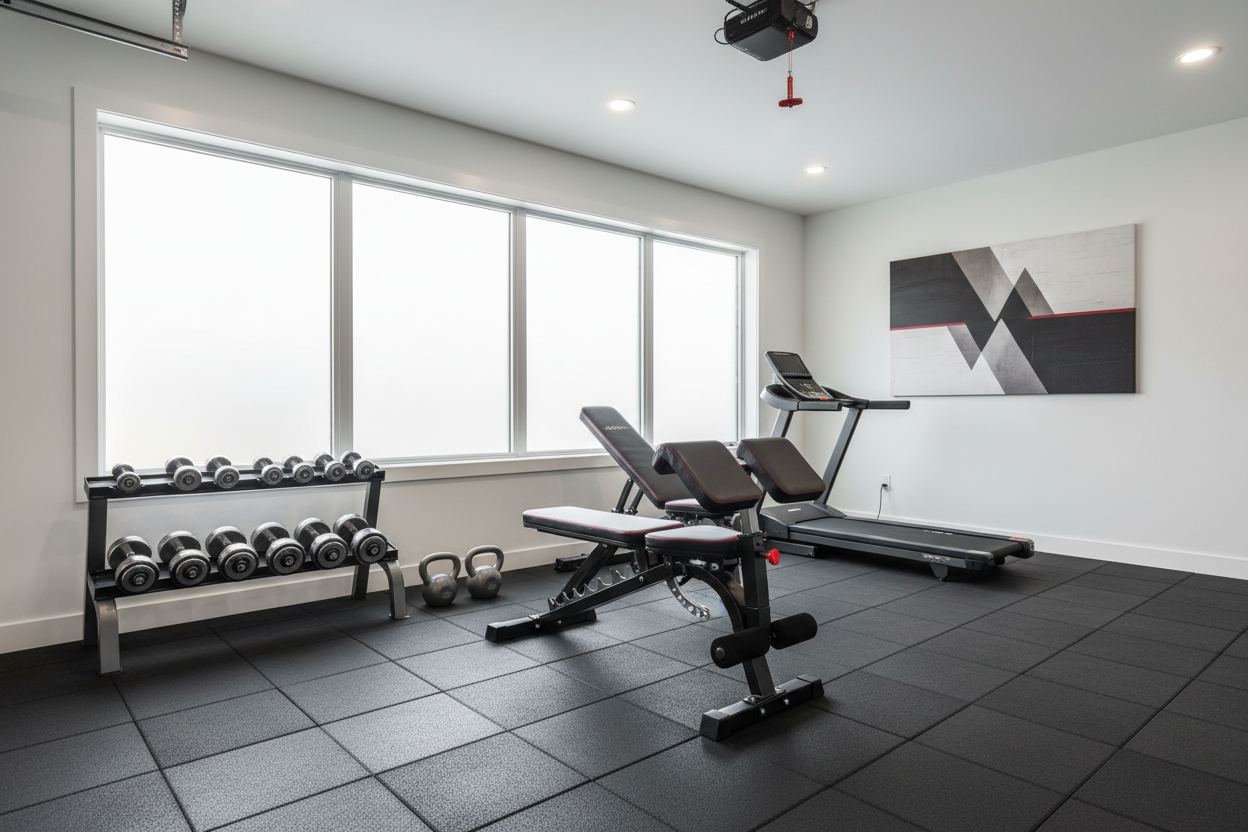
I’ve spent way too many late nights measuring my garage floor to the millimeter, trying to figure out how to squeeze in one more piece of steel. We’ve all been there—scrolling through equipment listings at midnight, convinced that a single ab bench roman chair is the missing link between us and a bulletproof core. You want the back extensions to save your lower spine from heavy deadlift days, but you also want a steep decline for those old-school sit-ups that make your hip flexors scream.
The idea of a 2-in-1 station is seductive because floor space is the most valuable currency in a home gym. But after years of loading, dropping, and occasionally breaking equipment that promised to do everything, I’ve learned that 'multi-function' often translates to 'mediocre at two things.' Let’s look at whether this hybrid belongs in your gym or if it's just a glorified clothes rack.
Quick Takeaways
- Most combos prioritize the 45-degree hyperextension, leaving the ab bench as a clunky afterthought.
- Stability is often sacrificed; if the unit weighs less than 60 lbs, expect some serious wobbling.
- Pivot points are rarely adjustable enough to fit both a 5'2' and a 6'2' lifter comfortably.
- Heavy lifting on these frames is a recipe for a hospital visit—they are core stations, not power racks.
The Allure of the 2-in-1 Core Station
The math seems to check out at first. A dedicated hyperextension bench takes up about 4 feet of length. A dedicated decline ab board takes up another 5 feet. By combining them into one unit, you’re theoretically saving about 15 square feet of floor space. In a standard two-car garage gym where you're already fighting for room between the squat rack and the lawnmower, that's a huge win. The ab bench roman chair promises to hit the entire 'trunk'—the spinal erectors, the glutes, and the rectus abdominis—all in one footprint.
Most of these units use a triangular frame design. You use one side for your back extensions at a 45-degree angle, and then you flip the rollers or adjust a pop-pin to turn the other side into a decline bench. On paper, it’s the ultimate accessory station for someone running a program like 5/3/1 or Westside Barbell who needs that extra posterior chain volume without buying a full-sized GHD. But as any veteran lifter knows, what works on paper often rattles like a spray paint can when you actually put 200 lbs of human on it.
Where the Roman Chair Workout Bench Fails
The mechanical compromise is where the dream usually dies. To make a roman chair workout bench functional for both movements, manufacturers often use a universal ankle roller height. The problem? The ideal ankle position for a back extension is not the ideal position for a decline crunch. You often find yourself stuck in a 'no man’s land' where the rollers are too high to get a deep stretch in your abs, but too low to feel secure during a hyperextension. I’ve tested units where the gap between the hip pads was so wide it felt like I was being split in half, or so narrow it pinched during every rep.
Then there is the stability issue. High-end commercial units are welded solid and weigh 100+ lbs. Home versions are usually bolt-together jobs made of 14-gauge steel. When you lean your entire body weight over the edge of a light frame, physics takes over. It’s a similar frustration to what you find with an adjustable workout bench with leg curl—the more moving parts and 'features' you add to a single hinge, the more play and wobble you introduce into the system. If you’re a 225-lb lifter, that wobble isn't just annoying; it’s a distraction that kills your mind-muscle connection.
The Dangerous Roman Chair Bench Press Myth
I need to address a trend I’ve seen bubbling up in some questionable corner of the internet: the roman chair bench press. Some lifters think that because the bench has a decline setting, they can use it for heavy dumbbell presses. Please, don't. These frames are designed for bodyweight or light-weighted core work, usually maxing out at a 300-lb total capacity. When you factor in your body weight plus a pair of 80-lb dumbbells, you are redlining the structural integrity of a single pop-pin.
The center of gravity on a roman chair is also dangerously high. Unlike a standard bench that sits low to the ground with a wide base, a core station is top-heavy. One slightly off-balance rep with dumbbells and the whole unit can tip sideways. If you want to hammer your lower chest, buy a dedicated multi function bench press set. It’s built to handle the load and has the safety catchers you need. Your spine will thank you for not trying to turn a core pad into a pressing platform.
Do You Really Need a Dedicated Core Bench?
Before you drop $200 and a chunk of your floor space, ask yourself if you can’t already do this. Most people can replicate a decline crunch by putting a couple of bumper plates under the foot of a standard bench. If you already own a high-quality adjustable bench for workout progression, you likely already have access to a decline setting that is sturdier than any 2-in-1 combo unit. You won't get the hyperextension, but you'll save the cash and the clutter.
If you’re just looking for core stability, things like hanging leg raises, ab wheels, and heavy front squats cover a lot of ground. A dedicated machine is a luxury, not a necessity. I only recommend these combo units if you specifically have a weak lower back and your PT has prescribed 45-degree hypers as a mandatory part of your rehab. Otherwise, you’re buying a very specific tool for a very narrow range of exercises.
My Go-To Alternative for Posterior Chain Training
If you actually have the space and you’re serious about building a back that won't quit, I’d skip the cheap combos and look at something more specialized. The Nordic Curl Bench 3 In 1 Core Back Hamstring Master Trainer is a much better investment for a serious home gym. It handles the back extensions and the sit-ups, but it also allows for Nordic curls—one of the most effective ways to bulletproof your hamstrings and knees.
The build quality on specialized trainers like that usually beats the 'Amazon Special' combo units. You get thicker pads, better vinyl that won't rip after three months of sweat, and a frame that doesn't feel like it's going to fold when you're mid-rep. In my experience, it’s always better to buy a tool that does one or two things perfectly than a tool that does four things poorly.
Personal Experience: The Face-Plant Incident
Years ago, I bought a budget-friendly ab bench roman chair because I was training in a cramped one-car garage. The first time I tried a weighted hyperextension with a 45-lb plate, the back legs of the unit actually lifted off the floor. I had to start stacking my heavy dumbbells on the base just to keep the thing anchored. It was a constant headache. Eventually, I realized I was spending more time 'fixing' the machine than training on it. I sold it for half what I paid and went back to doing floor-based core work until I could afford a heavy-duty station.
FAQ
Can I do side bends on a roman chair?
Yes, but be careful with your balance. Because the base is narrow, leaning too far to one side can cause the unit to tip. Start with body weight to find your center of gravity before adding a dumbbell.
Is a 45-degree or 90-degree roman chair better?
The 45-degree angle found on most combo units is generally better for beginners and intermediate lifters. It provides a good range of motion without the extreme shear force on the spine that a horizontal (90-degree) back extension can create.
How do I stop the pads from hurting my hips?
If the pads are too hard or have a sharp edge, you can wrap them in a gym towel or buy a cheap foam pad to lay over them. However, if the gap between the pads is the issue, that’s usually a design flaw you can’t easily fix.
Share:
Don't Hate the Smith Machine Bench Press Planet Fitness Makes You Use
Why I Actually Kept Those Trendy Beige Dumbbells