
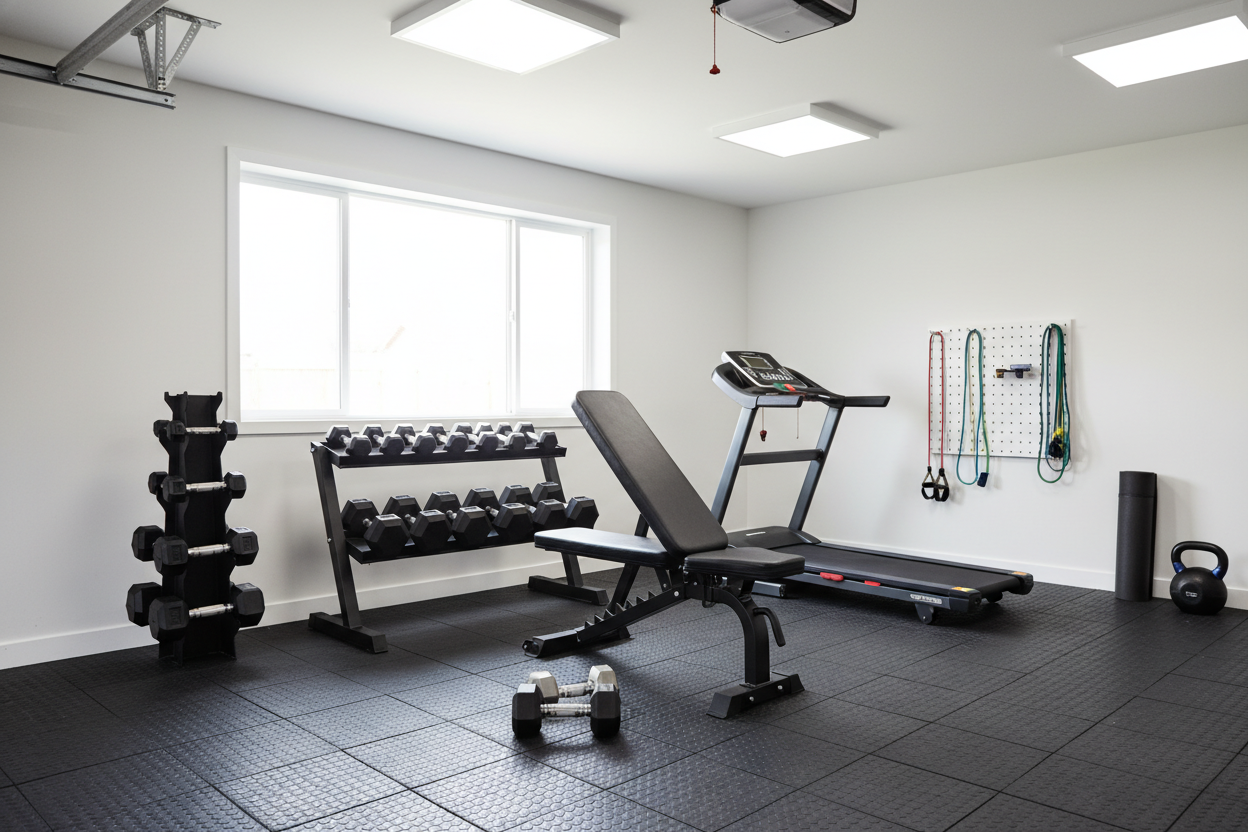
I’ve spent the last decade turning my garage into a temple of iron, but I started exactly where you are: looking for a way to sweat without the commute. I’ve bought the $20 'ab-shredders' and the $2,000 smart mirrors. Most of it is junk. People search for easy exercise equipment for home because they want to lower the barrier to entry, but the fitness industry usually translates 'easy' as 'flimsy plastic that will break by Tuesday.'
- Avoid gear that weighs less than your lunch; if there is no mass, there is no resistance.
- Skip the subscriptions. If your bike needs a software update to work, you bought a computer, not a fitness tool.
- Focus on 'plug and play' equipment that requires zero technical setup.
- Look for steel over plastic every single time.
The Infomercial Trap: Why 'Easy' Usually Means 'Useless'
Most 'easy workout equipment at home' is designed by marketers, not lifters. They sell you the dream of effortless results while hiding the fact that their product has the structural integrity of a soda can. I’ve seen plenty of marketing traps aimed at women and beginners that push bright colors and 'aerobic' gimmicks over actual progressive overload.
If a piece of equipment doesn't allow you to increase the weight or resistance over time, you will outgrow it in three weeks. That’s not an investment; it’s a waste of floor space. Real 'easy' gear should be easy to use, not easy to break. I once tested a 'portable' rower made of literal plastic tubing—the resistance was so low I could have gotten a better workout lifting my morning coffee.
The 3 Rules for Buying Beginner-Friendly Gear
First, it has to be friction-free. If you have to spend 20 minutes adjusting pins, cables, and Wi-Fi settings before every set, you are going to quit. I look for gear with a 'time to sweat' of under 60 seconds.
Second, skip the complex pulleys for now. Simple hinges and gravity are your friends. Third, check the footprint. 'Easy' equipment should fit your life, not require you to park your car on the street forever. A 4x6 foot space is usually plenty for a high-quality starter setup that actually builds muscle.
Cardio That Doesn't Require an IT Degree
I am tired of seeing people buy $3,000 treadmills that won't run unless they pay a monthly app fee. It is a racket. When you are starting out, you want a machine that turns on when you start moving. No logins, no loading screens, no 'connecting to server' prompts when you just want to burn some calories.
A simple magnetic resistance upright bike is the gold standard here. These things are dead silent—I’ve ridden mine while my kids were sleeping in the next room. They fold up, they don't need a Wi-Fi router, and they provide enough resistance to actually get your heart rate into the fat-burning zone without a complicated interface that dates itself in two years.
Strength Training Without the Intimidation Factor
Free weights are the best way to build muscle, but I get it—staring at a 45-lb Olympic bar can be intimidating if you have never done a squat. You don't need a massive power rack to get strong. You need a controlled environment where you can’t get pinned under the weight if your form slips.
A fixed-path Smith machine is a fantastic middle ground. It gives you the feel of a barbell workout with the safety of a guided track. You can't lose your balance, and the safety catches are always right there. It is the 'easy' button for heavy lifting because it removes the fear of injury while still letting you move real weight. I’ve used these for years to push my limits on chest press when I didn't have a spotter.
Putting Together Your First Real Setup
Don't try to build a commercial gym in a weekend. Start with a solid foundation. A basic home gym setup should consist of one piece of cardio you don't hate and one way to move external resistance. Whether that is a set of adjustable dumbbells or a compact multi-gym, the goal is consistency over complexity.
I once bought a 'total body' door-mounted system that used bungee cords. It felt like pulling on rubber bands and did absolutely nothing for my strength. I swapped it for a basic bench and a set of iron plates, and I saw more progress in a month than I did in a year with the 'easy' gadget. Buy real gear once, and you won't have to buy it again.
Is 'easy' equipment less effective?
Not necessarily. Equipment should be easy to operate, but the workout itself should still be challenging. If the machine does the work for you, you aren't getting fit.
Do I need a lot of space for a home gym?
No. Most of the best beginner gear is designed to be vertical or foldable. You can get a world-class workout in the space of a yoga mat if you choose the right tools.
Why avoid 'smart' equipment?
Because 'smart' usually means it has a shelf life. A piece of steel lasts forever; a tablet glued to a rower will be obsolete in four years. Stick to the mechanical basics.
Share:
My Numbers Dropped: Is It Harder to Bench on a Smith Machine?
I Rescued an Image 4.0 Smith Machine From a Garage. Was It Worth It?