
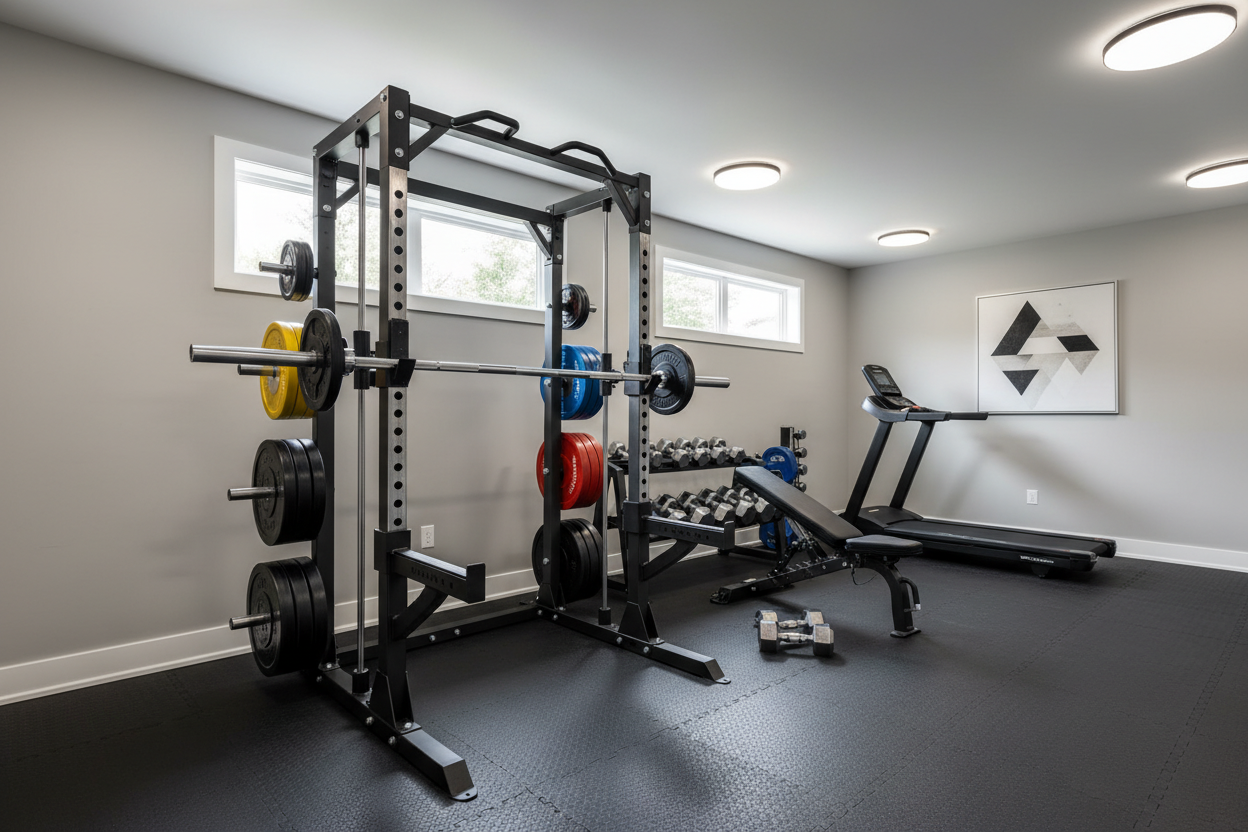
I was walking through the aisles for some bulk-buy detergent last week when I saw it: a smith machine walmart special sitting right next to the mountain bikes. The price tag said $399. My brain did that thing where it tries to justify a bad purchase because the math looks so good. 'It is just steel and a bar,' I told myself.
But here is the thing: I have spent the last decade breaking, bending, and swearing at cheap gym equipment. That shiny paint job is usually hiding some pretty sketchy engineering. If you are serious about moving heavy weight, you need to know exactly where those savings are coming from before you put your spine under that bar. This is not about being a gear snob; it is about not having a weld snap while you are mid-squat.
- Steel Quality: Most big-box rigs use thin 14-gauge steel that flexes under load.
- The Glide: Expect plastic bushings instead of smooth linear bearings.
- Weight Limits: Listed capacities are often 'static,' meaning the machine might hold the weight while sitting still, but it will not handle a hard drop.
- Versatility: Retail rigs are usually bare-bones; better machines offer integrated cable systems and better stability.
Why That Big-Box Price Tag is So Tempting (And Suspicious)
Let us be real. Spending $2,000 on a piece of gym equipment feels like a punch in the gut. When you see a Smith machine for the price of a weekend getaway, it feels like you have found a loophole. Walmart and other massive retailers move so much volume that they can drive prices down to levels that seem impossible for smaller, dedicated fitness brands.
The problem is that a Smith machine is a complex piece of moving machinery, not just a static power rack. To hit that $400 price point, manufacturers have to strip away the 'over-engineering' that keeps you safe. They use thinner walls, cheaper bolts, and skip the precision machining required for a smooth track. You are not getting a steal; you are getting exactly what you paid for—a rig that feels more like a toy than a tool.
Steel Gauge and Weight Limits: The Brutal Reality
In the equipment world, steel gauge is everything. Most budget rigs you find at big-box stores are built with 14-gauge tubular steel. To the untrained eye, it looks fine. But compared to the 11-gauge steel found in dedicated home gym smith machines, it is practically a tin can. 11-gauge steel is about 0.12 inches thick, while 14-gauge is only 0.07 inches. That 30% difference is what prevents the frame from swaying when you are grinding out a heavy rep.
Then there are the weight limits. A cheap machine might claim a 300-lb capacity. In my experience, that number is highly optimistic. When you are at the bottom of a squat and the frame starts to 'chatter' or lean, you will realize that 300 lbs was a suggestion, not a guarantee. If you plan on actually progressing in your lifts, you will outgrow a retail rig in six months. A real rack should be able to hold double what you plan to lift.
Plastic Bushings vs. Linear Bearings: The Glide Test
The soul of a Smith machine is the carriage—the part that holds the bar and slides up and down. High-end machines use linear ball bearings that encircle the guide rods. They are buttery smooth and handle vertical loads without sticking. Cheap Walmart models almost always use plastic bushings. It is literally just a plastic ring rubbing against a metal pole.
This creates a 'stutter' effect. When you apply pressure that is not perfectly centered, the plastic binds. If you are trying to follow a complete smith machine workout guide and doing slow-tempo movements, this friction is a nightmare. It makes the weight feel inconsistent and can actually throw off your joint tracking, leading to nagging shoulder or knee pain. You want to fight the weight, not the machine.
What You Actually Get When You Step Up Your Budget
If you decide to skip the 'blue light special' and invest a bit more, the jump in quality is massive. We are not just talking about thicker steel; we are talking about functionality. A mid-tier, direct-to-consumer machine like an all-in-one smith machine with cable crossover gives you a full commercial gym experience in a small footprint.
Instead of a shaky bar on a friction-heavy track, you get a counterbalanced system, high-quality pulleys, and a frame that does not move an inch when you re-rack. These machines use 2x3 or 3x3 11-gauge steel. They weigh three times as much as the retail versions. That mass is what makes the machine feel 'planted' and safe when you are training alone in your garage without a spotter.
The Final Verdict: Who Should Actually Buy a Retail Rig?
I am not a total gear snob. There is a very specific person who can get away with a budget Walmart machine. If you are strictly using it for light accessory work—think high-rep calf raises or shrugs with under 135 lbs—it might survive. If you are buying it for a teenager who is just starting out and weighs 120 lbs, it is probably fine for a year.
But if you are a grown adult who plans on benching, squatting, and pushing your limits, do not do it. You will end up selling it on Marketplace for $50 within a year because it feels like it is going to fall over. Save your money for another month or two and buy something that will actually last a decade. Your safety is worth more than a $200 discount.
My Personal Experience
Years ago, I bought a branded Smith machine from a retail store. I thought I was being smart. The first time I tried to do heavy Bulgarian split squats, the bar got stuck on the way up because the plastic bushing 'grabbed' the guide rod. I had to awkwardly dump the weight while the frame tipped forward. I sold it the next day. Stability is not optional when there is a loaded bar over your chest.
FAQ
Can I replace the plastic bushings with bearings later?
Almost never. The guide rods on cheap machines are usually a different diameter than standard linear bearings, and the carriage is not designed to house them. You are stuck with the friction.
Is a 300-lb weight limit enough for a home gym?
For most people, no. That limit includes the weight of the bar. If the machine is rated for 300 lbs, it will likely start to flex and feel unsafe once you hit 200 lbs of added plates.
Are Walmart Smith machines hard to assemble?
They are notoriously tedious. Because the tolerances are loose, holes often do not line up perfectly. Expect to spend 4-6 hours with a wrench and a lot of patience to get it even remotely level.
Share:
Why Your 225 on Smith Machine Doesn't Equal a Barbell
Is a Used Impex Smith Machine Actually Worth Your Money?