
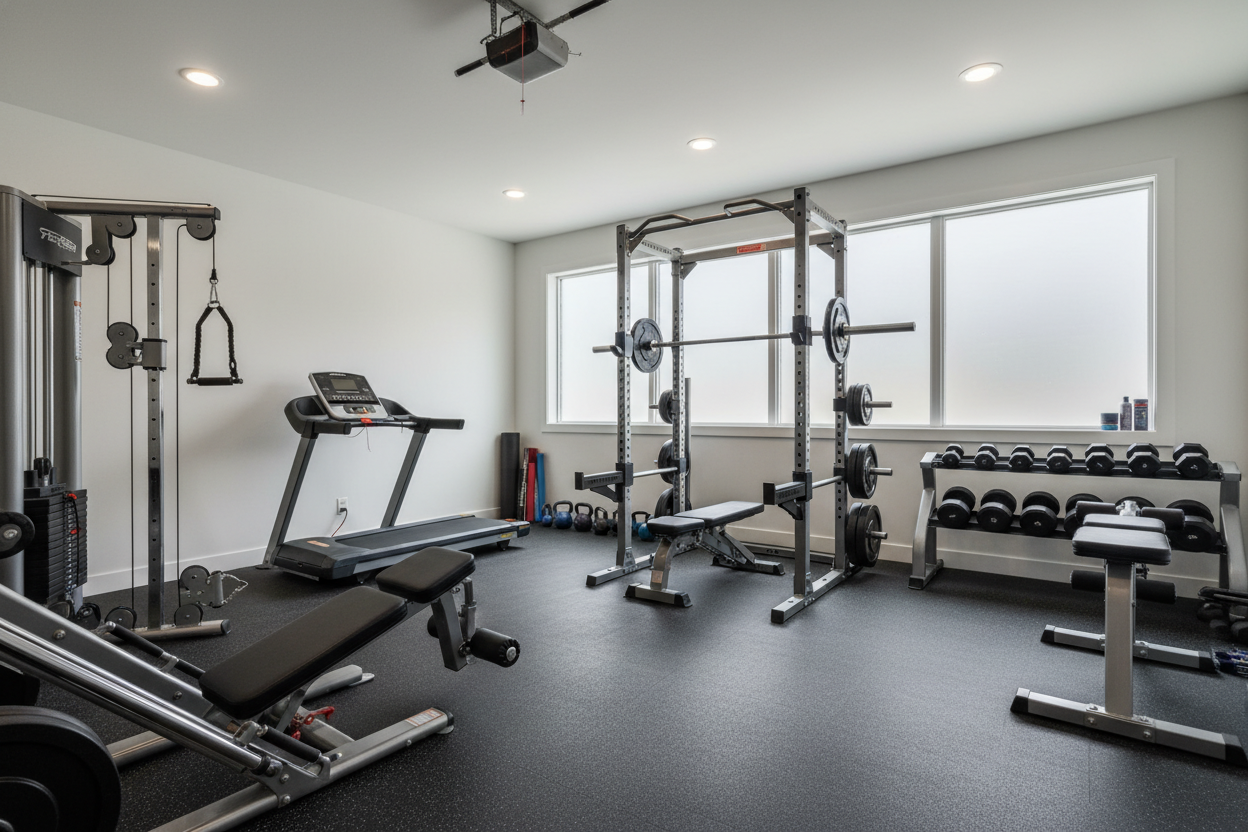
I remember my first week at a commercial gym. I stood in front of a $4,000 piece of selectorized steel, staring at the diagram like it was a bomb I needed to defuse. I eventually just called it 'the chest thing' and moved on. If you're tired of feeling like a tourist, it's time to learn the actual fitness machines names.
Quick Takeaways
- Power Rack: The four-post cage where you squat and bench safely.
- Smith Machine: The rack with the bar fixed on a vertical track.
- Functional Trainer: The big cable machine with two adjustable pulleys.
- Leg Press: The angled sled you push with your feet.
The Gym Floor Looks Like a Spaceship (And That's Okay)
Walking into a modern club is intimidating. You've got rows of gym exercise machines names you can't pronounce and mechanisms that look like they belong in a NASA lab. Most people just point and grunt, but knowing the exercise equipment names at gym is actually a massive training advantage.
When you know the gym machines names, you can actually follow a program. You stop writing 'pulled the handle down' in your log and start writing 'Lat Pulldowns.' It allows you to track progress, look up form cues, and eventually, buy the right gear for your own space without getting scammed by fancy marketing jargon.
The 'Big Box' Staples: Decoding the Squat Racks and Cages
The heavy-duty section is where the real work happens. First, you have the Power Rack (or Power Cage). It is a four-post steel box that lets you lift heavy without a spotter. Then there is the Half Rack, which is basically a Power Rack with the front two posts chopped off to save space. Both are essential names of machines in the gym for anyone moving heavy iron.
Then there's the controversial one: the Smith machine home gym station. This is the unit where the barbell is fixed on a set of vertical or slightly angled rails. Lifters love to hate on it, but for isolation work or training to failure safely, it is a beast. Just don't call it a squat rack; the fixed path changes the mechanics entirely.
Cable Systems: The Only 'Pulley Things' Worth Memorizing
Cables are the most versatile all gym machines you will encounter. The big one with two adjustable arms is a Functional Trainer. Because the pulleys move up and down, you can do everything from cable crossovers to woodchops. It's the Swiss Army knife of the weight room.
The other name of weight lifting equipment you need to know here is the Lat Pulldown. It’s the one with the long bar and the knee pads. Right next to it, you’ll usually find the Low Row (or Seated Row), where you sit on a bench and pull a handle toward your stomach. These three cable units cover about 80% of your upper body accessory work.
Lower Body Isolation: Translating the 'Leg Press Thingy'
Leg day has the most confusing names of different gym equipment. The big sled you sit in and push upward? That is the 45-degree Leg Press. If you are standing and pushing your shoulders against pads at an angle, that is a Hack Squat. Both are brutal on the quads, but they are not interchangeable in a training log.
Then you have the smaller gym devices names like the Leg Extension (sitting and kicking your legs straight) and the Hamstring Curl (lying down or sitting and curling your heels back). If you see a machine where you move your legs in and out like a pair of scissors, those are the Adductor and Abductor machines. Now you can stop calling them the 'inner thigh squeezer.'
Cardio Contraptions: Beyond the Basic Treadmill
The cardio floor is more than just motorized belts. You have the Ergometer, which everyone just calls a Rower. Then there is the Air Bike (or Assault Bike), which uses a massive fan for resistance—the harder you pedal, the miserable it gets. For a more civilized home experience, many people opt for an upright exercise bike with magnetic resistance because it doesn't sound like a hurricane in your spare bedroom.
Learning these work out machines names helps you choose the right tool for the job. An elliptical is great for low-impact recovery, but if you want high-intensity conditioning, you grab the handles of the Air Bike or the Rower.
Which of These Actually Belong in Your Garage?
I’ve spent a decade building a functional home gym, and I’ve made every mistake in the book. My biggest piece of advice? Don't buy single-use machines. A commercial leg extension takes up 15 square feet and only does one thing. In a garage, floor space is your most valuable currency.
I actually regret buying most of my gym machines at home because I prioritized home exercise equipment names I recognized from the commercial gym rather than versatility. If I were starting over, I'd stick to a solid rack, a functional trainer, and maybe one high-quality cardio piece. Leave the 15 different leg machines at the big box club—that's what your membership fee is for.
FAQ
What is the difference between a Smith Machine and a Power Rack?
A Power Rack is a cage for free weights where the bar moves wherever you move it. A Smith Machine has the bar fixed on a track, meaning it can only move up and down in a straight line. The Smith machine is safer for solo training to failure, but the Power Rack builds more stability.
Are gym machines better than dumbbells?
Neither is 'better.' Machines provide constant tension and stability, which is great for building muscle size (hypertrophy). Dumbbells require more balance and engage more stabilizer muscles. Most good programs use both.
What should I buy first for a home gym?
A Power Rack or a set of adjustable dumbbells. These give you the most bang for your buck and allow for hundreds of different movements without taking up your entire garage.
Share:
The Best Home Gym Fitness Equipment Is Just 3 Things
You Don't Need 500 Square Feet for the Best Home Gym Setup