
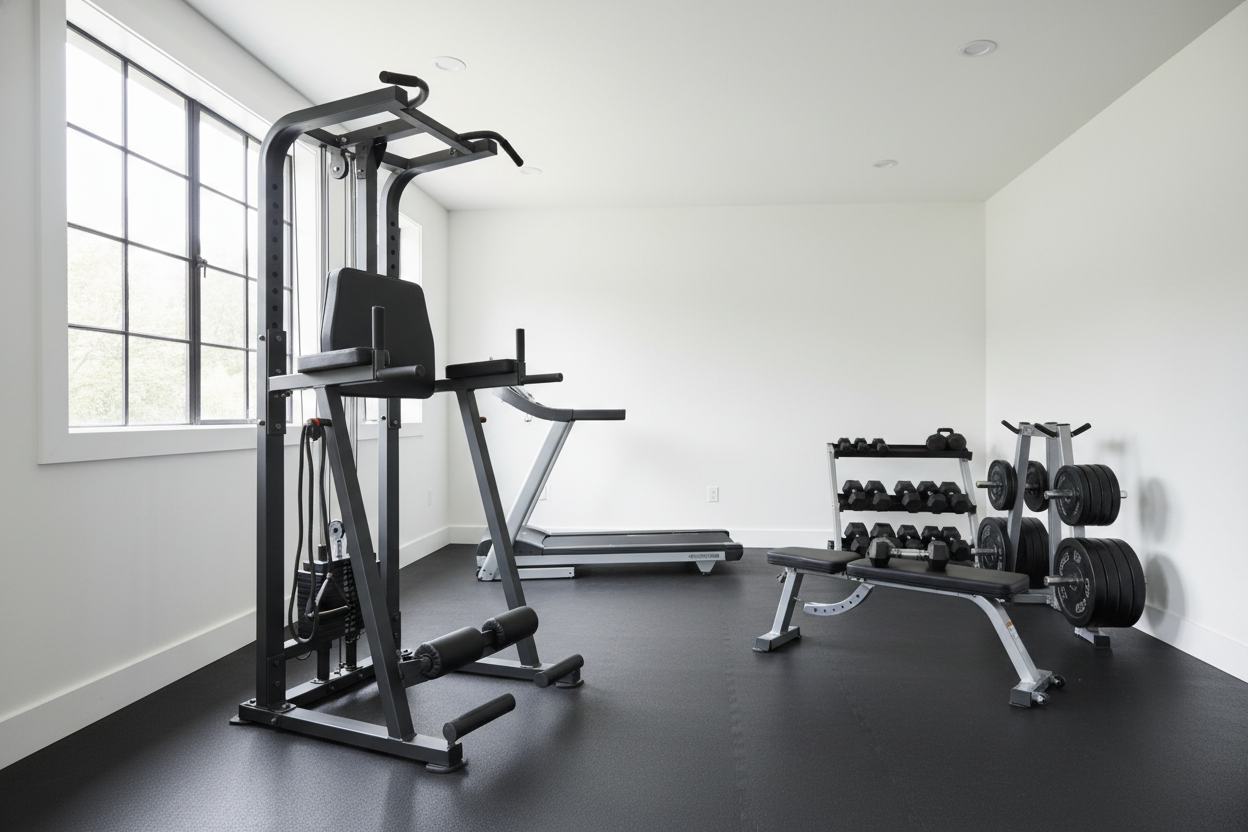
I remember staring at the ceiling of my garage, sweat stinging my eyes, while grinding out my 100th floor crunch. My abs weren't burning, but my lower back felt like it was being pried open with a crowbar. That's when I realized the leg lift machine at the commercial gym I used to frequent wasn't just a luxury—it was a necessity for anyone serious about core development without the orthopedic tax.
- Stops hip flexors from stealing the work from your abdominals.
- Protects the lumbar spine by providing a stable, vertical back pad.
- Eliminates grip strength as the limiting factor compared to hanging bars.
- Allows for easy progressive overload by pinning a dumbbell between your feet.
The Brutal Reality of Floor-Based Core Training
Floor crunches are the junk food of the fitness world. They feel productive because you're moving, but most people are just yanking on their necks or letting their hip flexors do 80% of the heavy lifting. When you lie flat on the ground for a lying leg raises machine alternative, your pelvis often tilts anteriorly, putting massive shear force on your lower discs.
This is why so many lifters complain about lower back pain after 'ab day.' A proper leg lift machine for abs fixes this by keeping your spine neutral against a pad. Instead of fighting gravity to keep your back flat against the floor, the machine's architecture does the bracing for you, allowing you to focus entirely on the contraction of the rectus abdominis.
What We Actually Mean by 'Leg Lift Machine'
The terminology in the fitness industry is a mess. When I talk about a leg raise machine, I’m usually referring to the 'Captain’s Chair'—that vertical frame with armrests, handles, and a back pad. You might see it listed as a standing leg lift machine or even an ab leg raises machine.
It’s important to distinguish this from lower-body gear like a leg press. We are looking for an ab machine where you lift your legs to curl the pelvis toward the sternum. Whether you call it a leg up machine or leg ups machine, the goal is the same: vertical core isolation that removes the floor from the equation.
The Hanging Leg Raise Trap (And Why Supported Is Better)
I love pull-ups, but hanging leg raises are a trap for most people. Unless you have the grip of a rock climber and lats that don't quit, your hands will give out way before your lower abs do. You end up swinging like a pendulum just to finish the set, which is basically just using momentum to fake your way through a workout.
Using a standing leg raise machine removes the 'hanging' variable entirely. Just as using the wrong leg exercise machine can ruin your quad pump, trying to train abs while your forearms are screaming is a waste of time. The armrests on a leg raise exercise machine allow you to lock your upper body in place, ensuring that 100% of the effort goes into the leg lift workout machine movement itself.
Is a Dedicated Ab Rig Actually Worth Your Floor Space?
Let's be real: a leg raise machine for home use takes up a lot of real estate. In a tight 10x10 garage gym, every square inch is precious. That's why I usually recommend a Power Tower—it combines the ab leg lift machine with a dip station and pull-up bar. It’s a multi-tool for your torso.
If you're willing to dedicate space to a specialized Leg Extension Hamstring Curl Machine to fix your legs, you should be just as willing to invest in a station that actually builds a bulletproof midsection. A gym equipment leg lift station isn't just for 'show muscle'; it builds the deep core stability you need for heavy squats and deadlifts.
How to Hack Your Leg Raises for Max Hypertrophy
Stop swinging. If you’re using momentum to kick your feet up on the standing leg raises machine, you’re just doing cardio. To get the most out of a leg lift crunch machine, you need to curl your pelvis toward your chest. Think about bringing your knees to your chin, not just lifting your thighs. If your lower back leaves the pad, you've gone too far; if your pelvis doesn't tilt, you haven't gone far enough.
For the advanced crowd, pin a 5-lb dumbbell between your feet. Adding resistance to a weighted leg raise machine movement is how you actually build thick, visible ab blocks. Control the eccentric phase—take a full three seconds to lower your legs. That's where the real muscle growth happens on a leg raise crunch machine.
Is a leg lift machine better than crunches?
Yes, for most people. It isolates the core more effectively and removes the tendency to strain the neck or arch the lower back, which are common issues with floor-based exercises.
Can I do obliques on a standing leg raise machine?
Absolutely. By performing front leg raises machine movements with a slight twist—bringing your knees toward your opposite shoulders—you can effectively target the internal and external obliques.
What is the best way to add weight to leg raises?
The simplest way is holding a small dumbbell between your feet or wearing ankle weights. This turns a standard leg raise exercise equipment session into a true hypertrophy workout.
Share:
Is the Inflight Fitness Smith Machine Overkill for a Garage Gym?
Don't Buy a Machine for Working Out Until You Check These 4 Specs