
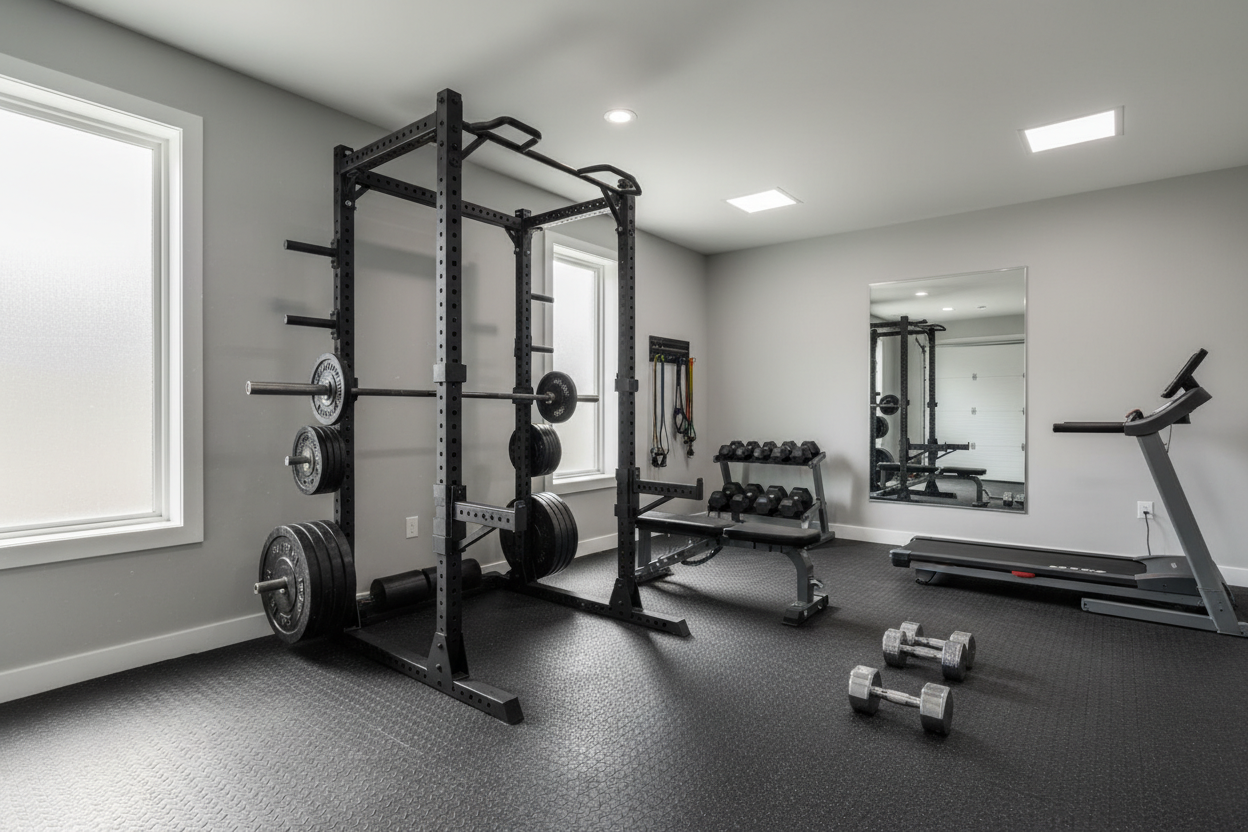
I remember the first time I tried to outfit a garage gym. I found a deal on a 300-lb set of plates, hit 'add to cart,' and nearly fell out of my chair when the shipping cost was higher than the iron itself. It is a classic rookie mistake. Finding the best home gym weight isn't just about the price per pound; it is about the logistics of getting heavy objects to your doorstep without a second mortgage.
Quick Takeaways
- Prioritize machined iron over cheap sand-filled plastic; iron lasts forever.
- Shipping is the silent killer—look for flat-rate freight or local pickup options.
- Bumper plates are for dropping; if you are benching and squatting, stick to thinner cast iron.
- Weight tolerance matters—cheap plates can be off by as much as 5 lbs.
Why Buying Iron is the Most Expensive Part of Your Build
The sticker shock of building a gym usually happens at the 'Weights' tab. You can find a decent rack for five hundred bucks, but filling it with enough iron to actually get strong? That is where the budget bleeds. The reality is that weight is a commodity, but shipping it is a luxury service. Most standard couriers hate 45-lb boxes, and they charge you accordingly. I have seen guys spend three thousand dollars on a full set of plates only to realize they could have bought a whole rack and a barbell for the same price if they had shopped smarter.
You do not need a thousand pounds of iron on day one. In fact, most people starting out only need three core pieces of equipment to see real progress. By focusing on a foundational set of plates—think two 45s, two 25s, and a handful of smaller change plates—you save on the initial freight costs. You can always add more as your deadlift climbs. The goal is to avoid paying for the shipping of weight you can not even lift yet.
When you are looking at the bill, check if the company offers tiered shipping. Some home gym equipment brands will give you a break if you hit a certain weight threshold, moving the shipment from individual boxes to a single pallet. Palletized freight is almost always safer for the gear and cheaper for your wallet. If you are buying a rack anyway, bundle the weights. It is the only way to beat the logistics game.
Cast Iron vs. Bumpers: Which Should You Actually Buy?
This is the great debate of the garage gym community. Bumper plates—those thick, rubberized discs—look cool and allow you to drop the bar without waking the neighbors or cracking your foundation. But here is my honest take: most people buy them when they do not need them. If you are not doing clean and jerks or snatches, you are paying a 'cool factor' tax for quality home gym equipment that actually takes up too much room on your barbell sleeve.
Cast iron is the blue-collar hero of the weight room. It is thinner, which means you can fit more plates on the bar, and it is generally 20-30% cheaper than rubber. For a complete home gym setup, I usually recommend a 'hybrid' approach. Buy one pair of heavy bumpers to act as a buffer, then fill the rest of the bar with iron. This protects your floor while keeping the cost down and the bar profile slim. Iron also has that distinct 'clang' that just feels right when you are grinding out a heavy set of fives.
However, do not just buy the rust-buckets from a backyard sale unless you are ready to wire-brush them. Look for machined iron. Unlike 'deep dish' plates that are cast in sand and left rough, machined plates are ground down to a smooth finish and a precise weight. They fit tighter on the bar and do not rattle like a bag of marbles every time you move. If you want a quality home gym equipment feel without the bumper plate price tag, machined iron is the sweet spot.
Navigating the Endless Home Gym Equipment Brands
The market is flooded right now. You have legacy companies charging a premium for a logo, and you have 'fly-by-night' Amazon sellers moving best quality home gym equipment that is actually just painted concrete. To find the real winners, you have to look at the specs. First, check the weight tolerance. A high-end plate should be within 1% or 2% of its stated weight. If a brand does not list their tolerance, assume it is garbage. I have weighed 'cheap' 45s that came in at 41 lbs. That is a massive difference when you are trying to track PRs.
Next, look at the coating. E-coat or powder coating is the gold standard for home gym equipment brands. It resists rust better than simple decorative paint. If you live in a humid area like a garage in the South, cheap paint will flake off in six months, leaving you with orange rust all over your hands and clothes. Urethane is even better—it is basically indestructible and does not have that 'dead fish' smell that cheap recycled rubber bumpers often carry.
Finally, look at the warranty. A company that stands by its iron for 5 or 10 years is a company that knows their casting process is solid. If they only offer a 90-day window, they are expecting those plates to crack or the centers to pop out. Do not settle for 'good enough' when you are throwing hundreds of pounds around. The best quality home gym equipment should be a one-time purchase that you eventually leave to your kids in your will.
Dumbbells, Kettlebells, or a Selectorized Machine?
If you have a 20x20 garage, you can afford a full rack of dumbbells. If you are working in a spare bedroom or a corner of the basement, you have to be surgical. A full run of 5-lb to 100-lb dumbbells is a massive investment and a floor-space nightmare. This is where new home gym equipment technology really shines. You can go the adjustable route, but some of those feel clunky and fragile when you are moving fast.
An alternative that people often overlook is the Smith machine home gym station. While purists might scoff, a modern Smith machine home gym station with integrated cables can replace an entire wall of dumbbells and several standalone machines. It gives you the safety of a self-spotting system and the versatility of a cable crossover in a footprint that is smaller than a twin bed. For home lifters who train alone, the safety aspect cannot be overstated. I have had to 'roll of shame' a heavy bench press more than once; a selectorized machine eliminates that risk.
If you prefer free weights but hate the clutter, stick to a few heavy kettlebells. A 24kg and a 32kg kettlebell can provide a lifetime of conditioning and strength work without requiring a dedicated rack. But if your goal is pure hypertrophy and you have limited space, the selectorized weight stack is the most efficient way to get your volume in without constantly tripping over iron on the floor.
The Checklist for High Quality Home Gym Equipment
Before you pull the trigger on a big order, run through this checklist. First, measure your bar's sleeves. You want plates with a 50mm center hole for a snug fit. Anything larger will slide around and make your lifts feel unstable. Second, check the knurling on any handles—whether it is a dumbbell or a cable attachment. It should be grippy but not sharp enough to draw blood. High quality home gym equipment finds that balance.
Also, consider the diameter of your plates. Standard Olympic plates are 450mm. If you buy 'budget' plates that are smaller, you will be starting your deadlifts from a deficit, which can mess with your mechanics and potentially hurt your back. Consistency is key. You want every 45-lb plate in your gym to be the exact same height so the load is distributed evenly across the bar when it is sitting on the floor.
Lastly, remember that your weights are only as good as the surface they are on. Heavy iron is useless if you are pressing from a wobbly, thin bench. I always tell people to pair their heavy sets with a sturdy adjustable weight bench. You need a platform that does not shift when you are holding 200 lbs over your face. A solid bench and high quality home gym equipment are the two things you should never go cheap on. Everything else is just window dressing.
Personal Experience: The 'Cheap' Mistake
A few years back, I found a guy selling 'standard' weights on Craigslist for 40 cents a pound. I jumped on it, drove an hour, and loaded my trunk. When I got home, I realized 'standard' meant the 1-inch holes, not the 2-inch Olympic holes my barbell required. I spent the next week trying to flip them on Facebook Marketplace just to get my money back. It taught me that in the world of iron, 'cheap' often costs you double in time and frustration. Now, I only buy machined plates from reputable brands. The peace of mind that my 45s actually weigh 45 lbs is worth every extra penny.
FAQ
Should I buy urethane or rubber plates?
Urethane is superior in every way—it is more durable, thinner, and has no odor. However, it is significantly more expensive. If you have the budget and train in a small, unventilated space, go urethane. If you are in a garage and want to save money, rubber is fine, just expect a 'new tire' smell for a few weeks.
How many plates do I need to start?
For most men, a 160-lb to 210-lb set is a great starting point. This usually includes a pair of 45s, 25s, 10s, and a few 5s and 2.5s. For women or those focusing on accessory work, a 100-lb set is often plenty. You can always buy 'add-on' pairs as you get stronger.
Is it okay to mix different brands of plates?
You can, but it is annoying. Different brands have different diameters and thicknesses. This makes the bar sit unevenly on the floor during deadlifts, which can lead to a lopsided pull. Try to keep your 'main' heavy plates the same brand, and only mix-and-match the smaller change plates.
Share:
Is an Adjustable Weight Bench With Resistance Bands Worth It?
Stop Using Regular Furniture for Gym Spaces (It Won't Last)