
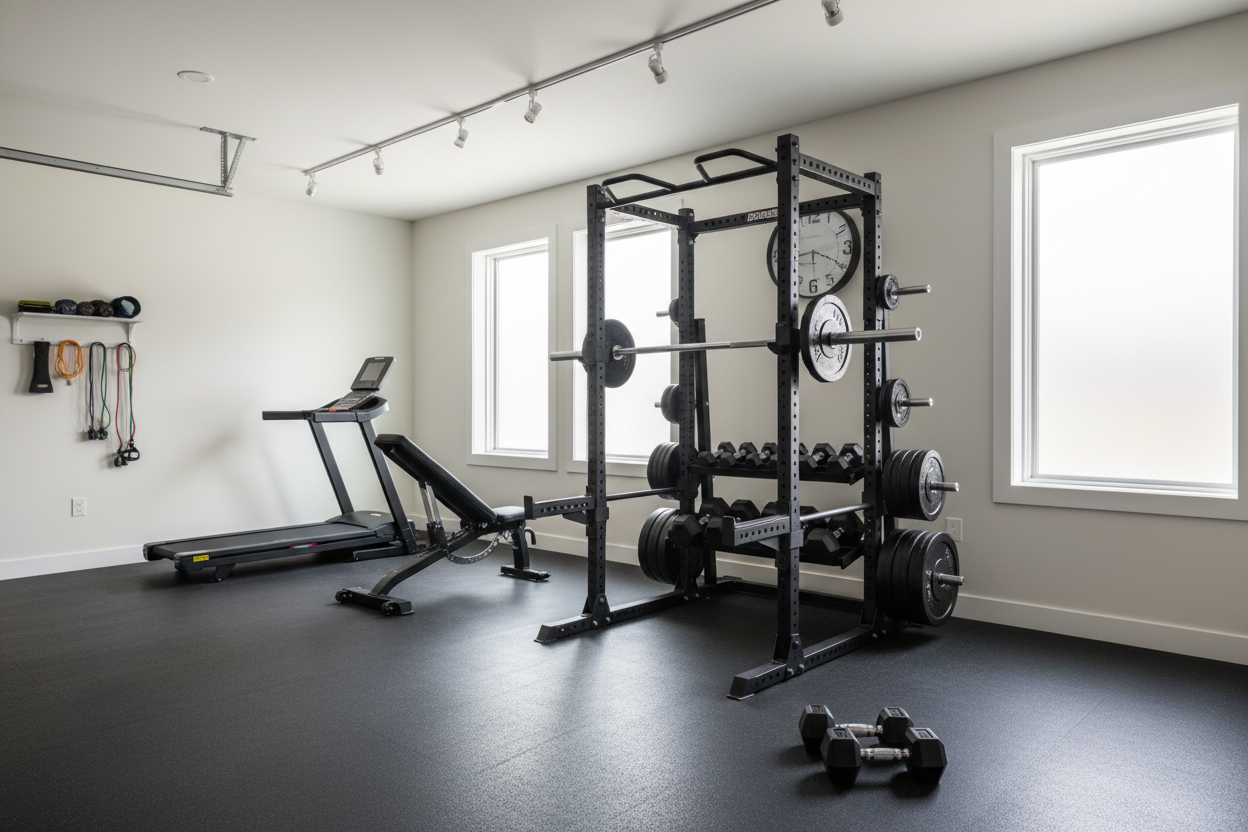
I still remember the first time I unboxed a budget weight lifting set I bought from a big-box retailer. On paper, it was a '110-piece masterpiece.' In reality, it was a cardboard box full of plastic-coated sand, spring clips that didn't grip, and a bar so thin I was afraid to sneeze near it. If you are scrolling through listings trying to find the best deal, you are likely being targeted by brands that care more about piece-counts than your actual progress.
Quick Takeaways
- Ignore the 'total piece count'—look at the total weight and bar quality instead.
- Standard 1-inch bars are a dead end; always go with 2-inch Olympic sizing.
- Cast iron is cheaper and thinner, while bumper plates are safer for your floors.
- A quality weight lifting set for home is an investment that should last a decade, not a season.
The '100-Piece' Marketing Lie
Marketing teams love big numbers because they know beginners equate quantity with value. When you see a weight lifting kit advertised with '50 pieces' or '100 pieces,' take a breath and look at the manifest. Usually, they are counting every single spring collar, every tiny 1.25lb plastic plate, and sometimes even the nuts and bolts on the storage rack as an individual 'piece.'
I have seen kits where 20 of the 'pieces' were just cheap plastic collars and a pair of 14-inch dumbbell handles that you will outgrow in three weeks. You aren't buying a Lego set; you are buying tools to move heavy loads. A real 300lb Olympic set technically only has about 17 pieces: one bar, two collars, and 14 plates. That is all you actually need to get strong.
The Core Components of a Real Setup
If you want a setup that actually survives a garage environment, you need to prioritize the barbell. A real Olympic bar weighs 45 lbs (20kg) and has 2-inch diameter sleeves. Anything less is a toy. Once you have the bar, you need a mix of plates—ideally a pair of 45s, 25s, 10s, 5s, and 2.5s. This allows for small, incremental jumps that keep your linear progression from stalling.
But the weights are only half the battle. You need a sturdy, reliable weight bench to serve as your foundation. There is nothing more distracting than feeling a bench shift or wobble while you have 185 lbs hovering over your windpipe. Look for a tripod design or a wide rear base to ensure the thing stays glued to the floor during your heavy sets.
Why 1-Inch Standard Plates Are a Dead End
You will often see weightlifting sets featuring 1-inch 'standard' bars. They are tempting because they are cheap, but they are a mechanical dead end. Most of these bars have a weight capacity that tops out around 200 lbs. That might sound like a lot now, but a dedicated novice can hit a 200-lb deadlift in a matter of months.
Upgrading to 2-inch Olympic sizing is the only way to future-proof your gym. Olympic bars are built to handle 500 to 1,000+ lbs, and the plates are universal. If you buy a 1-inch set today, you will just end up selling it for pennies on the dollar on Marketplace a year from now when you realize you can't find heavier plates that fit the bar. Save yourself the headache and buy the right size the first time.
When Should You Add Machines to the Mix?
I am a free-weight purist at heart, but I'm not a zealot. Once you have your primary weight lifting set for home established, adding a bit of guided resistance can help with hypertrophy and injury prevention. I have tested multiple home weight lifting machines over the years, and most of them are glorified clothes racks. The key is finding machines that offer a natural range of motion.
For example, an independent arm chest press is a phenomenal accessory. It allows you to isolate the chest without the stability demands of a barbell, which is great for finishing off a workout when your stabilizer muscles are fried. Just make sure you aren't sacrificing your budget for basic plates and a bar to buy a fancy machine first. Weights are the meal; machines are the dessert.
Don't Let a Wobbly Bench Ruin Good Iron
It is a common mistake: spending $800 on premium urethane plates and then trying to press them on a $50 bench from a department store. A cheap bench usually has thin, 'squishy' foam that bottoms out under load, making your shoulders feel unstable. You want high-density foam that supports your spine and a frame made of at least 11-gauge or 14-gauge steel.
Investing in a heavy-duty adjustable bench is the single best way to maximize the utility of your iron. A flat bench is fine, but an adjustable one opens up incline presses, seated overhead presses, and chest-supported rows. Look for a bench with a high weight capacity—at least 600 lbs—to account for both your body weight and the iron you are lifting.
My Personal Take
I once bought a 'bargain' 300lb set because it was $100 cheaper than the name-brand version. Within two months, the chrome on the barbell started flaking off like tinfoil, leaving literal metal splinters in my palms. I ended up buying a second, better bar anyway, effectively paying a 'cheap tax.' My advice? Buy a high-quality barbell from the jump, even if it means you can only afford a few plates to start. You can always buy more iron later, but a bad bar is just scrap metal.
FAQ
Is cast iron better than bumper plates?
It depends on your floor. If you're lifting on bare concrete, get bumpers—they're made of dense rubber and won't crack the slab. If you have thick stall mats or a lifting platform, cast iron is thinner, allowing you to fit more weight on the bar.
What is the most important part of a weight lifting kit?
The barbell. It is the only piece of equipment you touch during every single lift. A bar with good knurling (the grip pattern) and smooth-spinning sleeves will make every workout feel significantly better.
How much weight do I need to start?
For most people, a 160lb set is the absolute minimum, but a 300lb set is the 'sweet spot' for a home gym. It gives you enough variety to perform everything from overhead presses to deadlifts without running out of plates in the first six months.
Share:
I Finally Admitted a Dumbbell Set 5 25 Is the Perfect Starter Rack
Does Spin Really Matter? Finding the Best Weightlifting Barbell