
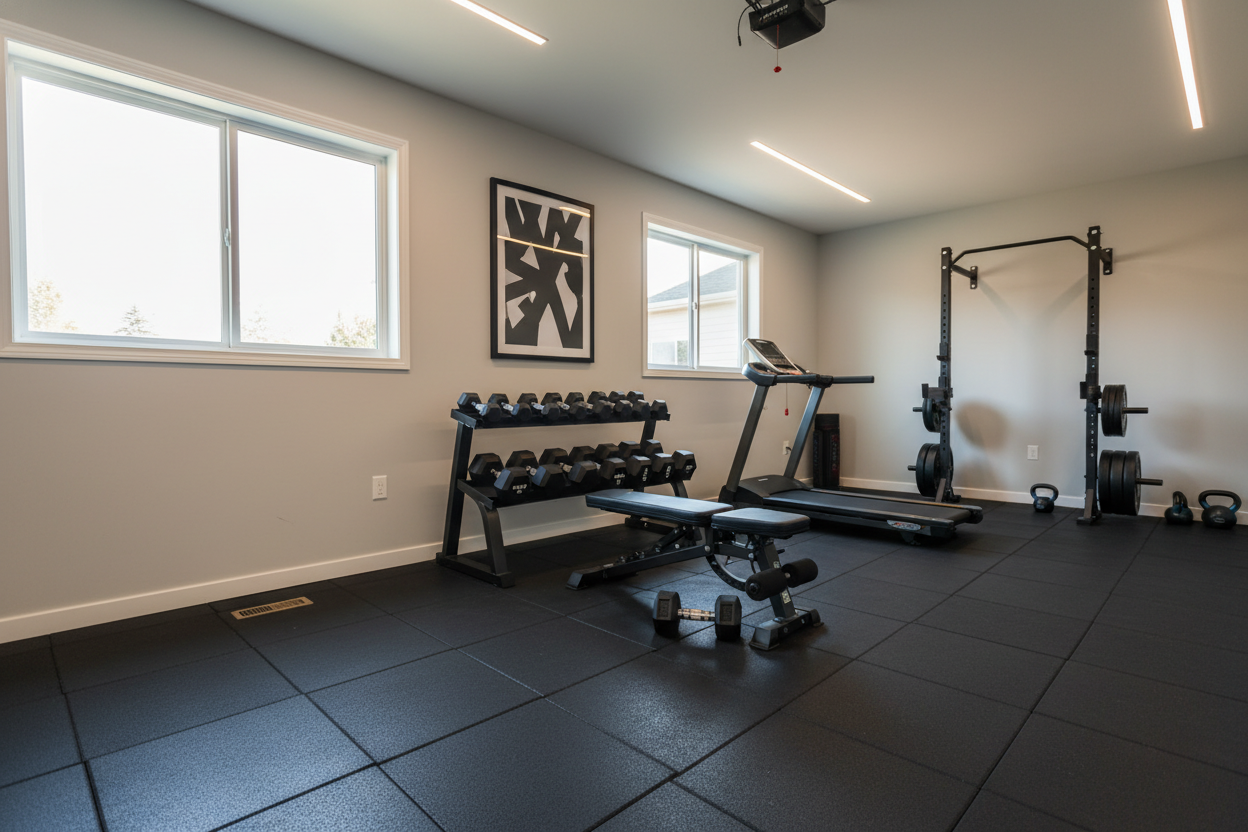
I remember staring at my first real setup—a rusted barbell and a pair of mismatched 25-lb plates I found in a neighbor's trash. It was ugly, it smelled like old pennies, and it was the most effective training tool I ever owned. Finding the best weights home gym configuration isn't about recreating a commercial health club; it's about buying the specific iron that won't break your floor or your spirit during a heavy set of five.
- Iron Over Electronics: Raw steel lasts decades; smart screens last until the software update fails.
- Weight Consistency: Cheap plates can vary by 5% or more; stick to machined or high-quality cast iron.
- Footprint Matters: Adjustable dumbbells save roughly 30 square feet of floor space compared to a full rack.
- Foundation First: A 1,000-lb capacity bench is a safety requirement, not a luxury.
Why Mismatched Facebook Marketplace Plates Are Ruining Your Lifts
We've all done it. You see a post for 'weights' at 50 cents a pound and you're out the door before the seller can reply. But here's the reality: those mismatched plates are a disaster for your progression. When one '45-lb' plate actually weighs 43.2 lbs and the one on the other side weighs 46.8 lbs, you aren't just lifting unevenly—you're begging for a tweaked lower back or a shoulder imbalance. I’ve spent years chasing 'deals' only to realize that a bar that feels 'off' is usually just a victim of poor manufacturing tolerances.
Investing in a calibrated or high-quality machined set from the jump is a move you'll never regret. Why Free Weight At Home Gyms Best The Expensive Smart Rigs is a lesson I learned the hard way. While your neighbor is fighting with a tablet that won't sync, you're moving heavy iron that doesn't require a Wi-Fi connection. High-quality plates have a consistent diameter, meaning they sit flush on the bar and pull evenly off the floor. If you're serious about getting strong, stop buying junk iron that rattles like a bag of bolts.
Barbells and Plates: The Core of the Best Free Weights Home Gym
The barbell is the most important piece of equipment you will ever own. Period. If you're building the best free weights home gym, you need an Olympic-sized bar with a 28mm to 29mm shaft and a tensile strength of at least 190,000 PSI. Don't buy a 'standard' 1-inch bar from a sporting goods store; the sleeves won't rotate, and the bar will likely permanent-bend the first time you load 225 lbs. I prefer a bar with a moderate knurling—enough to stick to your palms during a heavy deadlift, but not so aggressive that it leaves you bleeding after a set of cleans.
When it comes to plates, the choice between cast iron and bumpers depends entirely on your floor and your style. If you're doing Olympic lifts or dropping the bar, bumpers are mandatory. However, if you're a powerlifter, thin cast iron plates are the way to go because you can fit more of them on the sleeve. A standard 45-lb bumper is twice as thick as a machined iron plate; if you're pulling over 400 lbs, you'll literally run out of room on the bar. Building a proper Home Gym means planning for the strength you'll have in three years, not just what you're lifting today. Get a 300-lb set to start, but make sure the bar can handle 1,000.
Dumbbells vs. Adjustables: Finding the Best Home Gym Weight Sets
Everyone wants a 5-to-100 lb rack of rubber hex dumbbells until they realize it costs $3,000 and takes up an entire wall of their garage. For most of us, best home gym weight sets are the adjustable ones. I’ve used everything from the clunky screw-on collars to the high-end selectorized sets. The modern adjustable dumbbell is a marvel; you can go from 10 lbs to 80 lbs in the turn of a dial. This isn't just about saving money; it's about the footprint. In a 10x10 spare bedroom, every square inch is premium real estate.
The downside? You have to treat them with a bit more respect. You can't ghost-drop a selectorized adjustable dumbbell from overhead like you can a solid steel hex bell. But if you're a controlled lifter doing presses, rows, and curls, the versatility is unmatched. I recommend getting a pair that goes up to at least 50 lbs for beginners, but veterans should look for sets that expand to 90 lbs or more. If you can't do a heavy goblet squat with your dumbbell set, it's not heavy enough.
You Still Need a Foundation: Don't Skimp on the Bench
You can have the most expensive plates in the world, but if you're pressing them on a wobbly $60 bench, you're leaving gains on the table—and risking your safety. A cheap bench has a narrow base and thin padding that bottoms out when you get heavy. I look for 11-gauge steel and a tripod or wide-set foot design. You want to feel like you're lying on a sidewalk, not a pool noodle. Stability is the secret to a bigger bench press; if your shoulders feel shaky, your brain will literally shut down your force production to protect you.
The Adjustable Weight Bench Owb01 is a prime example of what you should be looking for: zero-gap design and a massive weight capacity. Having a bench that can handle incline, flat, and decline work without shifting an inch under load is a massive confidence booster. I’ve seen cheap benches literally buckle under a 300-lb total load (bodyweight plus bar). Don't let that be you. Spend the extra money on a bench that weighs more than 60 lbs itself; mass equals stability.
When Iron Isn't Enough: Bridging the Gap With Machines
I’m a free-weight purist at heart, but I’m also a realist. There are days when your CNS is fried, your back is screaming, or you're training alone and want to push to absolute failure on a chest press. This is where a Smith Machine Home Gym Station becomes a strategic addition. It’s not about replacing the barbell; it's about adding a layer of safety and isolation that free weights can't always provide. Guided paths allow you to focus purely on the muscle contraction rather than stabilizing the load.
For home lifters, a hybrid system that combines a cable pulley with a guided bar is the ultimate hypertrophy tool. You can do your heavy squats and deadlifts with the bar, then move to the machine for high-rep lunges or shrugs. It acts as a built-in spotter. If you're 40 years old and your joints are starting to complain about the 5x5 grind, moving some of your accessory volume to a machine can keep you in the game for another twenty years.
Personal Experience: The Garage Sale Disaster
Years ago, I bought a 'complete' set of weights from a guy moving out of state. It was a mix of three different brands. I didn't check the inner ring diameters. When I got home, I realized two of the 45s wouldn't even slide onto my barbell because the center holes were slightly too small. I ended up having to sand down the inside of the iron rings by hand for three hours. It was a miserable lesson in why buying matched, quality equipment matters more than saving fifty bucks. Now, I buy once and cry once.
FAQ
Should I buy iron or rubber-coated plates?
If you have neighbors or a sleeping baby, get rubber-coated or urethane plates to dampen the noise. If you love the 'clank' and want to save money, go with raw iron. Just remember that iron can rust if your garage isn't climate-controlled.
What is the minimum weight I should buy?
A standard 300-lb set (including the 45-lb bar) is the baseline. It sounds like a lot, but you'll outgrow it on deadlifts within six months if you're consistent. Look for sets that allow you to add individual plates later.
Are adjustable dumbbells durable?
The high-end ones are incredibly tough, but you should never drop them. If you're a 'slam the weights' kind of lifter, stick to fixed rubber hex dumbbells. If you're careful, adjustables will last a lifetime.
Share:
The Only Gifts for a Home Gym That Won't End Up on eBay
Why I Gave Up on Adjustables and Bought Fixed Weight Dumbbells