
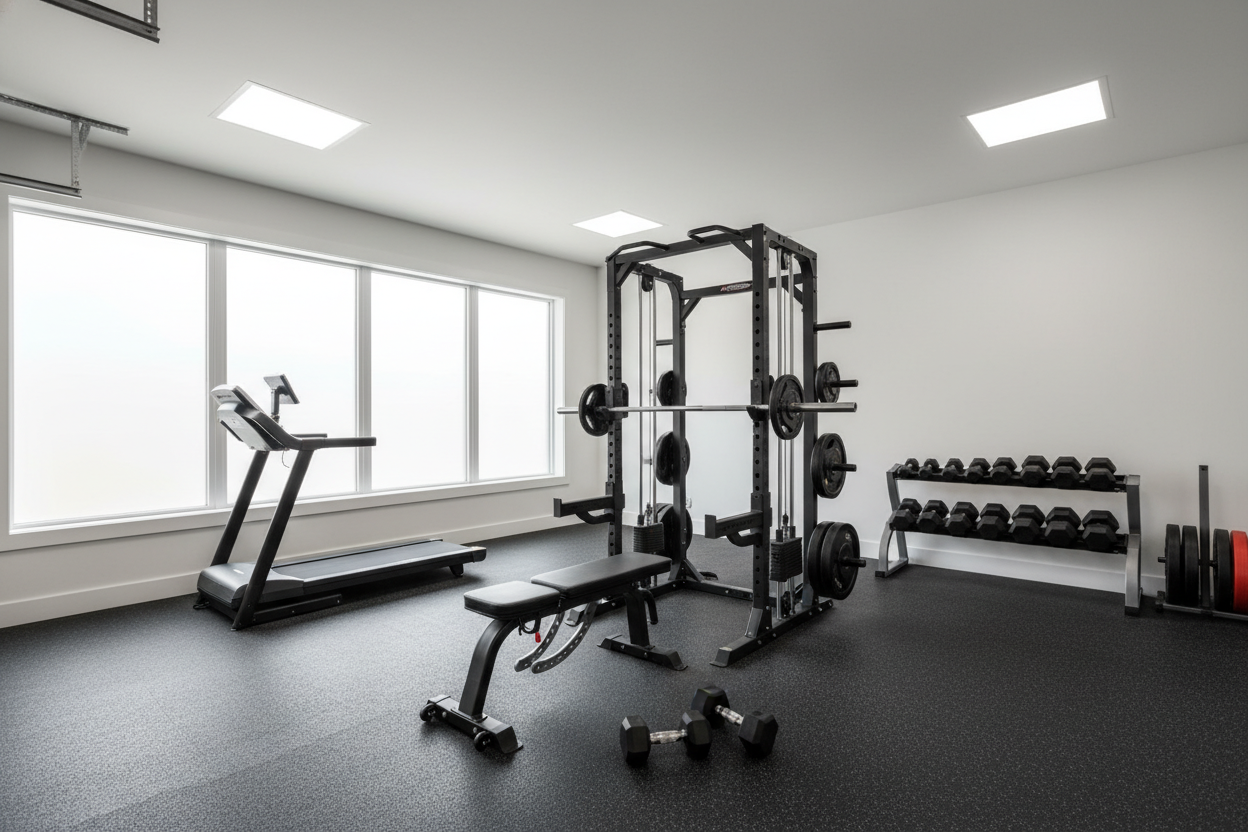
I remember the night I finally snapped. My local commercial gym hiked the monthly dues again, and the only Smith machine they had was perpetually occupied by a guy doing shrugs while scrolling TikTok. I went home and started hunting for a home smith machine, nearly pulling the trigger on a four-hundred-dollar Amazon special before I realized I was about to make a massive mistake that would have left my garage looking like a junkyard.
Buying gym gear is an investment in your sanity as much as your strength. If you buy the wrong rig, you aren't just out a few hundred bucks; you're stuck with a three-hundred-pound paperweight that makes you hate your morning workout. After years of testing everything from budget bangers to commercial monsters, I've learned that the 'cheap' route usually ends up being the most expensive one.
Quick Takeaways
- Nylon bushings are for laundry machines; linear bearings are mandatory for smooth lifting.
- Bare rigs save money upfront but eat your floor space when you inevitably need to buy cables later.
- Check your ceiling height—many all-in-one units need at least 84 inches of clearance.
- Selectorized weight stacks are a luxury that pays for itself in saved workout time.
The 'Naked Rig' Trap (And Why It Costs You More)
The biggest trap I see guys fall into is buying a 'naked' Smith machine—just the bar and the frame. It looks like a bargain at five hundred bucks. But here is the reality: you can't just do Smith squats and call it a day. Within a month, you'll realize you need a pull-up bar, a lat pulldown, and a place to store your plates so they aren't tripping you in the dark.
When you start adding those pieces separately, your budget and your floor space evaporate. A standalone cable tower takes up another 4x4 foot section of your garage. A weight tree takes up another two square feet. By the time you're done, outfitting a true home gym with separate pieces costs double what a high-quality combo unit would have cost. Plus, your garage is now so cramped you can't even move between sets.
I always tell people to look at the footprint first. If you can get a Smith bar, a power rack, and dual pulleys in a single 5x6 foot area, you've won. You're paying for the engineering that keeps everything compact without sacrificing the 300-lb weight capacity you need for heavy presses.
Do You Actually Need a Smith Machine Home Gym With Weights?
This comes down to the plate-loaded versus selectorized debate. If you buy a smith machine home gym with weights (meaning it has built-in selectorized stacks), you are paying for speed. There is nothing better than finishing a heavy set of chest presses and immediately moving a pin to hit cable flyes. It keeps your heart rate up and your workout under forty-five minutes.
Plate-loaded systems are the 'blue-collar' option. They are rugged, they have a higher ceiling for total weight, and they are significantly cheaper. However, they require you to have a massive stack of Olympic plates nearby. If you're running a high-volume program with lots of supersets, stripping 45s off a bar just to load them onto a carriage is a chore. If you have the cash, a smith machine home gym station with dual 200-lb stacks is the gold standard for home training.
Linear Bearings vs. Nylon Bushings: The Dealbreaker
If you ignore everything else, listen to this: never buy an at home smith machine that uses nylon bushings. Bushings are just plastic sleeves that slide over metal. They feel fine for the first week, but once you get a little dust or sweat on them—or heaven forbid, you actually load 225 lbs on the bar—they start to catch. It’s a jerky, stuttering movement that ruins your mind-muscle connection and puts weird shear force on your joints.
Linear bearings are the non-negotiable. These use actual steel ball bearings that roll along the guide rods. I have built and tested multiple rigs over the years, and the difference is night and day. You want that bar to feel like it's floating on ice. If the product description doesn't explicitly brag about 'commercial-grade linear bearings,' it's probably because they're using cheap plastic. Walk away.
Why the Combo Route Usually Wins for Garages
Most garage gym owners are fighting for every inch. This is why I almost always recommend an all-in-one unit. When you combine a half-rack (with J-cups for free weight work), a Smith bar, and a functional trainer into one footprint, you've solved the space problem entirely. You get the safety of the fixed path for when you're training solo and hitting failure, but you still have the freedom to do barbell work.
An all-in-one smith machine with cable crossover is the smartest move for a 10x10 space. You can hit your heavy compounds, then immediately pivot to cable crossovers or face pulls without moving more than two feet. It makes the gym feel professional rather than cluttered. Don't buy a piece of equipment; buy a system that covers every lift you'll ever want to do.
Personal Experience
I once bought a budget Smith machine because I thought I was being 'frugal.' The bar had a 1-inch diameter instead of the standard Olympic size, meaning I couldn't use my existing plates without adapters. It shook like a leaf every time I did chin-ups. I ended up selling it on Marketplace for a hundred bucks just to get it out of my sight. Now, I don't look at the price tag first; I look at the steel gauge and the bearing type. Buy once, cry once.
FAQ
Can I use my existing Olympic plates?
Usually, yes. Most quality machines use 2-inch sleeves. Just make sure the weight horns are long enough to hold the amount of iron you plan on lifting—some budget units have surprisingly short sleeves.
Is it hard to assemble these things?
It is a project. Give yourself a full Saturday, get a real socket wrench set (don't use the flat metal ones they provide), and have a buddy help you with the uprights. It’s not rocket science, but it requires patience.
Do I need to bolt it to the floor?
If the machine has a wide, heavy base and you aren't doing aggressive kipping pull-ups, you're usually fine. However, if you're loading 400+ lbs, bolting it down adds a level of 'rock-solid' feel that you can't beat.
Share:
Stop Bending Cheap Steel: Finding the Best Barbells for Home
Why a Simple Cast Iron Adjustable Dumbbell Beats a $400 Dial System