
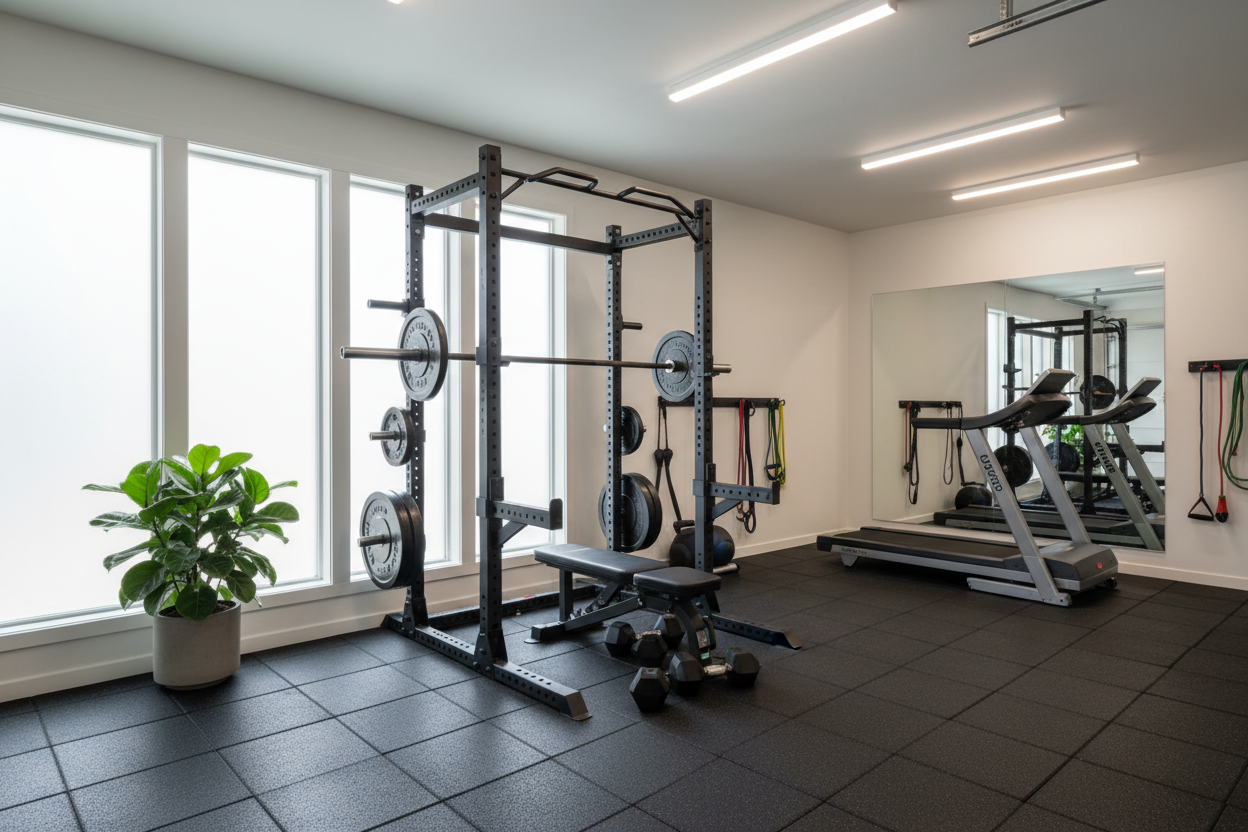
I have spent far too many Sunday mornings in damp garages, staring at rusted bolts and trying to figure out if a 'lightly used' cable crossover is a steal or a death trap. You know the feeling: you’re scrolling through Facebook Marketplace at midnight, and you see a home gym machine used for a fraction of its retail price. Your brain does the math, and suddenly you’re convinced you’ve hacked the fitness industry.
The reality is usually much messier. Most of the time, you aren't just buying a piece of equipment; you're buying someone else's abandoned New Year's resolution and all the mechanical neglect that comes with it. If you aren't careful, that 'deal' will end up costing you more in replacement parts and hospital bills than a brand-new setup would have.
Quick Takeaways
- Cast iron plates are safe bets; anything with a cable is a gamble.
- Always bring a flashlight and a wrench to inspections.
- Factor in the 'sweat equity' of disassembly and transport.
- If the pulleys aren't nylon or high-grade aluminum, they’re probably junk.
Why You Keep Seeing the Same Gear on Craigslist
Ever notice how the same three or four models of home gym used gear seem to flood the local listings? There is a reason for that. Most of what you see is 'fitness furniture'—stuff designed to look impressive in a showroom but built with 14-gauge steel that wobbles the moment you try to hit a PR. People buy these machines because they want a shortcut, but they quickly realize the biomechanics are terrible and the seat padding feels like cardboard.
They eventually give up, and that machine sits in a corner gathering dust until their spouse demands the garage space back. That is why there is always a home gym used for sale nearby. These machines were bought for a fantasy version of the owner, rather than as part of a setup that actually gets used. If the original owner didn't value it enough to use it, they definitely didn't value it enough to maintain the guide rods.
Heavy Iron vs. Moving Parts
When you are hunting for a home gym used, you have to categorize gear into two buckets: the stuff that lasts forever and the stuff that dies. Cast iron plates, dumbbells, and simple steel racks are almost always a win. Rust is just cosmetic; a wire brush and some 3-in-1 oil will make a 20-year-old plate look new. I’ve bought plates that looked like they were recovered from the Titanic, and after a afternoon of work, they weighed exactly what they were supposed to.
Moving parts are where the risk lives. If a machine has pulleys, cables, or linear bearings, the 'used' discount needs to be at least 60% to be worth it. Cables have a plastic coating that hides frayed steel strands. If that coating is cracked, the cable is a ticking time bomb. Bearings that haven't been lubricated will grind, and once the internal races are scored, the machine will never feel smooth again no matter how much WD-40 you spray on it.
The 5-Point Inspection for a Home Gym Machine Used
Don't just look at the machine; torture test it. If the seller won't let you put weight on it, walk away. First, run your fingers along the entire length of the cables. You are feeling for 'kinks' or bunches in the steel. Second, check the pulleys. If they are plastic and have deep grooves worn into them, they are dragging, not spinning. This ruins the 'feel' of the lift.
Third, if you are looking at a complex Smith machine home gym station, pay close attention to the guide rods. They should be perfectly straight and free of pitting. Any nick in the chrome will chew up the bearings every time the bar passes over it. Fourth, check the welds. Look for hairline cracks in the powder coating around joints—this indicates the frame has been stressed beyond its limit. Finally, check the hardware. If the bolts are stripped, it means the previous owner struggled with assembly, and the whole unit might be structurally unsound.
The Hidden Costs of Secondhand Gear
The price tag on the home gym used for sale is only the beginning. You need to account for the 'logistics tax.' Most high-quality heavy-duty home gym multi-stations weigh between 400 and 800 pounds. Unless you own a heavy-duty pickup and have three strong friends, you are looking at a U-Haul rental and a wasted Saturday. I once spent six hours disassembling a functional trainer only to realize I lost the proprietary tensioning bolt in the driveway. I spent three weeks hunting for a replacement part from a company that had gone out of business.
Your time has a dollar value. By the time you drive two hours, spend three hours sweating in a stranger's garage, and another three hours reassembling it at home, you’ve spent a full workday. If the machine needs new cables (which can run $50-$100 a pop) or new pads, your 'bargain' is suddenly looking very expensive.
When Buying New Actually Saves You Money
There is a threshold where buying new is just the smarter financial move. When you buy new, you get a warranty, fresh cables, and—most importantly—delivery to your door. You aren't inheriting someone else's stripped screws or sweat-soaked upholstery. I’ve actually found that I could build a high-performing home gym setup under $1,000 without buying used by focusing on high-quality basics rather than complex, low-quality machines.
If a used machine is more than 50% of the retail price, it is almost never worth it. You are better off buying a new, mid-range rack with a solid warranty. You’ll save yourself the headache of the 'Marketplace flake' sellers and the physical risk of a snapped cable during a heavy set of lat pulldowns.
My Personal Lesson in Used Gear
I once bought a used leg press for $300. It looked solid. I got it home, loaded it with four plates on each side, and realized the carriage was slightly bent. Every rep felt like I was pushing through sand. I tried greasing it, replacing the rollers, and even shimming the frame. Nothing worked. I ended up selling it for scrap metal for $40. I lost $260 and two weekends of my life because I didn't check the alignment before handing over the cash. Don't be me.
FAQ
Is rust on a used home gym a dealbreaker?
On weights and frames, no. It's mostly cosmetic. On guide rods or inside pulleys, yes. If the moving surfaces are rusted, the machine will never be smooth.
How do I know if a used cable is safe?
Look for 'bird-caging' (where the strands unravel) or any cracks in the outer nylon coating. If you see any silver wire peeking through, replace the cable before using it.
Should I buy a used treadmill or elliptical?
Generally, no. Electronic fitness equipment has a high failure rate and is incredibly expensive to repair. Stick to manual iron and cable machines when buying secondhand.
Share:
I Snapped a Cheap 80lb Weight, Then Finally Bought Commercial Dumbbells
Tracking Workouts Forced Me to Learn Gym Equipments and Their Names